Rheumatoid Arthritis: Immunological and Pathophysiological Mechanisms Prepared by: M.M. Abbas Hamza Khudhair
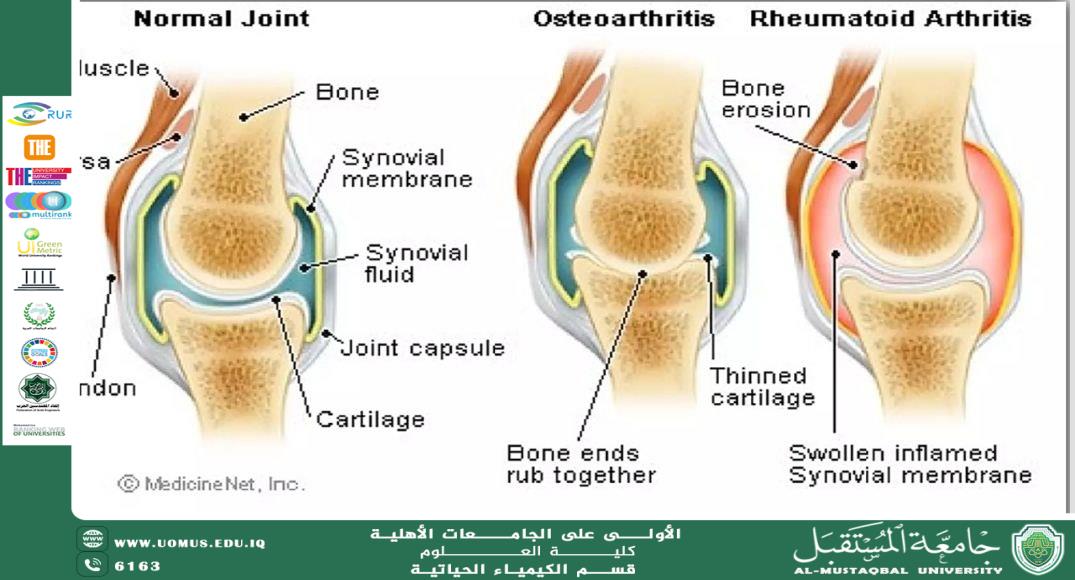
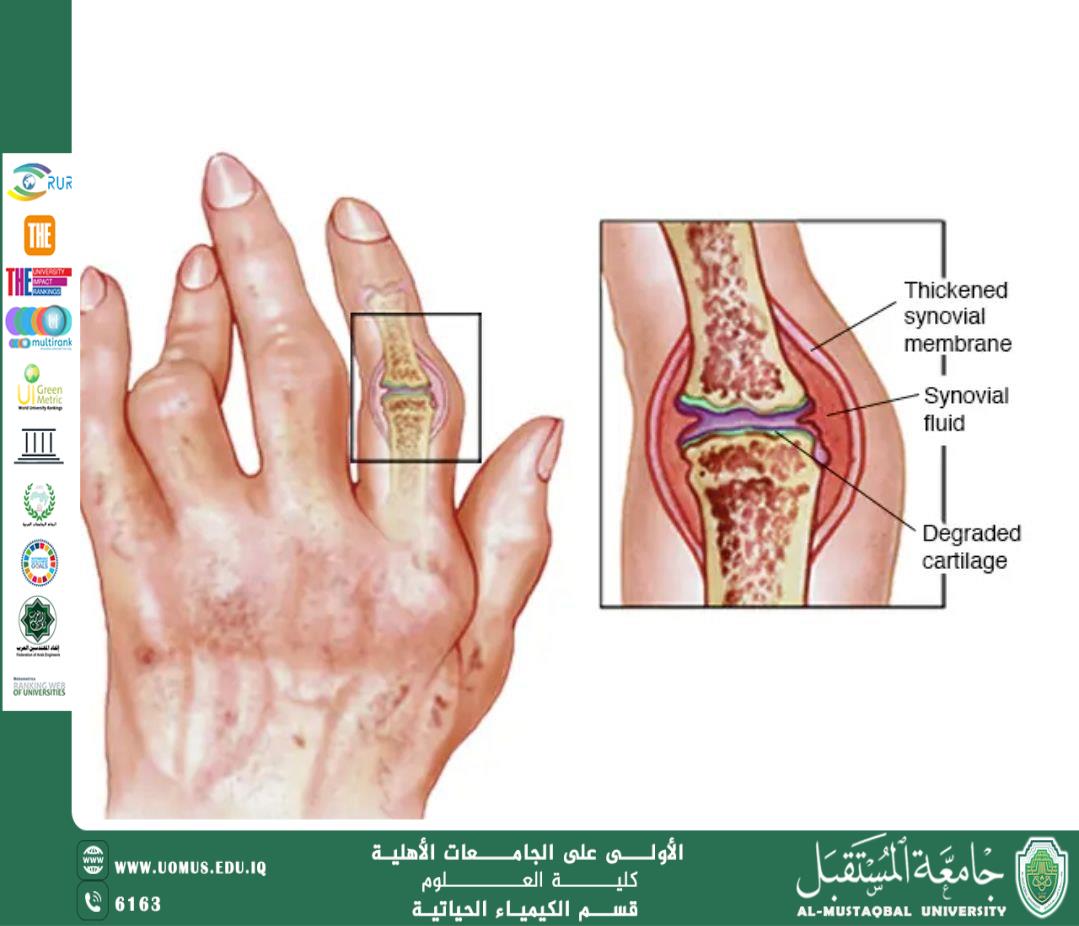
Rheumatoid Arthritis (RA) is a chronic autoimmune disease that primarily affects the joints, though its impact can extend to multiple organ systems. The disease is characterized by symmetrical inflammation in small joints, particularly those of the hands and feet, and may progress to cartilage and bone erosion if not treated early.
Immune Basis of the Disease
RA arises from a dysfunction in the immune system, leading to a loss of immune tolerance. This causes immune cells to attack healthy body tissues, especially the synovial membrane of the joints. Key cells involved in this process include:
· T cells
· B cells
· Macrophages
These cells secrete major inflammatory cytokines such as TNF-α, IL-1, and IL-6, which play a central role in sustaining inflammation and joint destruction.
Pathophysiological Mechanisms
The biochemical changes associated with RA include:
· Increased oxidative stress and accumulation of free radicals
· Activation of matrix metalloproteinases
· Hyperproliferation of inflammatory synovial tissue (pannus)
· Imbalance between pro-inflammatory and anti-inflammatory factors
These mechanisms lead to cartilage and bone erosion, joint deformity, and gradual loss of function.
Genetic and Environmental Factors
Genetic factors play a significant role in susceptibility to RA, particularly the association with HLA-DRB1 genes. Environmental factors also contribute to disease onset, most notably:
· Smoking
· Bacterial or viral infections
· Chronic exposure to pollutants
Diagnosis and Biomarkers
Diagnosis of RA relies on a combination of clinical and laboratory tests, including:
· Rheumatoid Factor (RF)
· Anti-Cyclic Citrullinated Peptide Antibodies (Anti-CCP)
· C-Reactive Protein (CRP)
· Erythrocyte Sedimentation Rate (ESR)
Anti-CCP antibodies are among the most accurate biomarkers and are closely associated with disease severity.
Systemic Effects of the Disease
RA is not limited to the joints and may lead to:
· Cardiovascular diseases
· Inflammatory anemia
· Osteoporosis
· Lung and skin involvement
Conclusion
Rheumatoid Arthritis represents a complex model of autoimmune diseases, where genetic, immune, and biochemical factors interact to cause progressive joint damage. A deeper understanding of the biochemical mechanisms of RA contributes to the development of more precise therapeutic strategies, focusing on inhibiting inflammatory cytokines and achieving long-term disease control. This improves patients' quality of life and reduces complications.
University of Al-Mustaqbal Ranks First Among Iraqi Private Universities