A Scientific Article Titled: Celiac Disease: Immune Mechanisms and Biochemical Effects By Instructor: M.M. Abbas Hamza Khudhair
Celiac Disease is a chronic autoimmune disorder that affects the small intestine, resulting from an abnormal immune system reaction to gluten, a protein found in wheat, barley, and rye. This reaction leads to inflammation and damage to the intestinal villi, causing malabsorption of nutrients and multiple systemic disorders.
Immune Basis of Celiac Disease
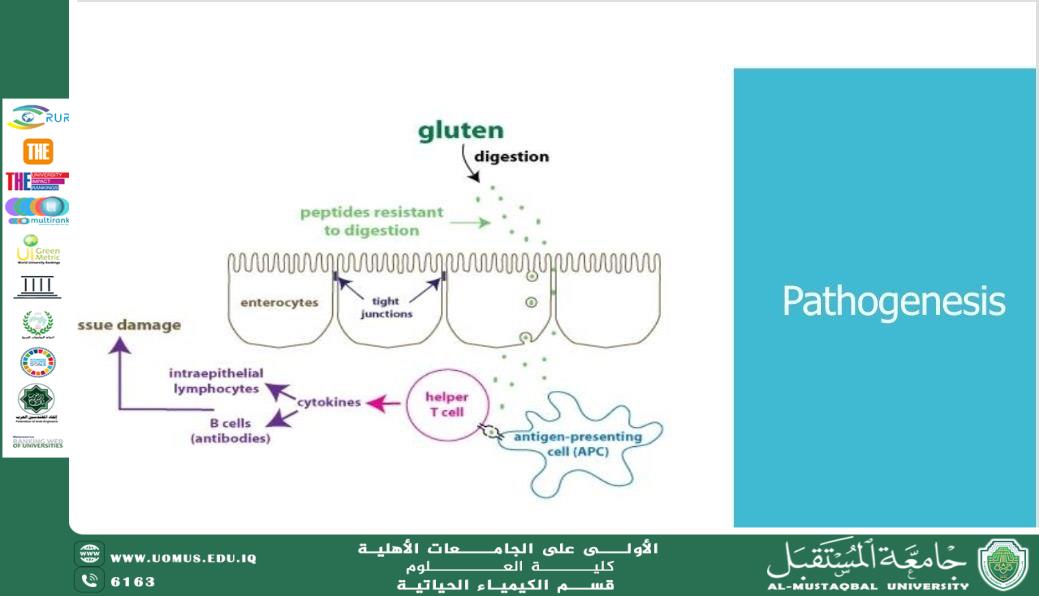
The disease arises from a loss of immune tolerance to gluten.Gluten proteins are broken down into peptides (particularly gliadin) that bind to the enzyme Transglutaminase-2 (tTG) within the intestine. This binding leads to:
· Activation of T cells
· Secretion of inflammatory cytokines
· Destruction of intestinal villi
The disease is genetically linked to HLA-DQ2 and HLA-DQ8 genes,explaining the high susceptibility in certain individuals.
Biochemical and Pathological Changes
Key changes in Celiac Disease include:
· Atrophy of intestinal villi
· Crypt hyperplasia
· Increased intestinal permeability
· Malabsorption of iron, calcium, folate, and vitamin B12
This results in anemia,osteoporosis, growth disorders, and chronic fatigue.
Clinical Symptoms
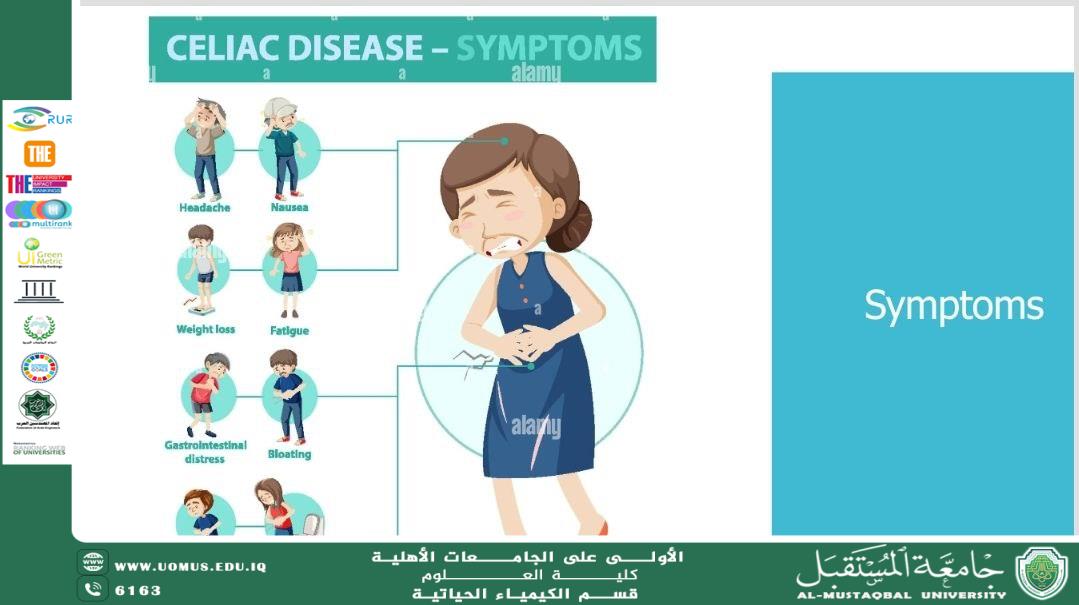
Symptoms vary between gastrointestinal and non-gastrointestinal manifestations,including:
· Chronic diarrhea and bloating
· Weight loss
· Anemia
· Osteoporosis
· Characteristic skin rash (Dermatitis herpetiformis)
· Neurological and hormonal disorders
In some patients,the disease may be silent, complicating diagnosis.
Diagnosis and Biomarkers
Diagnosis relies on:
· Anti-tTG-IgA antibodies
· Anti-Endomysial antibodies (EMA)
· Total IgA measurement
· Intestinal biopsy to confirm villous damage
Anti-tTG antibodies are among the most sensitive and specific biomarkers.
Treatment and Nutritional Management
There is no curative drug treatment for Celiac Disease.The primary treatment involves:
· Strict lifelong adherence to a gluten-free diet
· Supplementation of deficient vitamins and minerals
· Regular monitoring of immune biomarkers
Dietary adherence leads to improvement of intestinal villi and restoration of normal absorption within months.
Potential Complications
Without adherence to treatment,serious complications may arise, such as:
· Osteoporosis
· Infertility
· Chronic anemia
· Increased risk of intestinal lymphomas
Conclusion
Celiac Disease represents a clear model of the interplay between genetic,immune, and nutritional factors. A deep understanding of the biochemical and immune mechanisms of the disease facilitates early diagnosis and prevention of complications, emphasizing the pivotal role of a gluten-free diet in maintaining patient health and quality of life.
---
University of Al-Mustaqbal Ranks First Among Iraqi Private Universities