Internet of Things Systems for Monitoring Water Consumption A Scientific Article by Lecturer Lubna Ali Jalil
Introduction
Water is one of the most vital natural resources upon which human life and economic activities depend. However, the world is currently facing increasing challenges related to water scarcity and rising demand due to population growth, urban expansion, and climate change. In this context, modern technologies—particularly the Internet of Things (IoT)—have emerged as innovative solutions aimed at improving water management and monitoring consumption efficiently. IoT-based water consumption monitoring systems are among the most promising applications that integrate computer engineering, communication technologies, and intelligent control to achieve sustainable water use.
Concept of the Internet of Things and Its Role in Water Management
The Internet of Things refers to a network of interconnected physical devices equipped with sensors, processors, and communication modules that enable them to collect and exchange data over the internet without direct human intervention. In water management, IoT is used to monitor consumption in real time, analyze historical data, and predict future usage patterns. This contributes to improving water distribution efficiency and reducing losses caused by poor management or technical failures.
Components of an IoT-Based Water Consumption Monitoring System
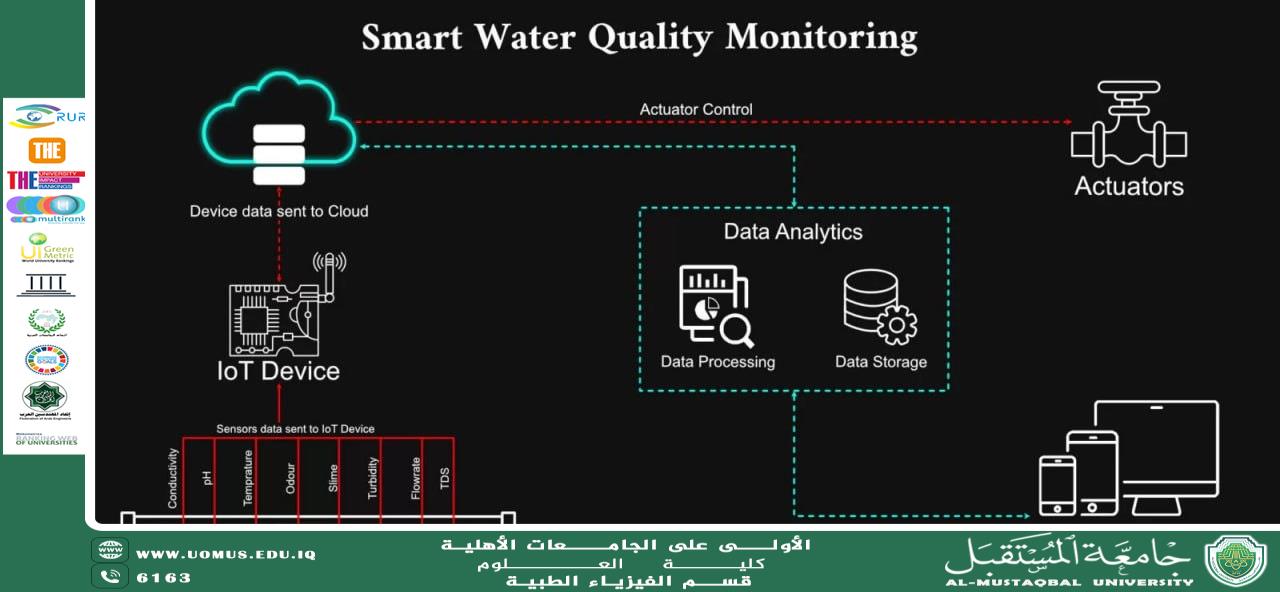
An IoT system for monitoring water consumption consists of several integrated components, including:
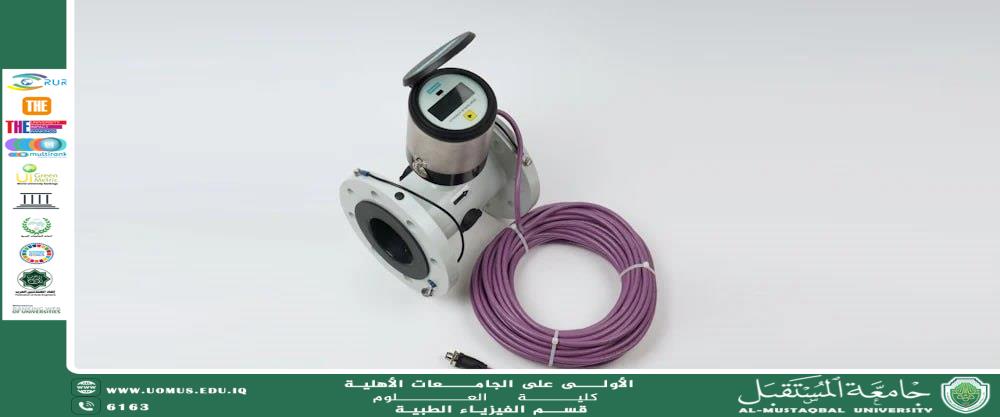
Flow and Pressure Sensors: Used to measure the volume of water flowing through pipes and to monitor pressure for leak detection.
Processing and Control Units: Such as microcontrollers or embedded systems that receive and process sensor data.
Communication Modules: Responsible for transmitting data to servers or cloud platforms using wireless communication technologies.
Data Storage and Analysis Platforms: Used to store large volumes of data and analyze them using intelligent algorithms.
User Interfaces: Such as smartphone applications or web-based dashboards that display consumption data clearly and intuitively.
System Operation Mechanism
The system operates by continuously measuring water consumption through sensors installed on distribution networks or points of use. The collected data are sent to processing units, where they are organized and converted into analyzable information. The data are then transmitted via the internet to a central platform that visualizes the information, performs analysis, and generates alerts in cases of abnormal consumption or potential leaks. This mechanism enables users and decision-makers to take timely and effective actions.
Importance of IoT Systems in Water Conservation
IoT-based water monitoring systems play a crucial role in water conservation by:
Reducing water loss caused by hidden leaks.
Providing accurate data to support better planning and resource management.
Raising awareness among individuals and institutions about their consumption patterns.
Improving the efficiency of water distribution networks and reducing operational costs.
Supporting national policies related to water security and sustainability.
Practical Applications
IoT systems for monitoring water consumption are applied in various sectors, including:
Smart Homes: For tracking daily water usage and reducing utility bills.
Agriculture: To optimize irrigation efficiency and minimize water waste.
Industrial Facilities: For monitoring water usage and ensuring compliance with environmental standards.
Smart Cities: For large-scale management of water distribution networks and service optimization.
Technical Challenges
Despite their significant advantages, these systems face several challenges, such as high initial installation costs, the need for advanced digital infrastructure, and concerns related to data security and privacy. In addition, regular maintenance is required to ensure sensor accuracy and continuous system operation.
Conclusion
IoT-based water consumption monitoring systems represent one of the most important modern technological solutions for addressing water scarcity and inefficient water management. By integrating computer engineering with communication technologies and intelligent data analysis, these systems enable more efficient and sustainable management of water resources. Adopting such systems is a strategic step toward water conservation and ensuring long-term water security for future generations.
"AL_mustaqbal University is the first university in Iraq"