An article on the integration of solar cell technology and panel design technology
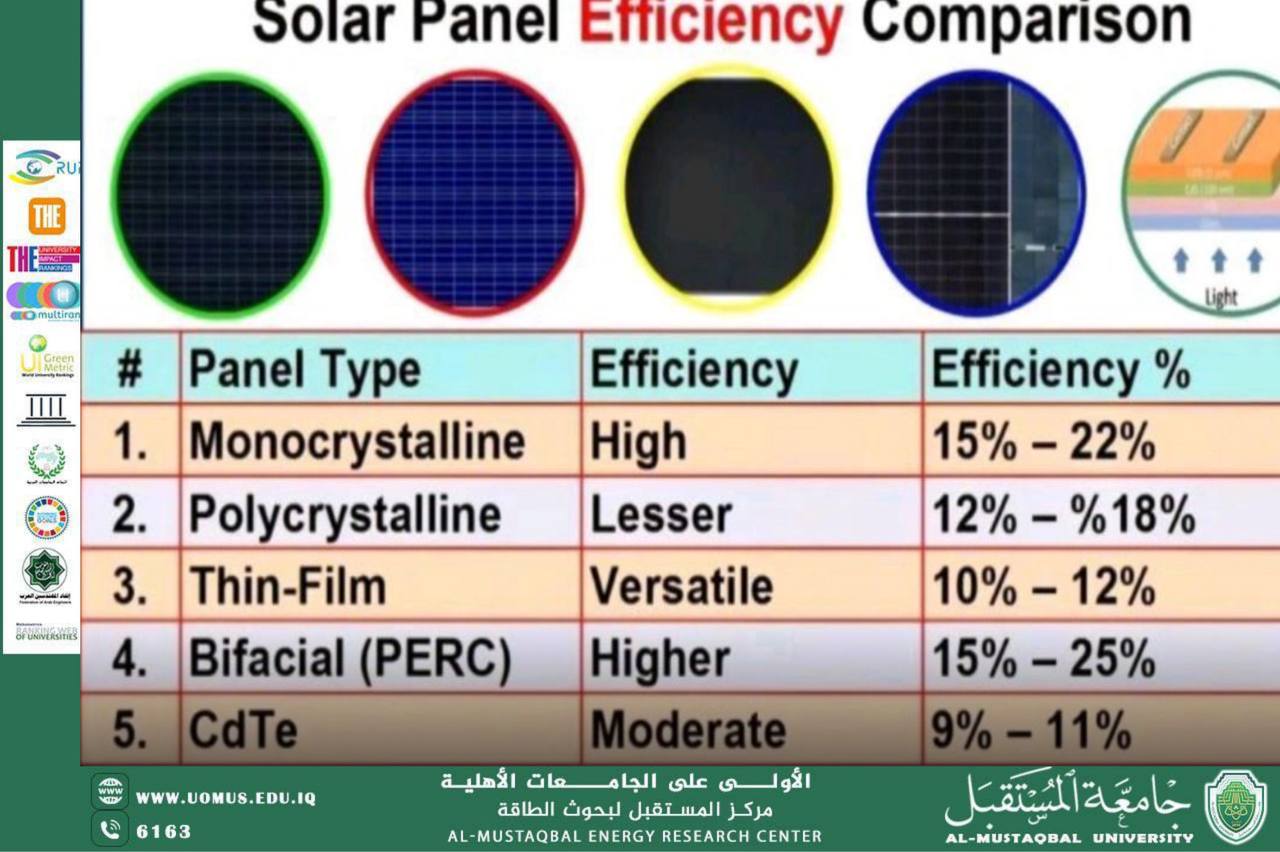
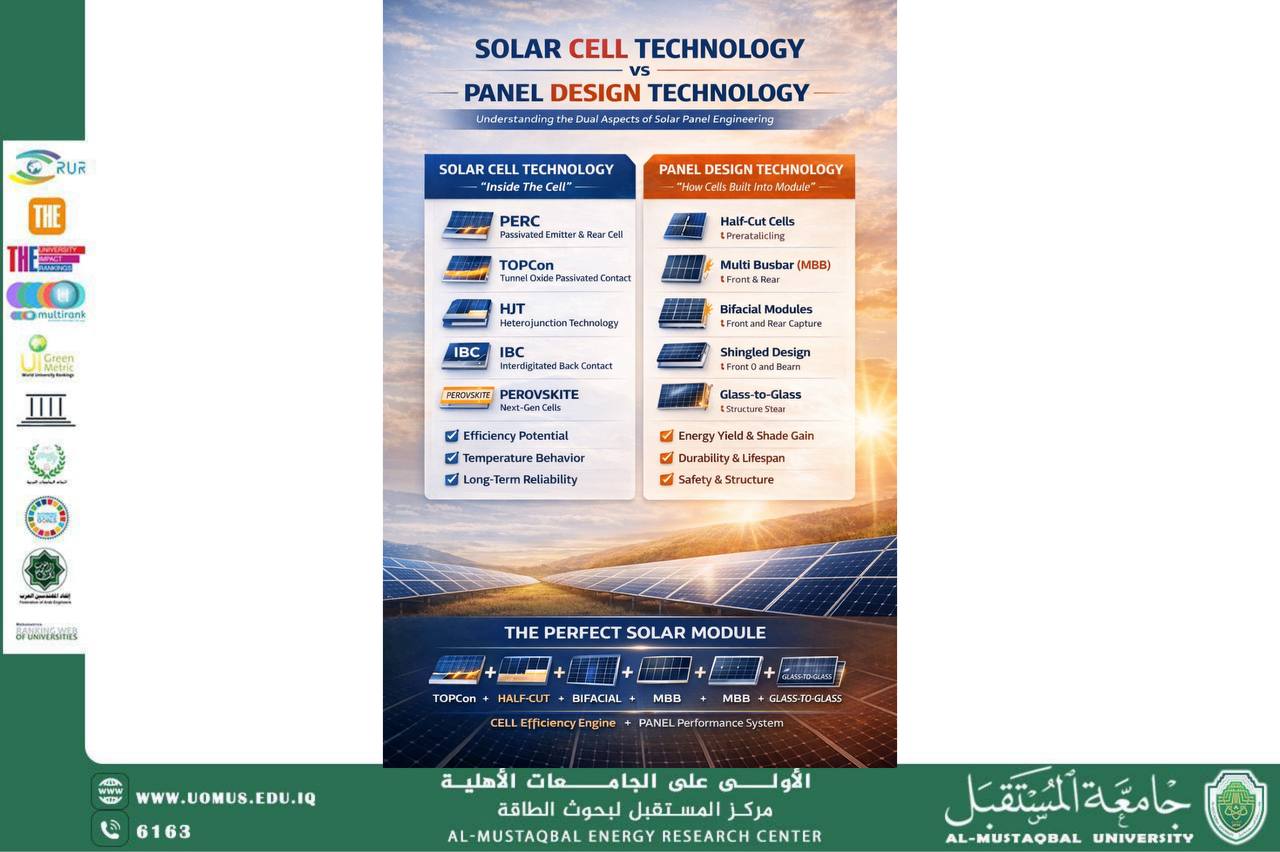
Energy generation occurs on both the front and rear surfaces. Outcome: Introduction The photovoltaic (PV) solar energy sector is undergoing rapid technological advancement, driven by the global demand for clean, reliable, and high‑efficiency energy sources. As PV technologies evolve, evaluating the quality and performance of solar modules has become far more complex than simply comparing nameplate power ratings or advertised efficiency values. In practice, the real performance of modern solar modules is governed by two fundamentally different yet highly integrated technological pillars: 1. Solar Cell Technology 2. Solar Module (Panel) Design Technology These two concepts are often conflated in commercial marketing, despite representing distinct engineering domains that influence different aspects of electrical performance, mechanical integrity, thermal behavior, and long‑term reliability. A clear scientific distinction between them—followed by an understanding of their integration—is essential for selecting appropriate PV modules and designing high‑yield, durable photovoltaic systems. 1. Solar Cell Technology – Engineering at the Cell Level 1.1 Definition Solar cell technology refers to the physical, electrical, and material structure of the photovoltaic cell itself, including: • Semiconductor materials and doping profiles • Layer architecture • Charge separation mechanisms • Current collection pathways This field lies primarily within semiconductor physics and materials engineering and defines the theoretical performance limits of a solar module. 1.2 Core Objectives of Cell Technology Modern solar cell technologies aim to: • Increase energy conversion efficiency • Minimize recombination losses • Improve the temperature coefficient • Enhance long‑term stability and reliability 1.3 Major Solar Cell Technologies PERC (Passivated Emitter and Rear Cell) PERC technology introduces a rear passivation layer that reduces electron recombination at the back surface of the cell. Technical impact: • Higher efficiency than conventional cells • Good performance‑to‑cost ratio • Widespread industrial adoption TOPCon (Tunnel Oxide Passivated Contact) TOPCon cells employ an ultra‑thin oxide layer combined with an optimized contact structure. Advantages: • Very high conversion efficiency • Superior performance at elevated temperatures • Significantly reduced recombination losses HJT (Heterojunction Technology) HJT combines crystalline silicon with thin amorphous silicon layers. Key benefits: • Excellent temperature coefficient • High efficiency under low‑irradiance conditions • Strong long‑term electrical stability IBC (Interdigitated Back Contact) All electrical contacts are placed on the rear side of the cell. Result: • Shading‑free front surface • Enhanced light absorption and efficiency Perovskite Solar Cells A promising emerging technology demonstrating exceptionally high laboratory efficiencies. Current challenges: • Long‑term stability • Commercial scalability and durability 1.4 What Does Cell Technology Determine? Summary: Solar cell technology defines the theoretical efficiency and power potential of a solar module. 2. Solar Module Design Technology – Engineering at the Module Level 2.1 Definition Solar module design technology concerns how individual cells are electrically interconnected, mechanically arranged, and encapsulated within a photovoltaic module. This domain integrates both electrical and mechanical engineering principles. 2.2 Core Objectives of Module Design • Reduction of resistive (ohmic) losses • Maximization of real‑world energy yield • Improved tolerance to partial shading • Enhanced mechanical strength and service life 2.3 Key Module Design Technologies Half‑Cut Cell Design Cells are divided into two halves, reducing current in each circuit path. Impact: • Lower resistive losses • Improved thermal behavior • Better shading tolerance Multi‑Busbar (MBB) Technology Increasing the number of busbars improves current collection. Benefits: •Reduced series resistance •Enhanced mechanical robustness •Higher reliability Bifacial Modules • Increased annual energy yield • Utilization of ground reflectance (albedo) Shingled Module Design Overlapping cells reduce inactive areas within the module. Advantages: • Higher power density • Improved resistance to micro‑cracks and shading Glass‑to‑Glass Modules Dual‑glass construction replaces conventional polymer back sheets. Benefits: •Superior resistance to moisture and environmental stress •Longer operational lifetime and reduced degradation 2.4 What Does Module Design Determine? Summary: Module design determines the actual field performance, durability, and annual energy production. 3. Fundamental Difference Between Cell Technology and Module Design •Solar cell technology defines what a module can theoretically achieve •Module design defines how much of that potential is realized in real‑world operation 4. Integration – The Key to High‑Performance Solar Modules Optimal photovoltaic performance is achieved through the integration of: •High‑efficiency cell technologies (such as TOPCon or HJT) •Advanced module designs (Half‑Cut, MBB, Bifacial, Glass‑to‑Glass) This integration delivers: •Higher conversion efficiency •Lower thermal losses •Increased annual energy yield •Enhanced durability and extended service life 5. Impact on Photovoltaic System Design Understanding this integration enables: •Proper module selection for hot‑climate environments •Improved levelized cost of energy (LCOE) •Reduced risk of premature degradation •Technical evaluation beyond marketing claims 6. Future Trends •Wider adoption of bifacial TOPCon and HJT modules •Expansion of dual‑glass module structures •Continued research into hybrid perovskite‑silicon cells •Increased focus on long‑term reliability rather than peak efficiency alone Conclusion The true performance of a photovoltaic module is not determined solely by solar cell technology, nor exclusively by module design. Rather, it emerges from the deep integration of internal semiconductor physics and external engineering architecture. This holistic understanding forms the foundation for developing advanced photovoltaic systems capable of delivering sustainable, efficient, and reliable energy solutions. Author: Esraa Mohammad Hassan Almustaqbal Energy Research Center
Images Attachments