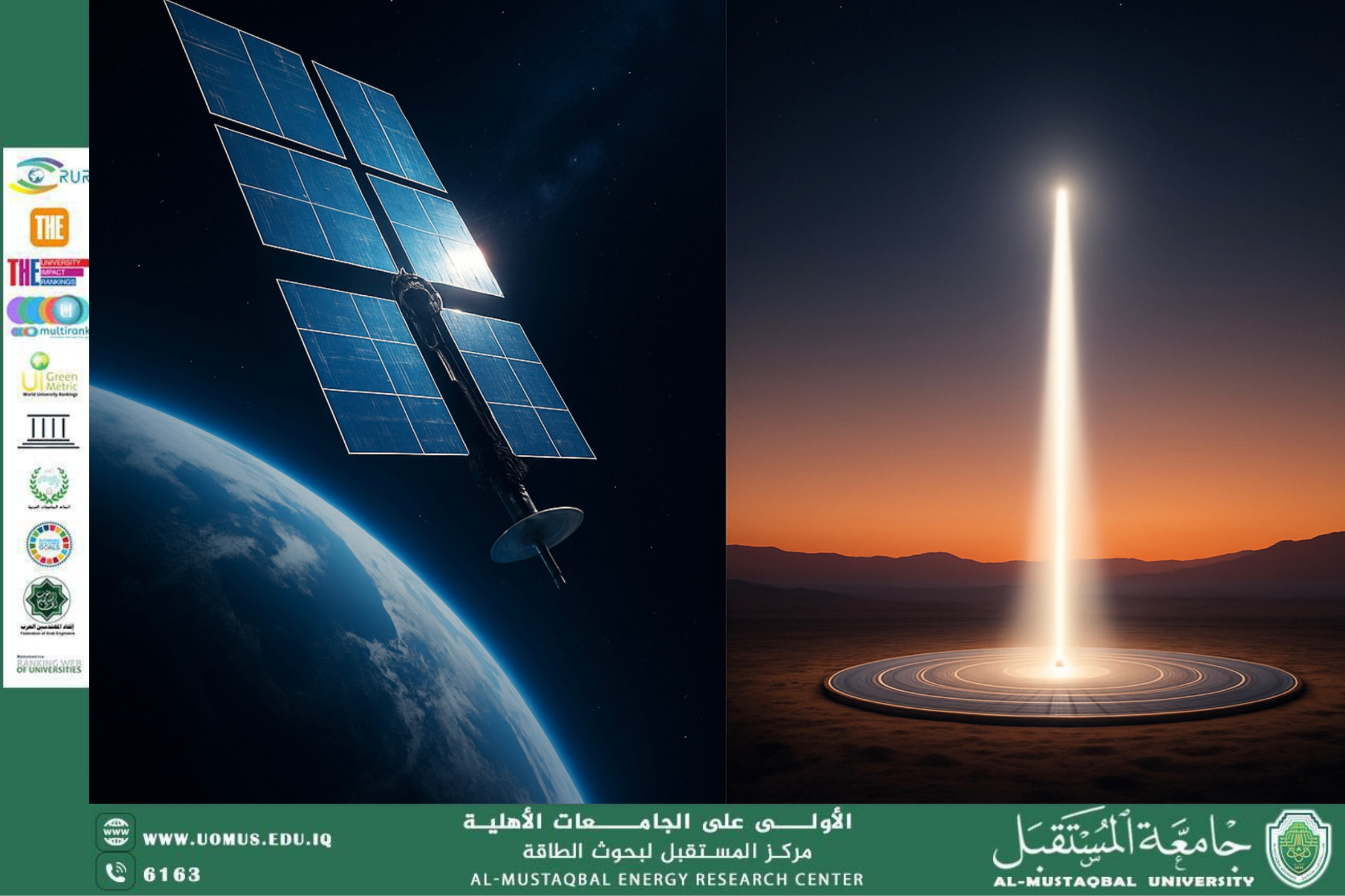
Solar Power from Space: Powerful and Sustainable Knowledge
Advanced technology like Japan, along with private companies in the United States, is developing solar energy technologies that could revolutionize the way we power the world. The idea is to install massive solar panels on cars, where the sun shines, and then convert this energy into solar waves or lasers that are transmitted wirelessly to special receiving stations on Earth, known as rectennas. These waves are then re-processed into electricity ready for use in homes, factories, and cities. Scientific and Technical Implementation • Continuous power around the clock: Satellites reach orbits where the sun shines constantly, so their electricity production is unaffected by night or cloud cover. • Powerful solar energy: Solar power in space is a clear potential and does not reach Earth through the air. • Reducing dependence on Earth: This technology does not require vast areas on Earth and is not weather-sensitive, which calls for attention to other projects. • Successful prototype: In 2023, the Caltech MAPLE system began transmitting ground-based power wirelessly from space to the first center. Older Countries and Entities • Japan (JAXA): Transmitting wireless electricity from outer space by 2025. • China: Including a full-scale solar-powered satellite by 2028. • The United Kingdom and Northrop Grumman (US): Developing space applications and requests. • Startups like Aetherflux: Exploring the use of energy for specific locations, such as disaster zones or areas identified by the disaster. Opportunities and Challenges Solar energy offers the opportunity to distribute electricity fairly and even in remote areas, eliminate carbon emissions, and achieve energy independence easily. However, there are significant challenges: • Dual-use potential: Energy technology can be converted to electrical applications. • Outer space: The increase in satellites could introduce space debris and massive interference with technological monitoring. • Adapting aircraft and lasers to the built environment. • The cost of establishing biodiversity stations.