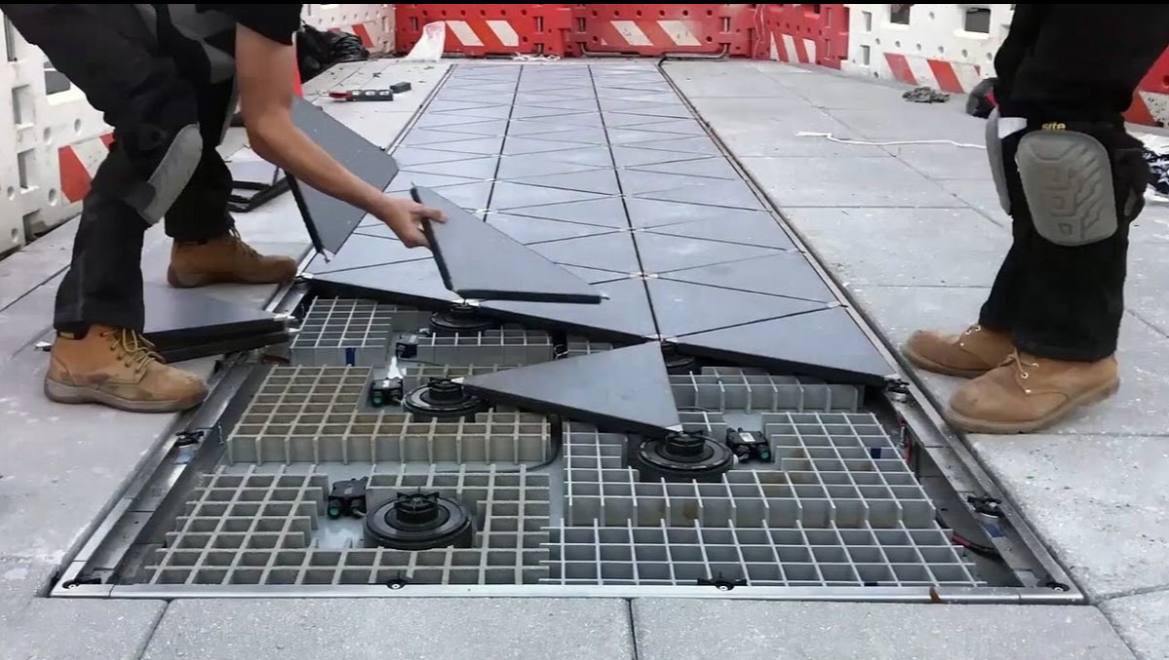
Japan is moving towards renewable electricity on foot
Japan has adopted a traction technology based on piezoelectric tiles, which are smart, efficient tiles that convert electrical progress into energy. Working Time: This technology relies on special devices that generate electricity when subjected to pressure or vibration. As thousands of people walk daily over the magnificent, ever-increasing tracks in train stations or public spaces, their steps become renewable electricity. This energy is then stored in batteries or used directly to power lighting, electronic displays, or store files in microgrids. Examples from Japan: • At Shibuya Station in Tokyo, these tiles were installed in 2008 to generate all the energy needed for the massive trains, as well as display panels and interior lighting. • Similar projects have been implemented on other trains in the capital, positively impacting residents to maximize the benefits of progress. Environmental and Development Actions: This initiative represents a practical example of integrating technology into everyday life, and can be used to: • Those who rely on fossil fuels. • Carbon removal. • Resisting the idea of smart cities. The Future: This technology is expected to expand to include football stadiums, universities, airports, and major centers, including new horizons for smart energy sources in future cities.