Enhancing the International Presence of Al-Mustaqbal University through Sustainable Academic Partnerships
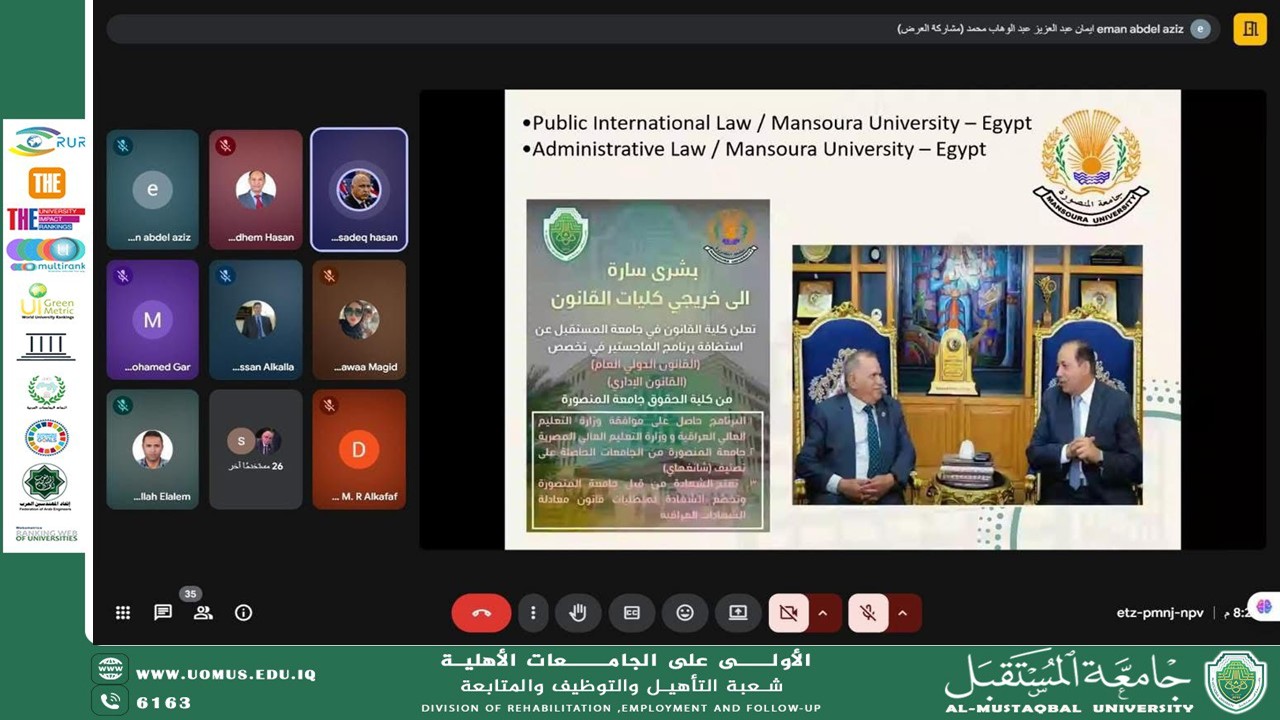
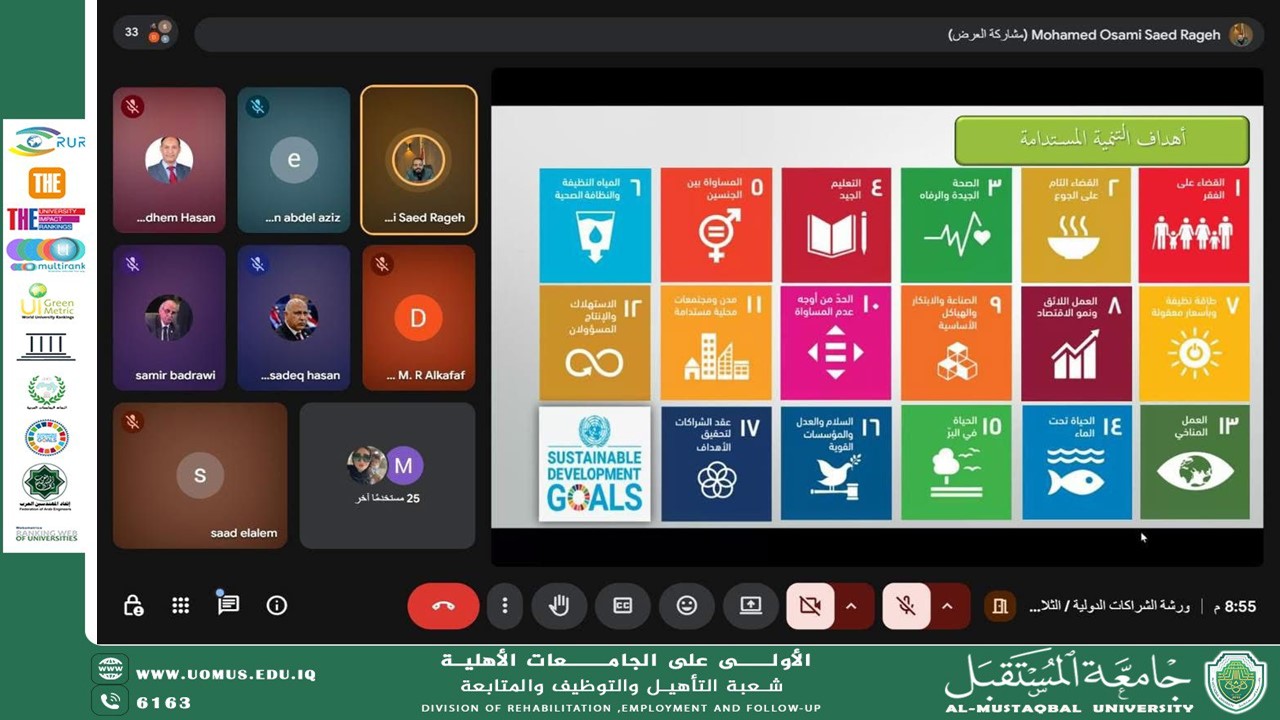
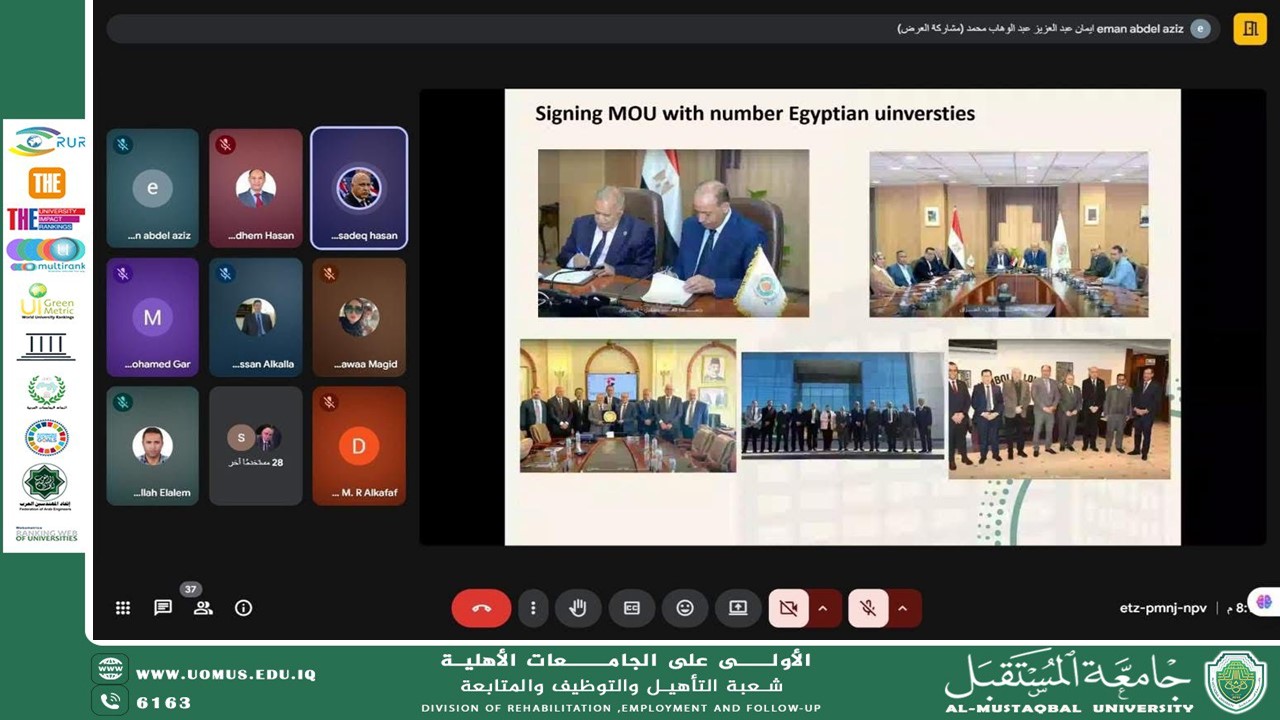
Al-Mustaqbal University organized, under the patronage of its President, Professor Dr. Hassan Shaker Majdi, and in cooperation with Mansoura University, an international workshop titled: “International Academic Partnerships as a Gateway to Achieving Sustainable Development: Leading University Experiences from Iraq and Egypt,” as part of the activities of the Fourth Al-Mustaqbal International Sustainability Week The workshop came within the university’s efforts to expand the horizons of international academic cooperation and exchange expertise, contributing to the achievement of sustainable development goals, particularly Goal 17 related to partnerships The event was held with the participation of the President of Mansoura University, Professor Dr. Sherif Youssef Khater, and under the supervision of Professor Dr. Muzaffar Sadiq Al-Zuhairi, Director of Scientific and Academic Supervision at Al-Mustaqbal University, with the attendance of a distinguished group of academics from Iraq and Egypt. The workshop addressed several key themes focusing on the role of academic partnerships in supporting scientific research and innovation, enhancing knowledge exchange, and presenting leading university models in sustainability The workshop witnessed active scientific contributions from several faculty members of both universities. Presentations were delivered by Professor Dr. Muzaffar Al-Zuhairi, Engineer Khalid Al-Salhi, Head of the Sustainability Division at Al-Mustaqbal University, and Dr. Mohammed Osama Rajeh from Mansoura University. The sessions were moderated by Professor Dr. Iman Abdelaziz The workshop concluded with a set of recommendations emphasizing the importance of expanding joint academic programs, strengthening collaborative scientific research, encouraging the exchange of students and faculty members, and employing digital transformation to develop academic partnerships Through such activities, Al-Mustaqbal University reaffirms its continuous commitment to strengthening its international presence and consolidating its role in supporting sustainable development pathways through education and scientific collaboration
Images Attachments