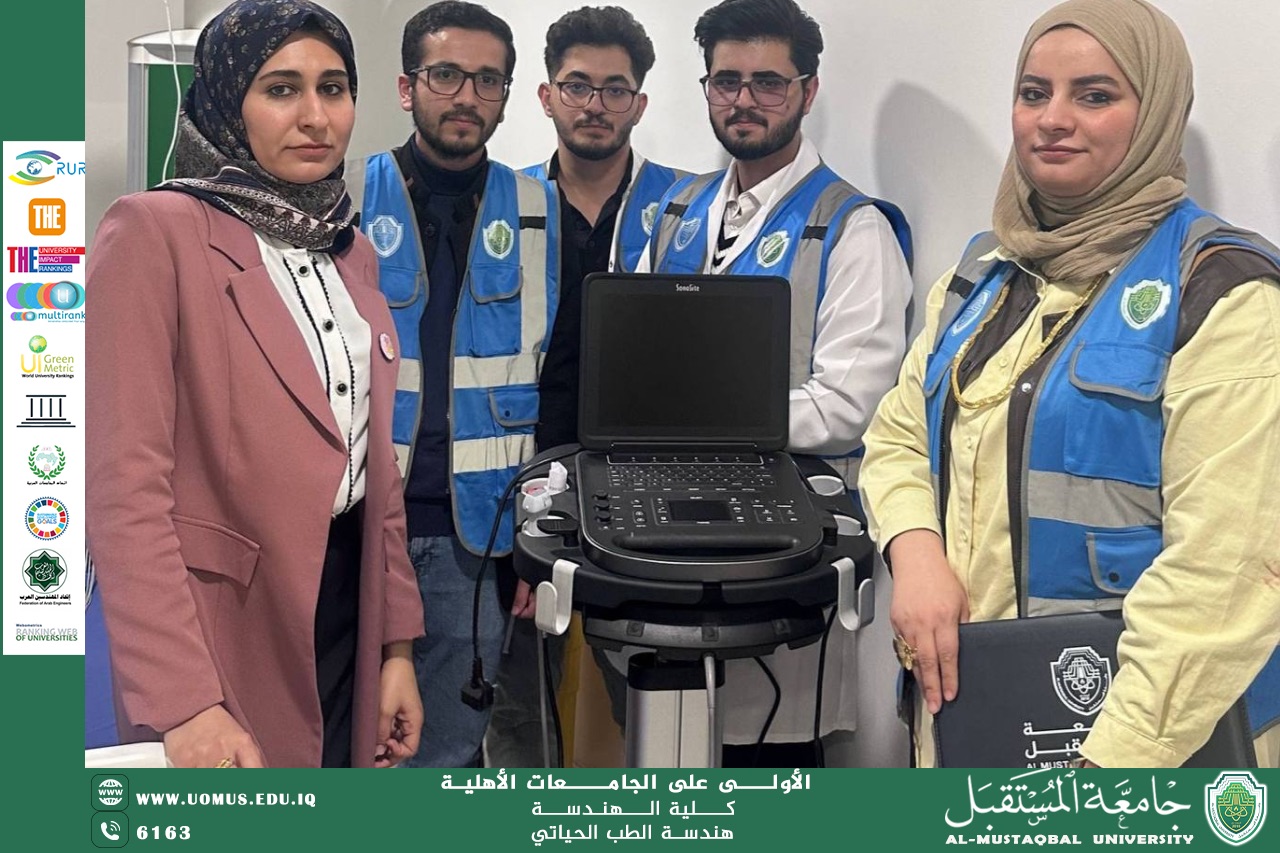


A case study and field analysis entitled “Analysis of the quality of echocardiography in accurately diagnosing heart diseases”
04/01/2026 Share :
A case study and field analysis titled “Echocardiography Quality Analysis in Accurately Diagnosing Heart Diseases,” supervised by M.M. Zainab Sattar Jabbar.
Within the framework of the Sustainable Development Goals (Goal 3), the technical and physical damage resulting from the decline in the quality or accuracy of echocardiography equipment poses a serious threat to public health. For example, poor ultrasound image resolution can severely impair the diagnostic process, leading to the loss of clinical data and impaired cognitive function in assessing the patient's condition. The heart also suffers stress in cases of misdiagnosis, as the inaccurate assessment of valve function increases the risk of heart attacks and strokes. The heart muscle and valves, which act as a filter and pump for the body, are subjected to significant stress and may fail over time due to delays in appropriate surgical or medical intervention. The diagnostic equipment may become compromised due to the absence of regular calibration, making the patient more susceptible to undetected heart diseases and infections. The quality of care becomes compromised as the efficiency and sensitivity of the probe deteriorate, leading to a decrease in the accuracy of basic cardiac ventricle measurements. The risk of diagnostic error, which can lead to sudden cardiac death, remains ever-present—a real threat demanding awareness and engineering caution.
We must not forget the looming danger of inaccurate readings and sudden cardiac death resulting from the poor quality of medical imaging systems.
Future University... Ranked First Among Private Universities