From Eloquence to Administration: The Role of the Arabic Language in Shaping Administrative Thought and Decision-Making
22/01/2026 Share :
Asst. Lect. Ahmed Mohammed Jawad
College of Administrative Sciences – Al-Mustaqbal University
Introduction
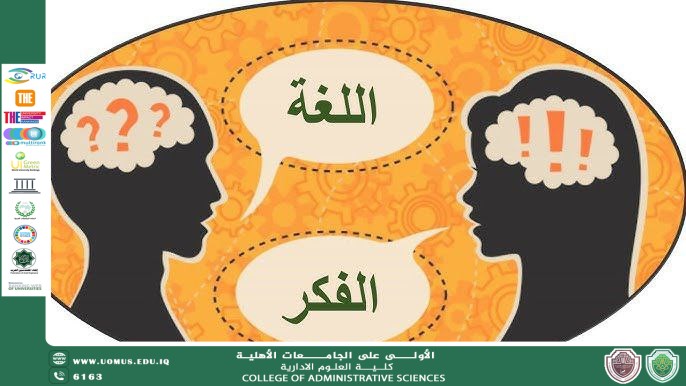
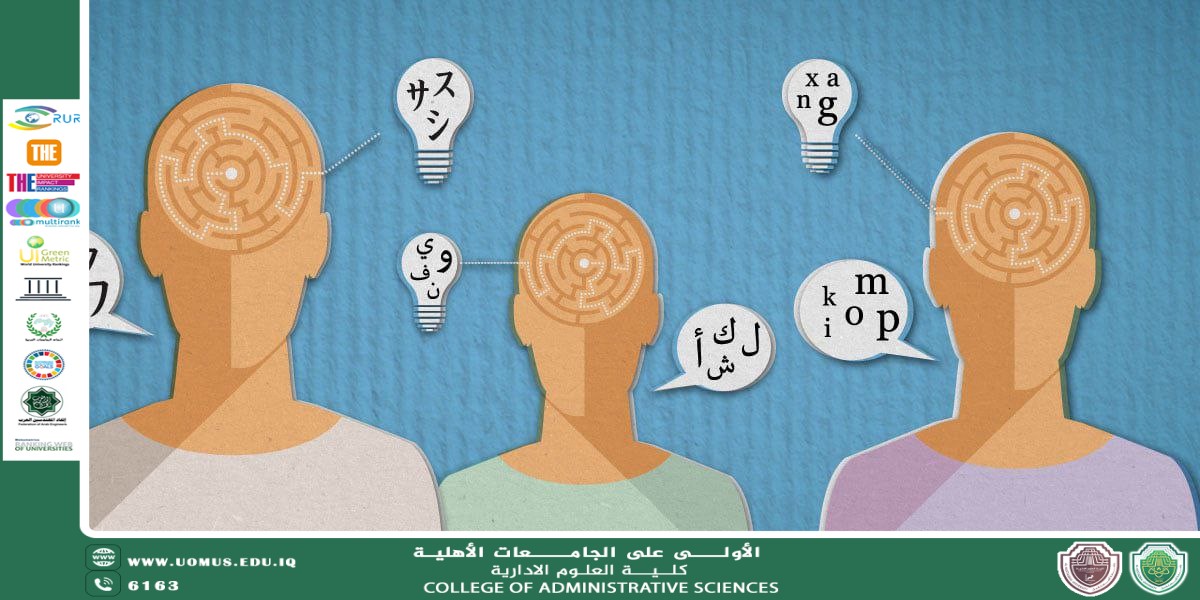
Language is the instrument of thought and the vessel of knowledge; through it, concepts are formed, visions are constructed, and institutions are managed. While administrative sciences are concerned with organizing human and material resources and achieving goals efficiently and effectively, the Arabic language plays a pivotal role in shaping administrative thought, guiding organizational behavior, and making sound decisions. From this perspective, this article seeks to highlight the integrative relationship between the Arabic language and administrative sciences, and to demonstrate the impact of Arabic eloquence on building administrative thought and formulating decisions within institutions.
First: The Arabic Language and the Construction of Administrative Concepts
Administrative thought is not based solely on procedures; rather, it is grounded in concepts and values that are linguistically formulated before being practically applied. Owing to its semantic precision and rich terminology, the Arabic language has contributed to shaping clear administrative concepts such as planning, organization, leadership, control, and accountability.
The ability to distinguish subtle meanings and to frame concepts within a well-structured linguistic context enhances administrative clarity and reduces ambiguity in understanding roles and responsibilities within an organization.
Second: Arabic Eloquence and Its Impact on Administrative Leadership
Leadership is one of the central pillars of administrative sciences, and at its core, it is a communicative practice before being an organizational authority. A successful leader is one who possesses the ability to express ideas clearly, persuade effectively, and build trust through discourse.
The Arabic language has endowed administrative leaders with rhetorical tools and expressive styles that enable them to influence subordinates and motivate them toward achieving shared goals—through clear speech, well-crafted expression, and a balanced style that combines firmness with flexibility.
Third: The Arabic Language and Administrative Decision-Making
The decision-making process passes through multiple stages, beginning with data collection and analysis and ending with the formulation and announcement of the decision. At every stage, language is present as both a tool of thinking and communication.
Precise drafting of administrative reports, clarity in memoranda and official correspondence, and careful selection of wording when presenting alternatives and outcomes all directly affect the quality of decisions made. Hence, mastery of the Arabic language contributes to reducing misunderstandings, limiting misinterpretation, and enhancing administrative rationality.
Fourth: The Arabic Language and Institutional Identity
Administration cannot be separated from the cultural context in which it operates. The Arabic language represents a fundamental element in building institutional identity within Arab societies and contributes to strengthening organizational belonging and loyalty.
Adopting sound administrative language in correspondence, regulations, and strategic plans reflects a professional image of the institution, affirms respect for its culture and identity, and enhances trust between the institution and the society it serves.
Fifth: Challenges and Prospects for Integration between Arabic and Administrative Sciences
Despite the importance of the Arabic language in the administrative field, several challenges hinder this integration, most notably the prevalence of literal translations of foreign administrative terminology and the limited attention given to language in administrative academic programs.
However, these challenges open broad prospects for developing Arabic administrative discourse through scientifically accurate Arabization of terminology and enhancing administrative writing and communication skills among students and administrative leaders.
Conclusion
It is evident that the relationship between the Arabic language and administrative sciences is one of integration rather than separation. Language contributes to shaping administrative thought, guiding leadership, supporting decision-making, and consolidating institutional identity. Therefore, caring for the Arabic language is not a linguistic luxury, but a scientific and professional necessity that contributes to improving administrative performance and achieving sustainable institutional development.