
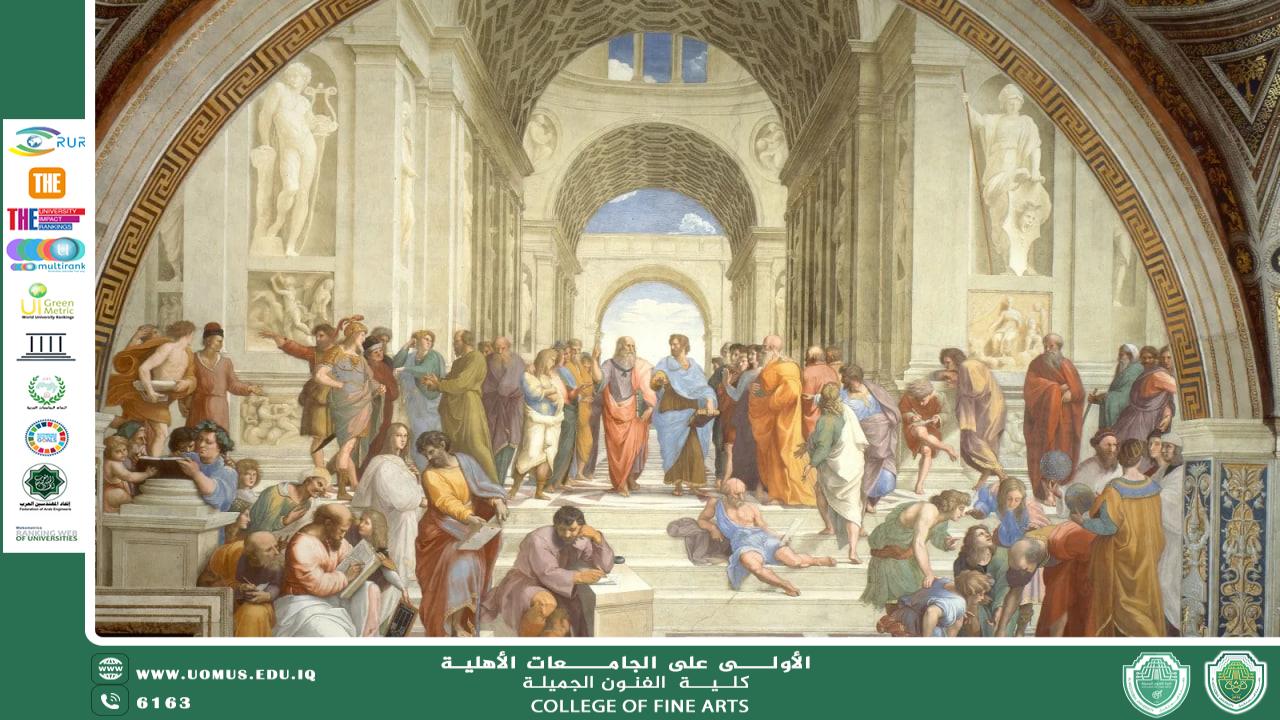
The School of Athens: How Raphael’s Painting Transcended the Limits of Imagination
24/01/2026 Share :
The School of Athens by the Italian artist Raphael is considered one of the greatest masterpieces of the Renaissance, not only for its visual beauty but for its profound philosophical depth. Through this work, Raphael transcended the limits of artistic imagination, merging philosophy, science, and art into a single scene that reflects the peak of human intellectual maturity. The painting has received extensive scholarly attention due to its rich symbolism and timeless intellectual significance .
Historical and Artistic Context
Painted between 1509 and 1511 as part of the Vatican Palace frescoes, The School of Athens emerged during the height of the Renaissance. This period was marked by a revival of classical Greek philosophy and its integration into contemporary human thought. Raphael transformed the painting into a visual dialogue between different historical eras, bringing together thinkers from various philosophical schools within a harmonious and monumental architectural setting .
Philosophical Vision and the Limits of Imagination
The painting depicts a symbolic gathering of great Greek philosophers, led by Plato and Aristotle, engaged in a dialogue about knowledge, existence, and truth. Raphael went beyond conventional imagination by uniting figures who never lived at the same time, creating a timeless intellectual interaction. This imaginative yet intellectually precise approach granted the painting its enduring universal value .
Artistic Style and Visual Symbolism
The composition is characterized by a balanced geometric structure and deep perspective, giving the viewer a sense of spatial harmony. Raphael employed gestures and body language to express the diversity of philosophical approaches, turning each figure into a symbol of a distinct school of thought. Visual beauty was not an end in itself, but a means of conveying a message that human knowledge is a cumulative and shared achievement across civilizations .
Humanistic and Intellectual Significance
The lasting importance of The School of Athens lies in its celebration of the human mind and its capacity for dialogue and critical thinking. The painting is not merely a reflection of the past, but a timeless visual discourse that emphasizes the value of science and philosophy as foundations for societal progress. This enduring relevance has made the work a continuous source of inspiration for artists, scholars, and thinkers worldwide .
Almustaqbal University, The First University in Iraq.
الهدف الرابع (التعليم الجيد)