
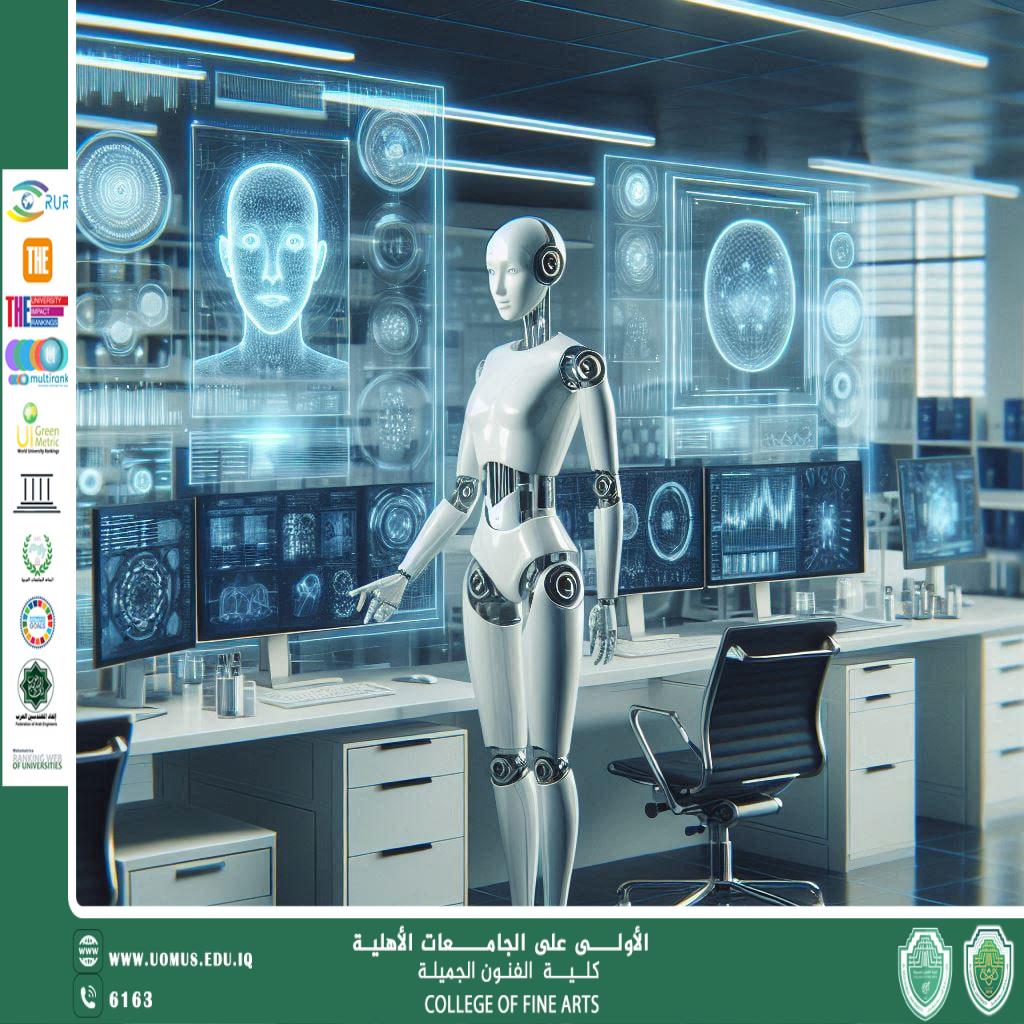
Artificial Intelligence and Scientific Research
31/01/2026 Share :
In recent decades, the world has witnessed rapid advancements in artificial intelligence technologies, leading to a profound transformation across various fields, particularly in scientific research. Researchers no longer rely solely on human effort for data collection and analysis; instead, artificial intelligence has become a key partner in knowledge production and the acceleration of scientific discoveries.
The Concept of Artificial Intelligence and Its Role in Scientific Research
Artificial intelligence refers to the ability of computer systems to simulate certain functions of the human mind, such as learning, reasoning, and decision-making. In scientific research, AI is used to analyze vast amounts of data, uncover hidden patterns, and provide accurate predictions that support research decision-making.
Accelerating Research and Discovery
Artificial intelligence significantly reduces the time required to conduct scientific research by automating several stages, including literature review, source organization, and data analysis. It has also contributed to accelerating drug discovery, predicting natural phenomena, and designing scientific experiments more efficiently.
Improving Accuracy and Quality of Results
AI technologies are characterized by their high capability to process data with great precision, thereby reducing potential human errors. Intelligent algorithms are employed to validate hypotheses, detect inconsistencies, and enhance predictive models, which strengthens the reliability and quality of scientific outcomes.
Supporting Interdisciplinary Research
Artificial intelligence plays a vital role in bridging different disciplines such as medicine, engineering, social sciences, and the arts. By providing shared analytical tools, it facilitates data exchange and knowledge integration, leading to innovative solutions for complex problems that require interdisciplinary collaboration.
The Role of Artificial Intelligence in Education and Academic Research
Within academic institutions, AI is utilized to support students and researchers in writing scientific papers, analyzing statistical data, selecting appropriate journals for publication, and detecting academic plagiarism. It also contributes to developing researchers’ skills and enabling them to use advanced digital tools.
Ethical and Scientific Challenges
Despite its significant benefits, the use of artificial intelligence raises important ethical and scientific challenges, including privacy protection, research integrity, algorithmic bias, and preserving the human role in scientific thinking. Therefore, the application of AI requires clear legal and ethical frameworks to regulate its use in scientific research.
Conclusion
Artificial intelligence represents a genuine revolution in scientific research, contributing to faster discoveries, improved quality of results, and enhanced interdisciplinary collaboration. Nevertheless, maintaining a balance between leveraging these advanced technologies and upholding scientific and ethical values remains essential to ensure a sustainable and responsible research future.
Almustaqbal University, The First University in Iraq.
الهدف الرابع (التعليم الجيد)