Breastfeeding in the First Hours: Scientific Evidence vs. Traditional Practices
01/02/2026 Share :
The first hours following childbirth, scientifically referred to as the "Golden Hour," represent the most critical and influential stage in the lives of both the newborn and the mother. During this window of time, modern evidence-based science encounters traditional practices passed down through generations, placing midwifery nursing at the forefront of the challenge to educate families and provide optimal care.
1. Skin-to-Skin Contact: Science Speaks
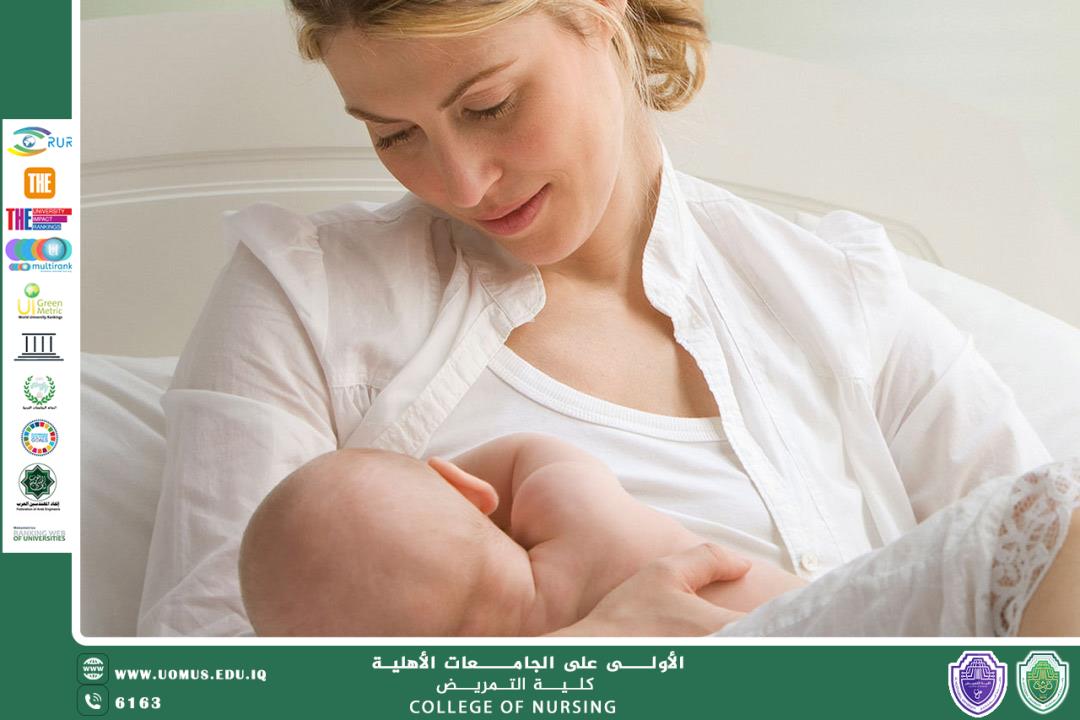
• Scientific Evidence: Studies confirm that placing the newborn naked on the mother's chest immediately after birth helps regulate the infant's heart rate, temperature, and blood sugar levels.
• It also stimulates the release of "Oxytocin," which enhances milk flow and reduces postpartum hemorrhage for the mother.
• Traditional Practices: In some cultures, it is believed that the baby must be bathed immediately and wrapped in layers of cloth before being given to the mother, which can cause thermal shock to the newborn and delay the initiation of breastfeeding.
2. Colostrum: "The First Vaccine"
• Scientific Evidence: Science proves that "Colostrum" (the thick yellow milk produced in the first days) is extremely rich in antibodies and proteins that build a protective barrier in the infant's intestines.
• It is not merely food, but a comprehensive immune system.
• Traditional Practices: A misconception prevails in some societies that this milk is "old" or "heavy" for the baby's stomach. Some may resort to discarding it and replacing it with sugar water or herbs, depriving the child of irreplaceable immune protection.
3. On-Demand Feeding vs. Scheduled Feeding
• Scientific Evidence: The World Health Organization supports "on-demand feeding" because the infant's stomach is very small and empties quickly. Furthermore, frequent suckling is the primary stimulus for increasing milk production.
• Traditional Practices: Grandmothers may impose a strict schedule (e.g., every 3 hours), which can lead to prolonged crying for the infant or decreased milk supply for the mother due to lack of stimulation.
4. The Midwife's Role in Bridging the Gap
The nurse acts as the link between science and the family through:
• Prenatal Education: Correcting misconceptions held by the mother and her family regarding sugary fluids and colostrum.
• Clinical Support: Assisting the mother with proper breastfeeding positions during the first hour to ensure a "proper latch".
• Psychological Empowerment: Enhancing the mother's confidence in her body and her ability to satisfy her child without the need for external supplements.
Conclusion
Success in initiating breastfeeding during the first hours is not just a biological practice; it is a medical decision based on strong evidence. By replacing harmful traditional habits with conscious scientific practices, we ensure not only the healthy physical growth of the newborn but also the construction of a strong emotional bond that lasts a lifetime.
University of Al-Mustaqbal – The First University in Iraq
الهدف الثالث من اهداف التنمية المستدامة -الصحة الجيدة والرفاه