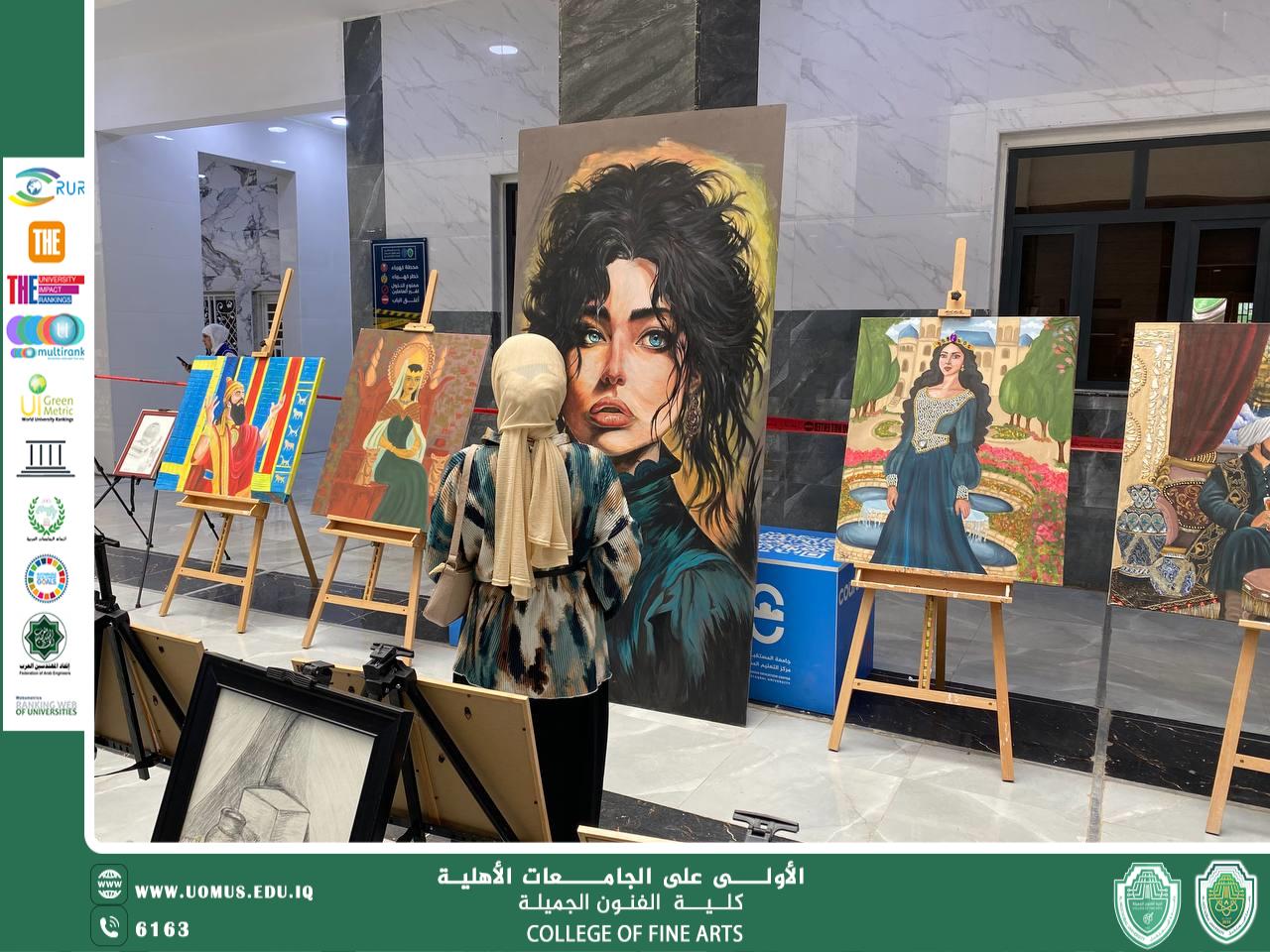

Aesthetic Experience and Artistic Experience
01/02/2026 Share :
Experience is a broad personal practice that encompasses enjoyment of anything, whether natural or artistic. Aesthetic experience focuses on emotional and sensory interaction with beauty, whereas artistic experience centers on engagement with a creative work produced by humans. Artistic experience involves awareness of the artist’s intention and the use of artistic principles, elements, and composition, carrying deeper meanings that usually require training, understanding, analysis, and comparison, and thus move away from pure spontaneity.
The artwork represents a part of the aesthetic experience; however, aesthetic experience is broader than art itself. It may arise through nature and sensory phenomena, while some artistic experiences may fail to be fully aesthetic if the viewer neglects the formal and expressive qualities of the work.
Several factors contribute to the maturation of both aesthetic and artistic experiences. Aesthetic experience extends widely to include landscapes, music, literature, and all manifestations of beauty, whereas artistic experience is confined to artworks such as paintings, sculptures, music, and theater. Aesthetic experience relies on emotional and intuitive responses and may be spontaneous, while artistic experience requires recognition of human creation and analysis of artistic intent, form, color, and composition.
The goal of aesthetic experience is the enjoyment of beauty for its own sake, regardless of practical benefit or human intention. Artistic experience, on the other hand, aims at deeper understanding and appreciation of creative and intellectual value, often involving continuous exploration of meaning. Aesthetic experience is characterized by fascination, immersion, and unity with the object, while artistic experience involves structural awareness, symbolism, and interaction between imagination and understanding.
Aesthetic experience differs from practical experience in that it does not pursue a future goal; rather, consciousness remains focused on the object itself. Many thinkers emphasize immersion in immediate perception, leading to the description of aesthetic experience as timeless, centered on the present moment.
Nevertheless, this does not negate temporal awareness within aesthetic experience, especially in time-based arts such as music, drama, literature, and cinema. In these forms, moments of experience are closely interconnected, relying on memory and anticipation to achieve unity and meaning within the artwork.
Visual arts also embody temporality through rhythm and movement within the image. Movement is achieved through line direction, light and shadow, and compositional relationships, creating a dynamic and unified aesthetic experience even in seemingly static works.
Theories of aesthetic experience thus extend beyond art appreciation to define fine art itself and distinguish it from utilitarian art and natural objects. Aesthetic perception is not limited to artworks but includes nature, though artistic beauty differs fundamentally as it reflects the artist’s vision rather than nature as it exists.
Human engagement with art and beauty dates back to the earliest stages of civilization, when organizing life and crafting tools represented early artistic expressions. Aesthetic experience therefore constitutes an existential necessity and social function, contributing to psychological balance and the development of aesthetic awareness, and ultimately leading to the emergence of aesthetics as an independent field of knowledge.
Art plays a vital role in purifying emotions and achieving ethical and psychological balance, as exemplified in tragedy and comedy, confirming that aesthetic experience is not a luxury but an essential human need.
Almustaqbal University, The First University in Iraq.