The Death of Rote Learning: Why Traditional Teaching Methods Have Failed in the Age of Information Explosion
02/02/2026 Share :
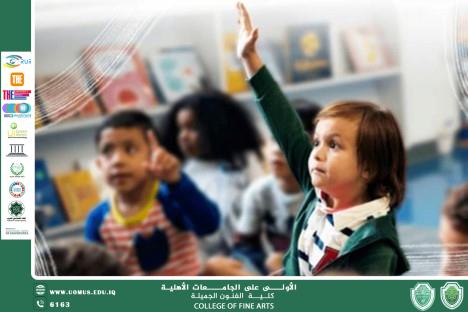
For decades, education was designed according to a factory-like model in which the teacher stood at the front of the classroom as the sole source of knowledge, while students assumed the role of passive recipients. This model, known as rote learning, is no longer merely outdated; it has become a serious obstacle to progress. In an era where thousands of books, lectures, and learning platforms are available at the click of a button, the key question is no longer what the information is, but how it can be used and transformed into meaningful knowledge and action.
The Information Explosion and the End of Rote Learning
In the past, information was scarce, and the teacher’s role was to transmit it. Today, humanity lives in an age of unprecedented information growth, where knowledge doubles at an accelerating rate. This reality has rendered rote learning ineffective for several reasons, most notably the rapid obsolescence of information, which may become outdated before students graduate. Furthermore, the widespread availability of information through search engines and artificial intelligence has diminished the value of mere transmission, while the cognitive patterns of digital generations struggle to engage with long, one-way lectures based on memorization.
Rote Learning and the Suppression of 21st-Century Skills
Traditional teaching methods focus primarily on memorization, while modern life and labor markets demand far more complex skills. Rote learning weakens critical thinking by telling students what to think instead of teaching them how to analyze, question, and evaluate. It also limits problem-solving abilities by presenting ready-made answers that fail to reflect the complexity of real-world challenges, which rarely have a single correct solution. Moreover, creativity suffers in rigid educational environments that restrict exploration and experimentation.
From Teaching to Learning
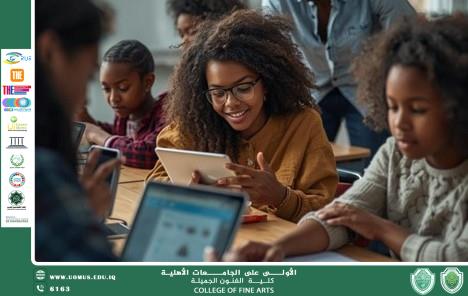
The failure of rote learning has led to the emergence of alternative educational models that have proven effective. Project-based learning encourages students to seek knowledge in order to solve real problems, while inquiry-based learning begins with questions rather than answers, transforming the teacher into a facilitator rather than a transmitter of information. Artificial intelligence has also emerged as a powerful supportive tool, enabling personalized learning experiences that adapt to each student’s pace and abilities.
Escaping the Trap of Rote Learning
Transitioning from a rote-based environment to a thinking-centered one requires rethinking the types of questions asked, replacing memorization-based prompts with analytical and interpretive inquiries. Students must also be given space to make mistakes, as genuine learning thrives on experimentation and trial rather than fear of failure. This shift further requires transforming the classroom into a space for dialogue, discussion, and debate, rather than silent listening.
Conclusion
It is often said that a teacher who can be replaced by a machine deserves to be replaced. While artificial intelligence can transmit information more efficiently than humans, it cannot inspire students, ignite passion, or shape character. The death of rote learning does not signal the end of the teacher’s role; rather, it marks the beginning of the teacher’s true mission as an architect of minds and a catalyst for creativity, not merely a human recording device.
Almustaqbal University, The First University in Iraq.
الهدف الرابع (التعليم الجيد)