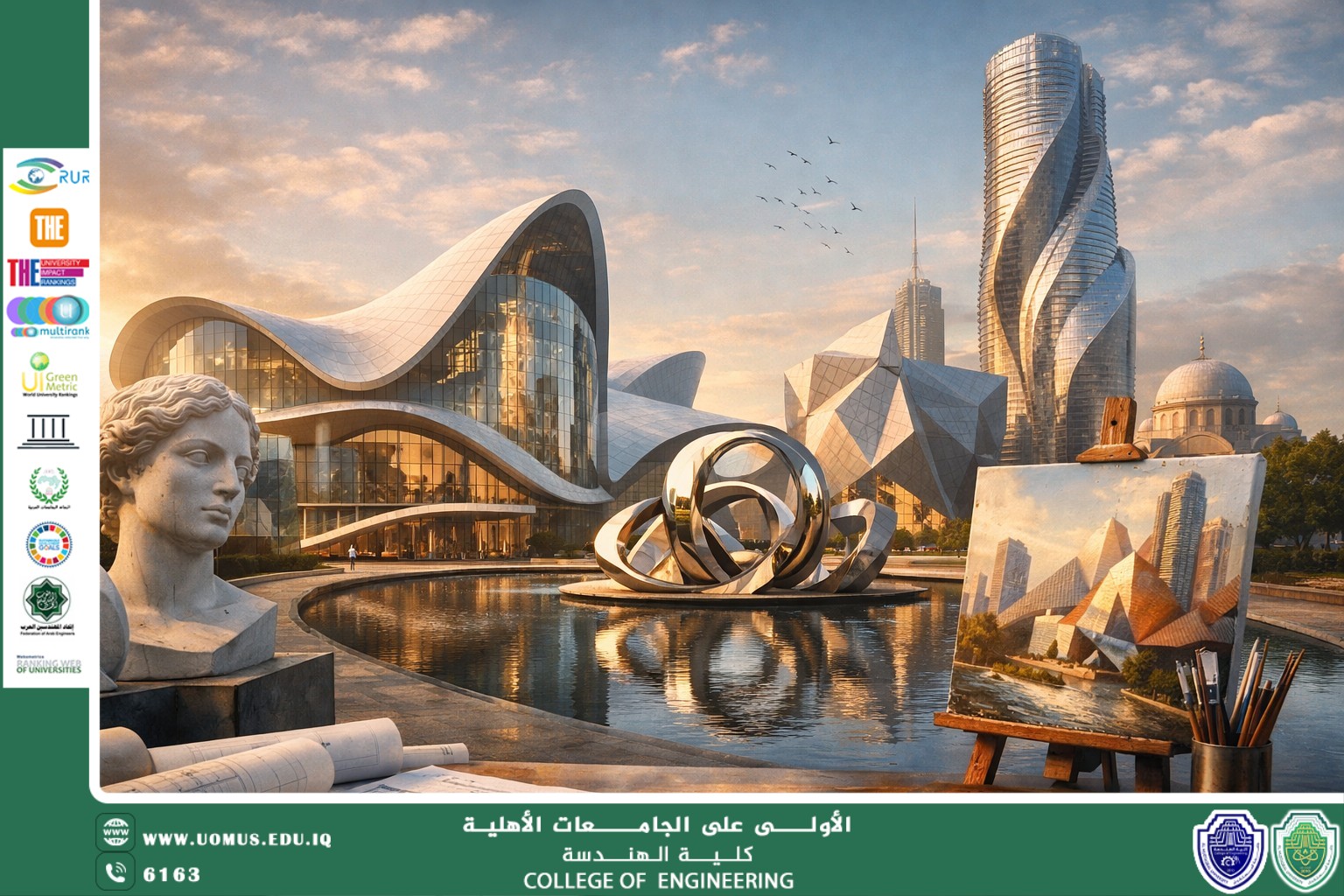

Architecture as a Visual Art: An Analysis of the Aesthetic Dimension of Architectural Design By: Raghda Safaa
06/01/2026 Share :
Architecture is considered one of the oldest human arts and among the most influential on both the environment and human life. It is not merely the construction of a shelter or structure; rather, it is a visual language that communicates with people through forms, lines, and spaces. Architecture can be viewed as a visual art based on aesthetics and the balance between form and function, making architectural design a sensory experience that goes beyond its functional needs.
The Aesthetic Dimension of Architecture
Beauty in architecture is not merely superficial decoration; it is a harmony between form, function, and the surrounding space. The architect creates a complete visual experience using light and shadow, colors, materials, and architectural lines. Every element of a building carries an aesthetic message that reflects the architect’s artistic vision, making architecture resemble a visual poem that touches the senses and influences individuals’ psychological mood.
The Relationship Between Art and Architectural Design
Architecture and art share the ability to express the cultural and historical identity of societies. Historical buildings, such as Gothic cathedrals or Islamic mosques, were not merely functional structures but carefully crafted artistic works that embodied the spiritual and aesthetic values of their time. In contemporary architecture, designers draw inspiration from visual arts, painting, and sculpture to add an innovative visual dimension to buildings, making them an artistic experience that goes beyond traditional functionality.
Architecture as a Means of Visual Communication
Architecture can serve as a means of communication with the public, conveying intellectual and cultural messages through symbols and forms. The visual design of buildings, through the selection of facades, proportions, and compositions, allows designers to express national identity or the social values of a community. This visual dimension makes architecture an art that transcends linguistic boundaries and directly reaches the sensory perception of the viewer.
Technology and Art in Contemporary Architecture
With technological advancement, it has become possible to integrate digital art with architectural design, creating new possibilities for producing interactive and visually flexible buildings. Three-dimensional display technologies and digital modeling have enabled designers to achieve their artistic visions with greater precision while maintaining the functional purposes of the building, making contemporary architecture both a sensory and artistic experience.
Architecture as a visual art confirms that beauty and function can integrate to produce spaces that engage both the mind and the senses simultaneously. It is not merely about structures, but rather a sensory and aesthetic experience that reflects art in all its dimensions. Understanding architecture from this perspective transforms buildings into continuous artistic works that influence daily human life and enrich the urban environment with meaning and beauty.
Reference
Francis D.K. Ching, Architecture: Form, Space, and Order, Wiley Publishing.
Christian Norberg-Schulz, Genius Loci: Towards a Phenomenology of Architecture, Academy Editions.
Le Corbusier, Towards a New Architecture, Architectural Press.
Kenneth Frampton, Modern Architecture: A Critical History, Thames & Hudson.
UNESCO, Architecture and Cultural Heritage and Their Role in Sustainable Urban Development.
University of Al-Mustaqbal – the first university in Iraq