
Interior Design in Roman Civilization By Dr. Asrar Samandar
09/02/2026 Share :
Interior design in Roman civilization represents one of the most significant transformations in the history of architecture, as interior space evolved from a purely functional element into an integrated system combining aesthetics, comfort, and social organization. The Romans developed advanced structural and decorative techniques that turned interior spaces into clear expressions of state power and cultural prosperity. Although Roman architecture was influenced by Greek civilization, it was not merely an extension of it; rather, it established a distinct architectural identity that focused more on public and secular buildings than religious ones, a fact clearly reflected in the design of interior spaces that embodied the social, political, and cultural dimensions of the Roman state.
Environmental conditions and available building materials in Italy played a major role in shaping interior design solutions. The diverse climate required flexible architectural treatments, leading the Romans to use not only stone but also brick, terracotta, and tiles. Their most significant innovation was Roman concrete, which enabled the creation of vast interior spaces later clad in marble to achieve a luxurious aesthetic. The Romans also introduced arches and vaults and developed column systems by adding the Tuscan and Composite orders to the classical Greek styles.
Public spaces had a profound influence on Roman interior design thinking. The Colosseum stands as a clear example, with its oval interior structure, multiple levels, and seating arrangement based on social classes, reflecting an advanced design awareness linking architecture to society. Basilicas formed the core of civic spaces through their rectangular plans and colonnaded aisles, later influencing the development of Christian church architecture. In temples, particularly the Pantheon, interior design reached its peak through the central dome and oculus, transforming natural light into a symbolic design element that connected humans with the heavens.
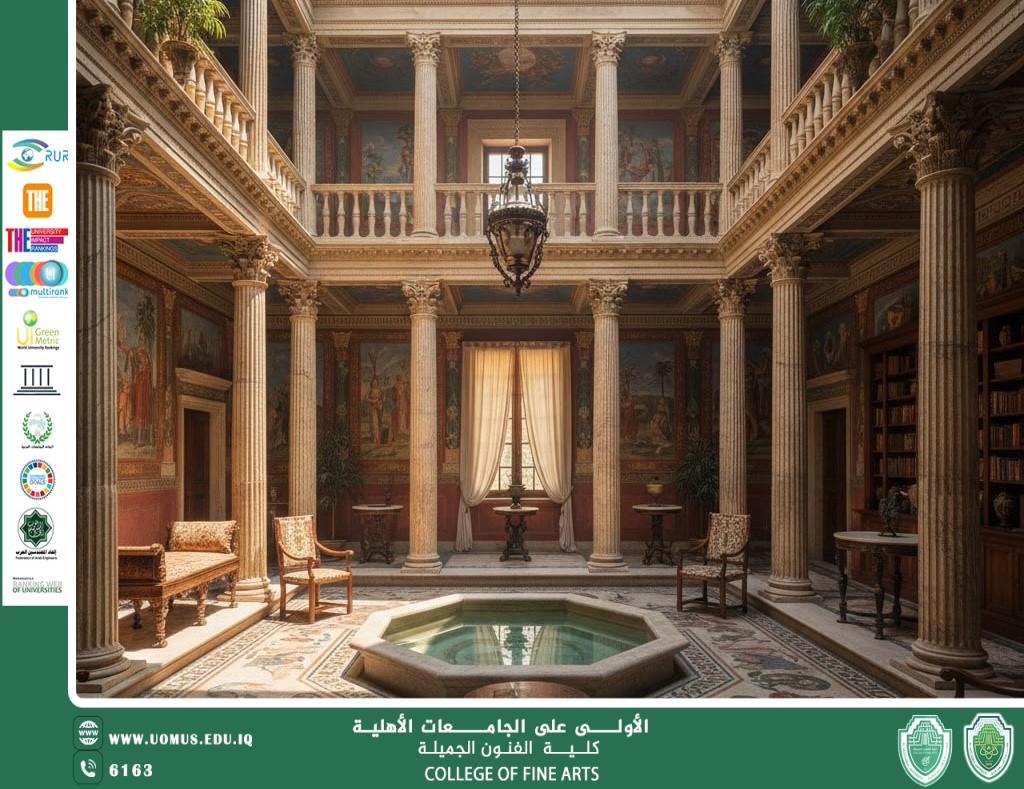
Roman houses were designed as social spaces reflecting the status and role of the family. The house was organized around a central courtyard surrounded by columns, with rooms distributed around it in a deliberate manner. Wall paintings depicting nature, mosaic floors, glass windows, and bronze lighting fixtures were widely used. The central hall served as the social and political heart of the household and received the greatest decorative attention.
Furniture and interior fittings were crafted from wood, stone, and bronze, often embellished with ivory and silver. Long couches, oil lamps, statues, and interior fountains contributed to a comprehensive interior environment that balanced beauty and function. Thus, Roman interior design was not merely decorative but a complete intellectual system reflecting social organization, technological advancement, and aesthetic awareness, laying a foundational influence on the development of Western architecture.
Almustaqbal University, The First University in Iraq.
الهدف 11 – المدن و المجتمعات المستدامة