The Mind in Times of War: Psychology of Trauma and Mechanisms for Building Psychological Resilience
24/03/2026 Share :
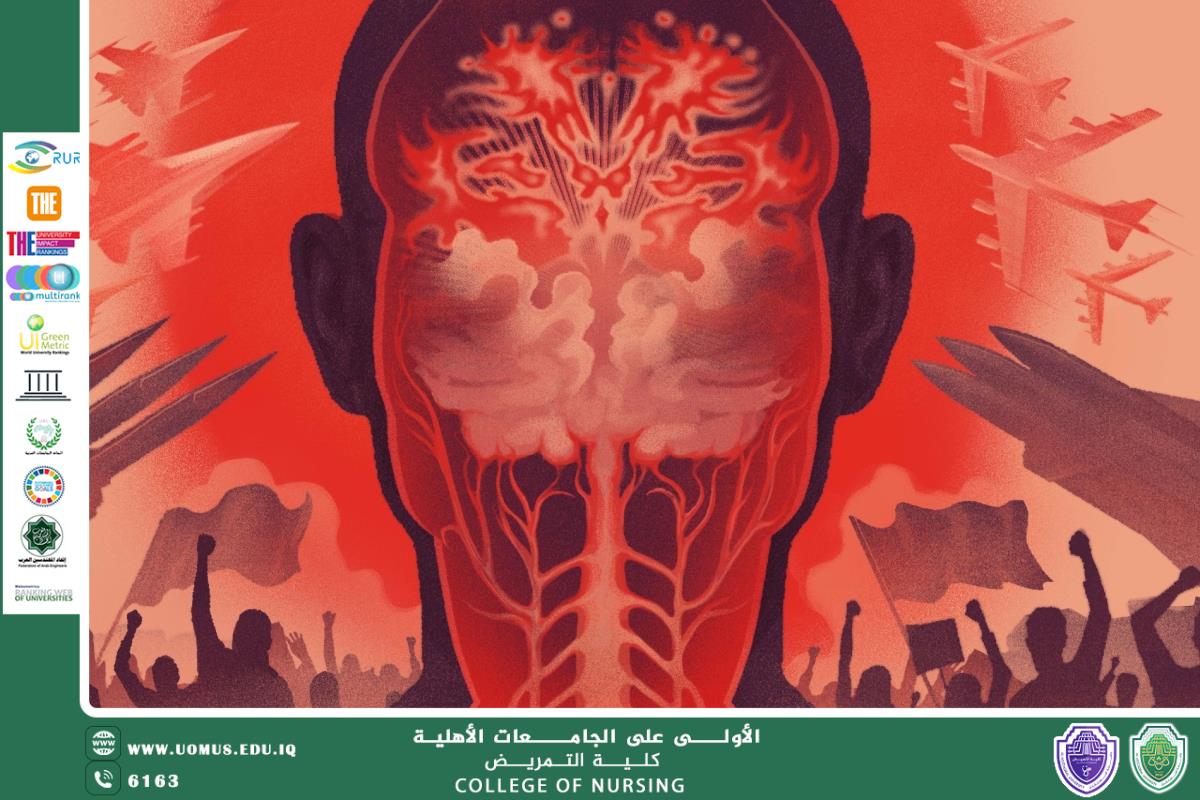
Wars are among the harshest human experiences. Their destruction is not limited to infrastructure; it extends to shattering the psychological structure of individuals and societies. From a nursing and medical perspective, “wounds of the soul” are seen as invisible injuries that require proactive intervention and a deep understanding of coping mechanisms.
First: Psychological Effects of War (Clinical Impact)
When exposed to armed conflict, the nervous system enters a state of constant alertness, leading to several disorders, most notably:
Post-Traumatic Stress Disorder (PTSD): Characterized by flashbacks, avoidance behaviors, and hyperarousal.
Generalized Anxiety and Depression: Resulting from loss of safety, loss of loved ones, and forced displacement.
Psychosomatic Symptoms: Psychological stress manifests as physical pain such as chronic headaches, digestive disorders, and rapid heart rate—symptoms often observed by nurses in shelters.
Second: Psychological Resilience
Resilience is not the absence of distress, but the ability to recover and grow despite adversity. In nursing settings, resilience is strengthened through evidence-based models that include:
Cognitive Flexibility: Reframing catastrophic thoughts and focusing on what can be controlled.
Social Support: Activating community support networks that act as buffers against trauma.
Meaning and Purpose: The individual’s ability to find a role or purpose (such as volunteering or helping others), which significantly protects mental health.
Third: The Role of Nursing Staff in Times of War
Nursing professionals carry a crucial role that goes beyond physical first aid to include Psychological First Aid (PFA), summarized in three steps:
Look: Identify individuals experiencing acute stress reactions.
Listen: Provide non-judgmental support and allow individuals to express their feelings.
Link: Connect individuals to specialized psychological services and social support resources.
Fourth: Practical Strategies to Build Psychological Immunity
To maintain psychological balance during crises, the following are recommended:
Limit News Consumption: To protect against secondary trauma caused by constant exposure to distressing events.
Maintain Daily Routines: Engaging in simple routine activities helps restore a sense of control and order.
Practice Breathing and Emotional Release Techniques: To reduce the activity of the sympathetic nervous system responsible for the “fight or flight” response.
Conclusion:
War imposes a harsh reality, but a “resilient mind” can navigate through the ruins. As students and faculty in nursing colleges, we bear the responsibility of raising awareness that mental health is not a luxury—it is the foundation for survival and reconstruction.
الهدف الثالث من اهداف التنمية المستدامة -الصحة الجيدة والرفاه