City Design as a Work of Art and Al-Shawi’s Vision in Urban Spaces Dr. Asrar Samandar Al-Moussawi
24/03/2026 Share :
City design is one of the most prominent fields where art intersects with engineering sciences, transforming urban spaces into visual and functional expressions that reflect the identity and culture of society. In this context, the work of Midhat Ali Al-Shawi emerges as an early model for understanding the city as an integrated work of art, moving beyond traditional planning toward a comprehensive design vision.
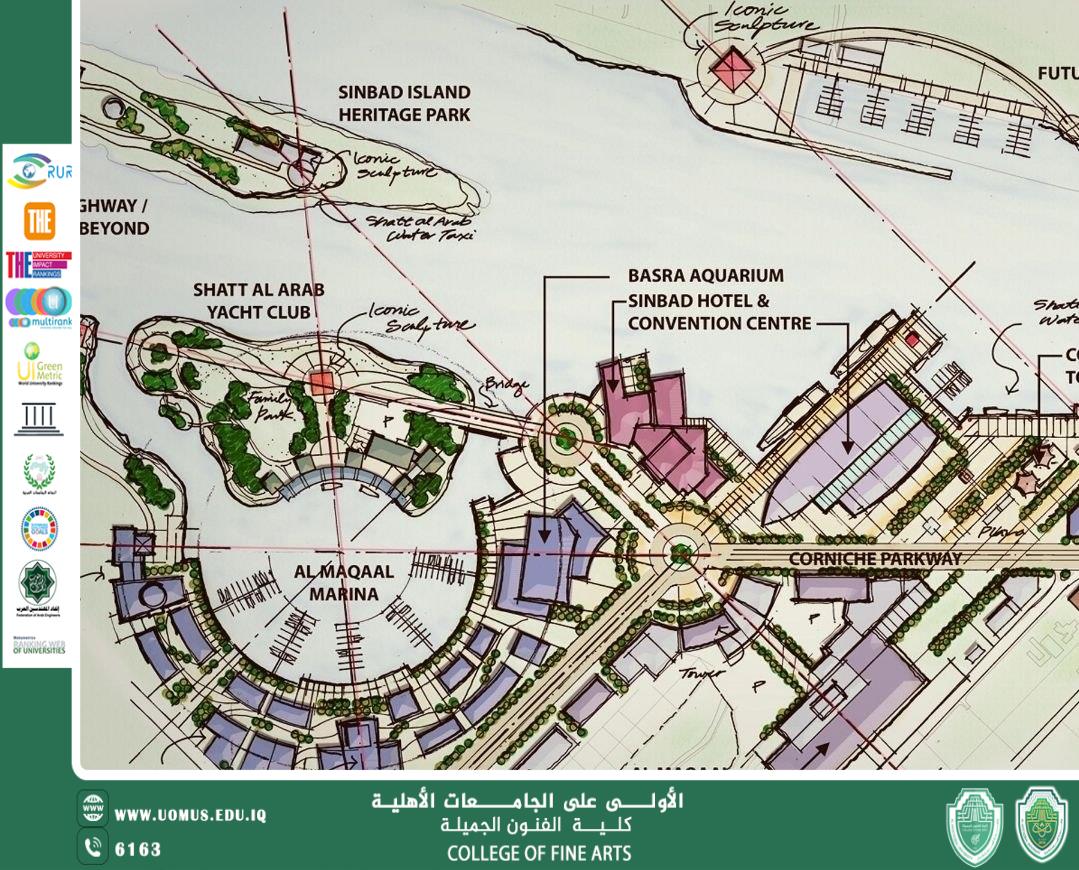
Al-Shawi’s work became particularly evident during the 1950s and 1960s, a period that witnessed significant urban development in Basra, especially in the Al-Maqal area. At that time, he served as a municipal engineer in Basra, supervising several urban planning projects and organizing urban spaces.
Al-Shawi’s approach was based on achieving a balance between function and aesthetics. The city, in his view, was not merely a network of streets and buildings, but a compositional system in which masses and voids harmonize. He organized urban spaces to ensure fluid movement while simultaneously creating a visual rhythm that enhances the user’s experience. This approach reflects an artistic awareness closely related to principles of composition in fine arts, treating the city as a living canvas.
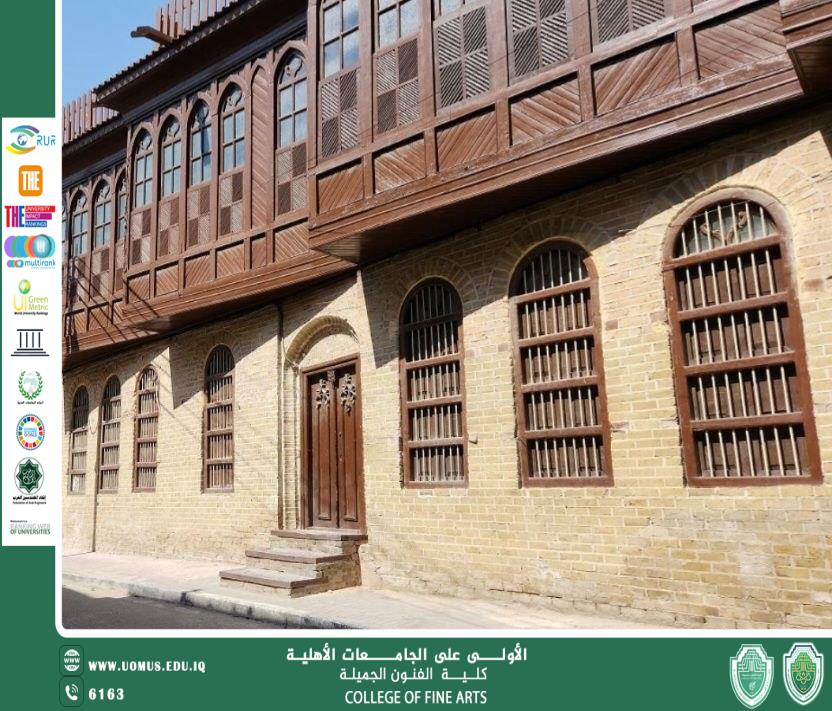
His vision was also evident in his focus on public spaces, which are essential elements in building social relationships. He designed squares and open areas that promote social interaction while fulfilling aesthetic values. Additionally, he considered environmental factors, directing streets in alignment with wind movement and adopting architectural solutions suitable for Basra’s hot climate.
Al-Shawi’s experience highlights the role of the engineer as both a designer and an artist, capable of shaping urban space through a language that combines scientific precision with aesthetic sensitivity. It also emphasizes that the success of a city is not measured solely by its functional efficiency, but by its ability to create an integrated visual and human experience.
In conclusion, Al-Shawi’s work can be regarded as a pioneering experience in the history of urban planning in Iraq. Through his professional role and expertise, he contributed to establishing the concept of the city as a comprehensive work of art that integrates planning, engineering, artistic creativity, and integrity of execution.
Almustaqbal University, The First University in Iraq.