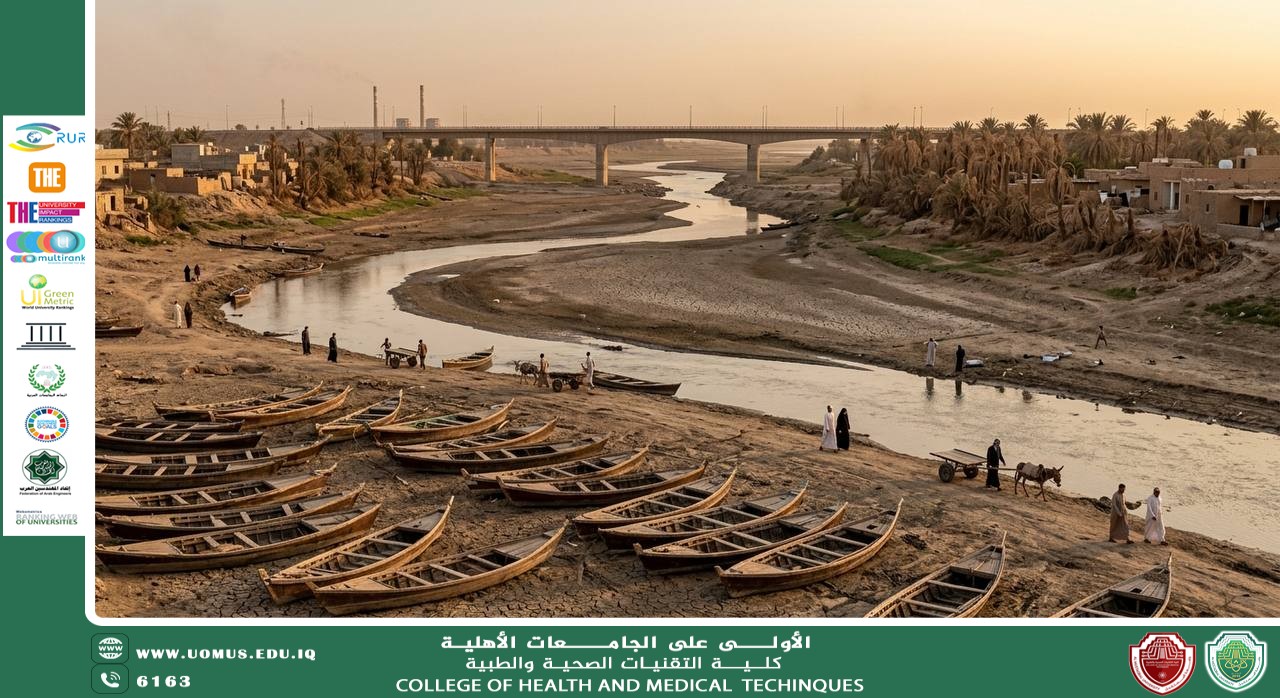
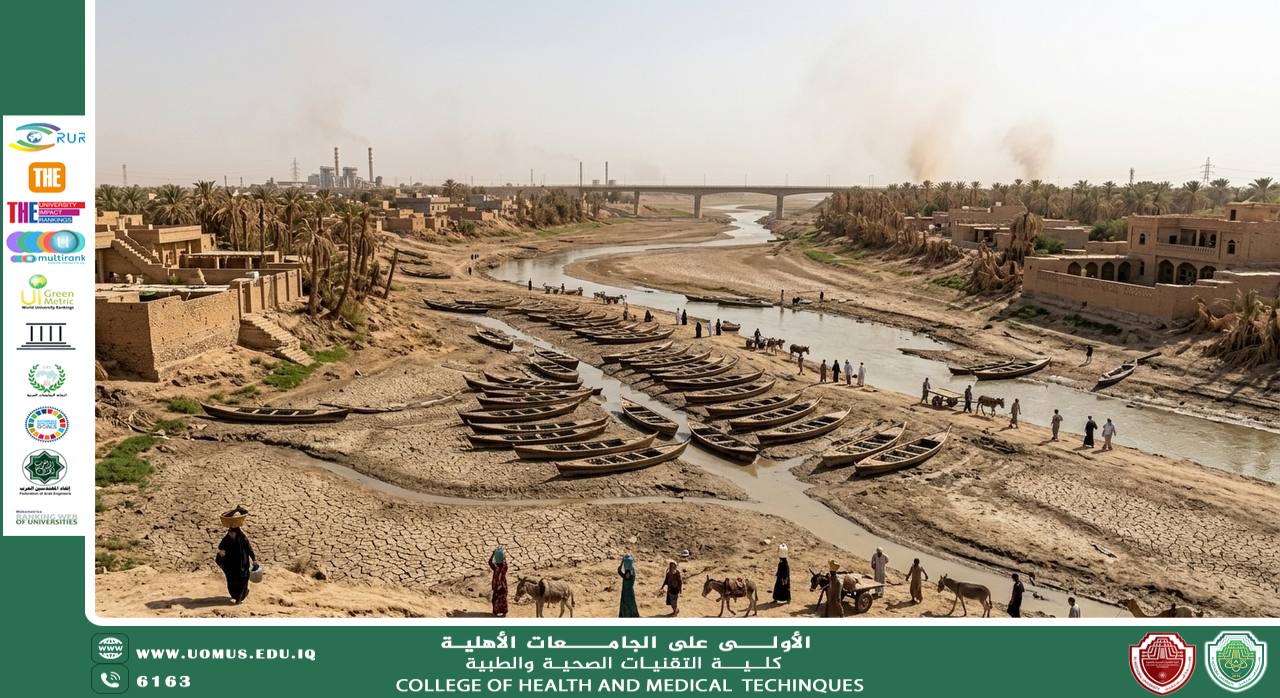
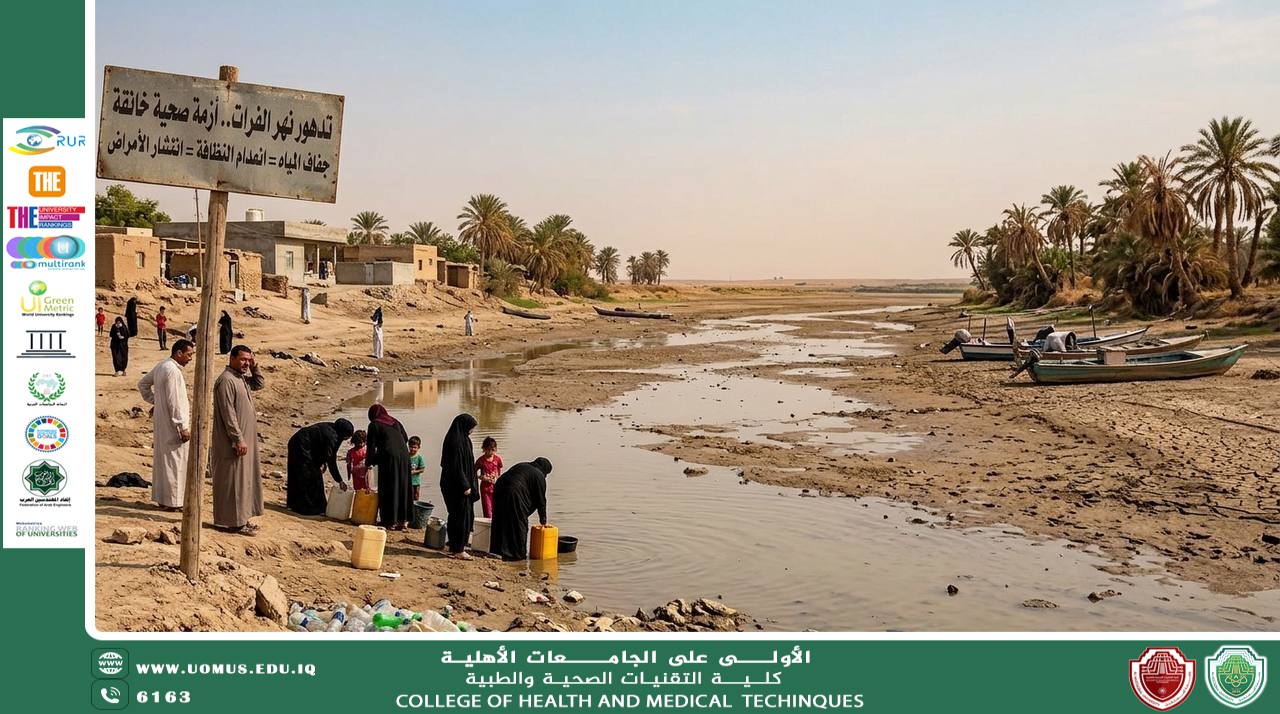
Health deterioration associated with the scarcity of Euphrates water in the cities of the Middle Euphrates region.
25/03/2026 Share :
Prof. Dr. Raad Shaker Abis
Introduction
There are numerous health reports and academic studies published over the last decade (especially between 2015 and 2024) that have addressed the health and environmental impacts of water pollution resulting from water scarcity in the Middle Euphrates region.
These studies can be classified by year and issuing bodies as follows:
1. Ministry of Health and Environment Report (2015–2018): “Pollution of River Tails”
This period focused on Al-Diwaniyah and Al-Muthanna provinces, where water scarcity led to the cessation of flow at the ends of canals.
Details: The study documented an increase in Total Coliform bacteria levels exceeding permissible standards by up to 400%.
Associated diseases: انتشار “Baghdad boil” (Leishmaniasis) due to stagnant water and dried canals providing a breeding environment for sandflies. In addition, cases of acute diarrhea peaked in the summer of 2015.
2. University of Babylon – College of Science Study (2019): “Water Quality and Its Health Impact”
This study examined the chemical effects of water shortage in Al-Hilla and Al-Kifl areas.
Details: It found a direct correlation between the انخفاض water levels of the Euphrates and increased Total Dissolved Solids (TDS), which exceeded 2500 mg/L in some areas.
Associated diseases: A noticeable increase in kidney failure and urinary tract stones among rural populations relying directly on untreated river water.
3. World Health Organization (WHO) and UNICEF Report (2022): “Cholera Crisis”
The year 2022 was critical for Middle Euphrates cities (especially Najaf and Diwaniyah).
Details: The report linked the drying of shallow wells and انخفاض water pressure in supply networks (due to scarcity) with contamination of drinking water by sewage.
Associated diseases: Hundreds of confirmed cholera cases were recorded. The study noted that scarcity forces people to use unsafe water sources (sullage water).
4. Field Study (2023–2024): “Climate Change and Respiratory Diseases”
One of the most recent studies describing Middle Euphrates cities as a “water-stressed” region.
Details: It highlighted the transformation of agricultural lands in the Euphrates basin into dust bowls due to orchard die-off caused by reduced water allocations.
Associated diseases: Chest hospitals in the region recorded a 30% increase in acute asthma and bronchitis cases, especially during dust storms fueled by dried riverbanks.
The Middle Euphrates basin in Iraq is considered one of the regions most affected by climate change and international water policies, leading to serious health challenges documented by various academic studies and reports issued by health organizations.
Below is a summary of the key findings from specialized studies regarding diseases associated with water scarcity in this region:
1. Water-borne Diseases
With declining river levels, concentrations of pollutants and sewage increase, making water a suitable environment for bacteria and parasites.
Cholera: Outbreaks have been recorded in provinces such as Babylon, Diwaniyah, and Najaf, directly linked to contaminated and scarce drinking water.
Typhoid and Paratyphoid Fever: Spread due to consumption of insufficiently filtered water or contamination of old water networks caused by pressure fluctuations.
Epidemic Diarrhea: Especially among children, with increased cases of rotavirus infection and amoebic dysentery.
2. Skin and Gastrointestinal Diseases
Water scarcity has forced rural populations to use drainage or stagnant water for washing and bathing:
Scabies and skin infections: نتيجة ضعف النظافة الشخصية بسبب قلة المياه.
Parasitic infections: Such as intestinal worms transmitted through contaminated vegetables irrigated with polluted or untreated wastewater.
3. Kidney Failure and Chronic Diseases
This aspect is closely related to elevated Total Dissolved Solids (TDS):
Kidney stones and renal failure: Health reports indicate a steady rise in kidney failure cases due to high salinity levels in Euphrates water, sometimes exceeding global standards for human consumption.
Heavy metal poisoning: Some environmental studies detected increased concentrations of metals such as lead and cadmium in stagnant water, affecting the nervous system and liver over time.
4. Environmental Impacts and Public Health (Indirect Effects)
Water scarcity has not only affected drinking water but has also altered the environmental pattern of the region:
Dust storms: The drying of agricultural lands in the Euphrates basin has turned them into major sources of dust, leading to increased cases of asthma and respiratory diseases.
Vector-borne Diseases:
Stagnant water in dried canals creates an ideal environment for mosquito breeding, increasing the risk of skin diseases and viral infections.
Below is a list of the most important reliable scientific sources (in Arabic and English) that have addressed these diseases and their relationship to water scarcity and pollution:
First: Academic Studies and Theses
These studies were conducted in Middle Euphrates universities (Babylon, Kufa, Al-Qadisiyah) and focused on laboratory water analysis and disease correlations:
Study (University of Al-Qadisiyah – 2018):
Title: “Environmental Assessment of Euphrates River Water in Al-Diwaniyah Province and Its Impact on Public Health.”
Content: Focused on measuring bacterial contamination (E. coli) and its relationship with the spread of gastrointestinal diseases in rural areas suffering from water scarcity.
Study (University of Babylon – 2021):
Title: “The Impact of Increased Total Dissolved Solids (TDS) in the Euphrates River on Rising Kidney Failure Rates in Babylon Province.”
Content: A statistical study linking water quality in areas such as Al-Qasim and Al-Hashimiyah with kidney patient records at Marjan Teaching Hospital.
Study (Kufa Journal of Medical Sciences – 2019):
Content: Research on the causes of “Baghdad boil” (Leishmaniasis) in Middle Euphrates regions, linking dried canals, waste accumulation, and increased activity of the transmitting insect.
Second: Official and International Reports
These reports are considered the most important statistical references as they rely on hospital and health center records:
World Health Organization (WHO) – Iraq Office:
Report (2022): “Cholera Response in Iraq: Water and Sanitation Challenges in Middle Euphrates and Southern Provinces.”
United Nations Environment Programme (UNEP):
Report (2023): “Impact of Climate Change and Water Scarcity on Health Security in the Mesopotamian Basin.”
This report focuses on desertification and the increase in respiratory diseases.
Iraqi Ministry of Health – Public Health Directorate:
Annual Epidemiological Report (2020–2023):
Includes charts showing a rise in cases of Hepatitis A and Typhoid fever in provinces such as Al-Diwaniyah, Najaf, and Babylon, coinciding with water scarcity and pollution.