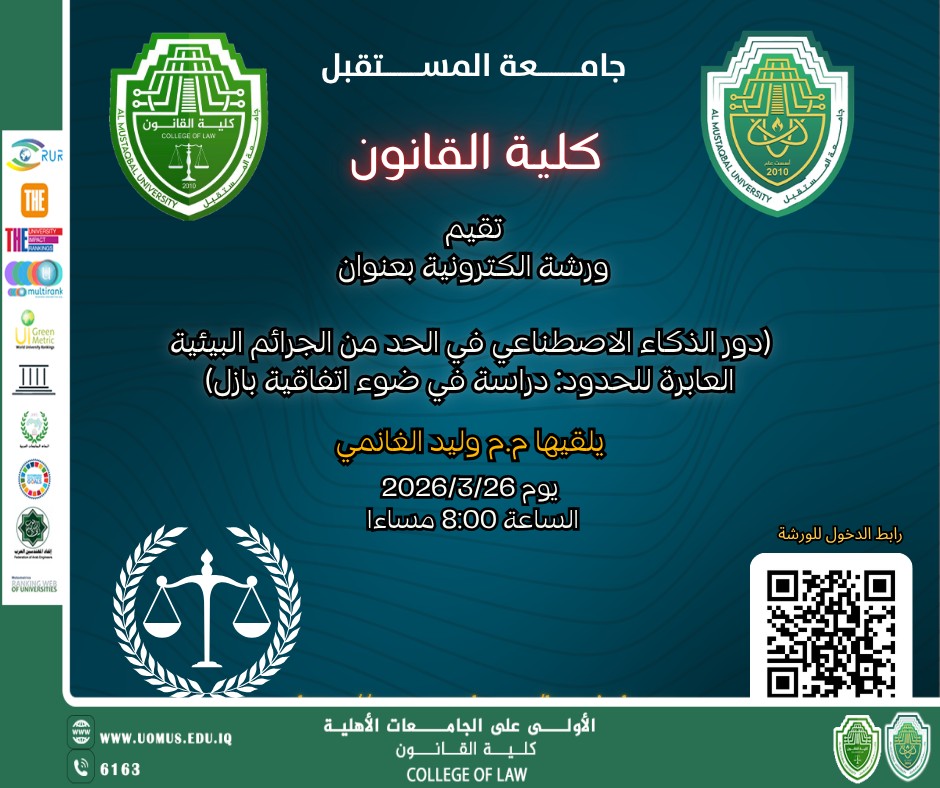
The College of Law at a university organized an online workshop on environmental crimes and the role of artificial intelligence.
26/03/2026 Share :
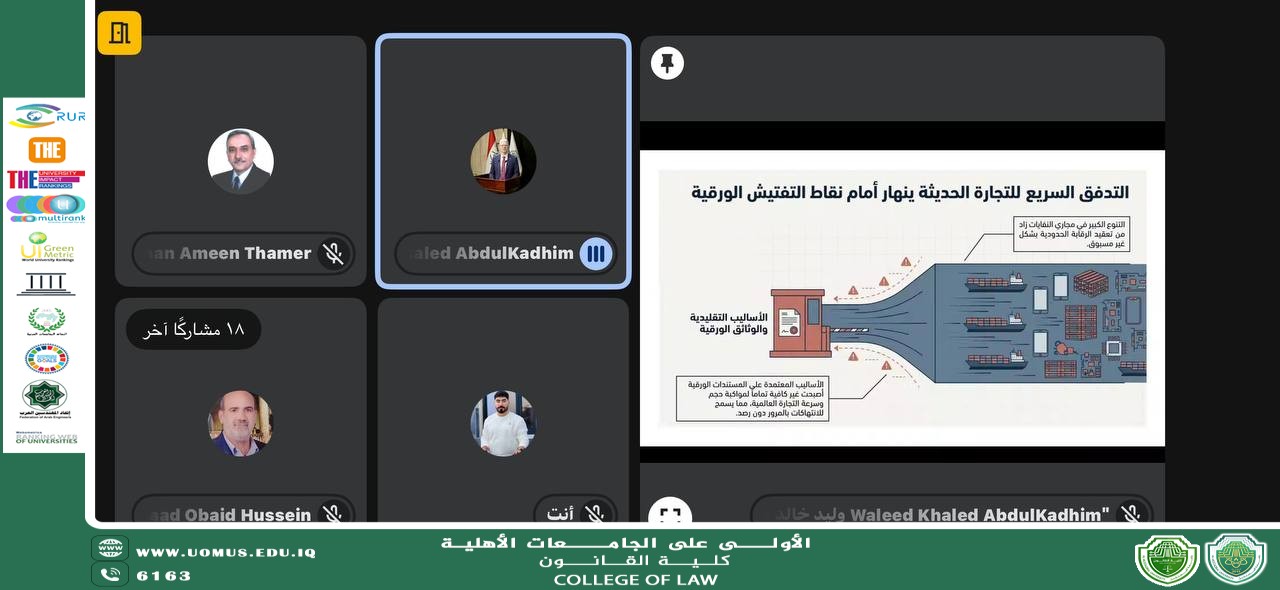
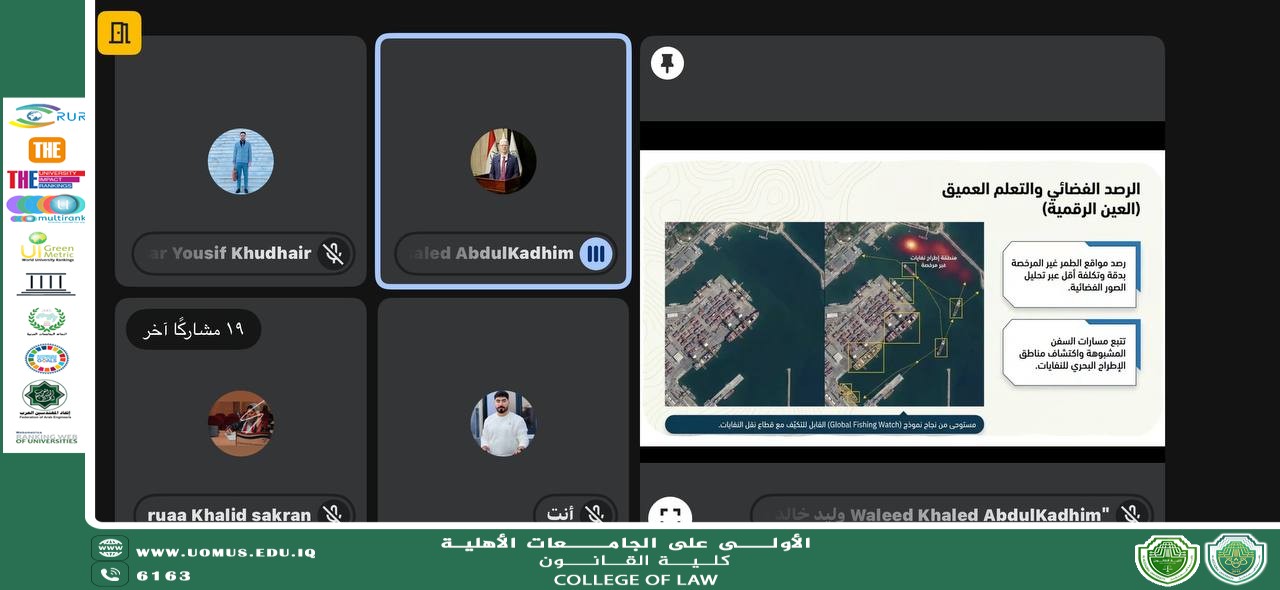
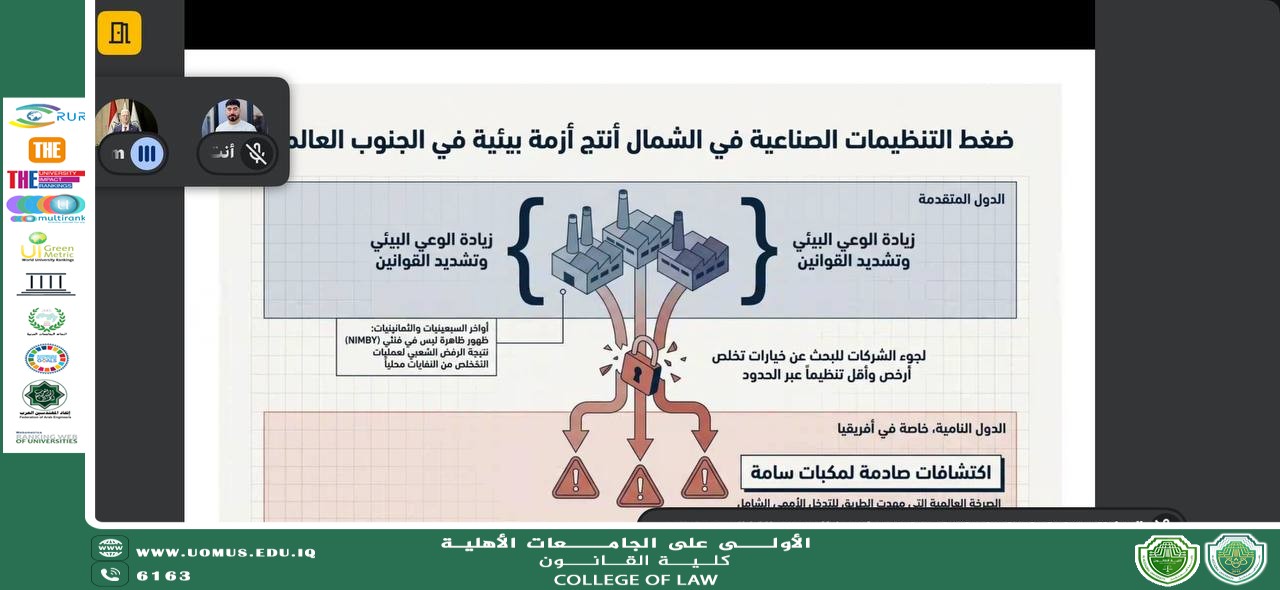
As part of its ongoing efforts to keep pace with contemporary legal issues and technological developments, the College of Law at Al-Mustaqbal University organized an interactive webinar on Thursday, March 26, 2026, via the Google Meet platform, titled “Transboundary Environmental Crimes and the Role of Artificial Intelligence Technologies in Enhancing International Compliance,” presented by Asst. Lact. Walid Khalid Abdul-Kazim.
The workshop reviewed the major challenges posed by transboundary environmental crimes to the international legal system, particularly with the escalation of illicit trade in hazardous waste and the growth of complex international networks, which reveal the limitations of some traditional control mechanisms associated with the 1989 Basel Convention.
The workshop addressed the advanced role of artificial intelligence technologies—such as machine learning, big data analysis, and smart satellite monitoring systems—in supporting compliance with the provisions of international conventions and enhancing the capabilities for early detection and deterrence of environmental crimes. Participants also discussed the legal framework for regulating the use of artificial intelligence in the environmental field, highlighting the technical and legal challenges that experts and decision-makers may face, while offering practical recommendations to strengthen international governance in this area.
The workshop saw fruitful interaction from the audience, who contributed with their comments and questions, emphasizing the importance of continuing these scientific meetings to advance legal thought and strengthen environmental protection.
This workshop is part of a series of academic activities organized by the College of Law at Al-Mustaqbal University, aimed at raising awareness of emerging legal issues and supporting scientific research in the fields of international law and technology. Al-Mustaqbal University ranks first among private universities in Iraq.
إقرا أيضاً