Eliminating Poverty and Strengthening International Partnerships Integrating Goals 1 and 17 to Achieve Sustainable Development
21/03/2026 Share :
Prepared by Professor Dr. Haider Ali Al-Dulaimi
College of Administrative Sciences
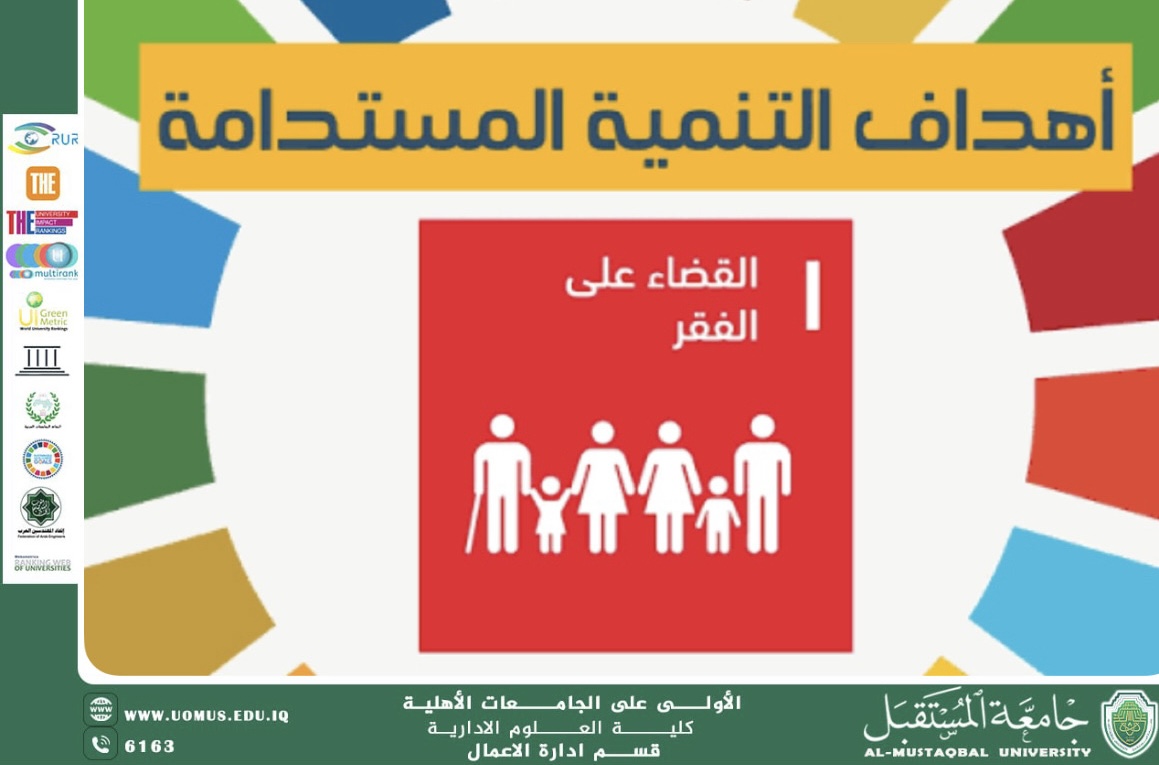
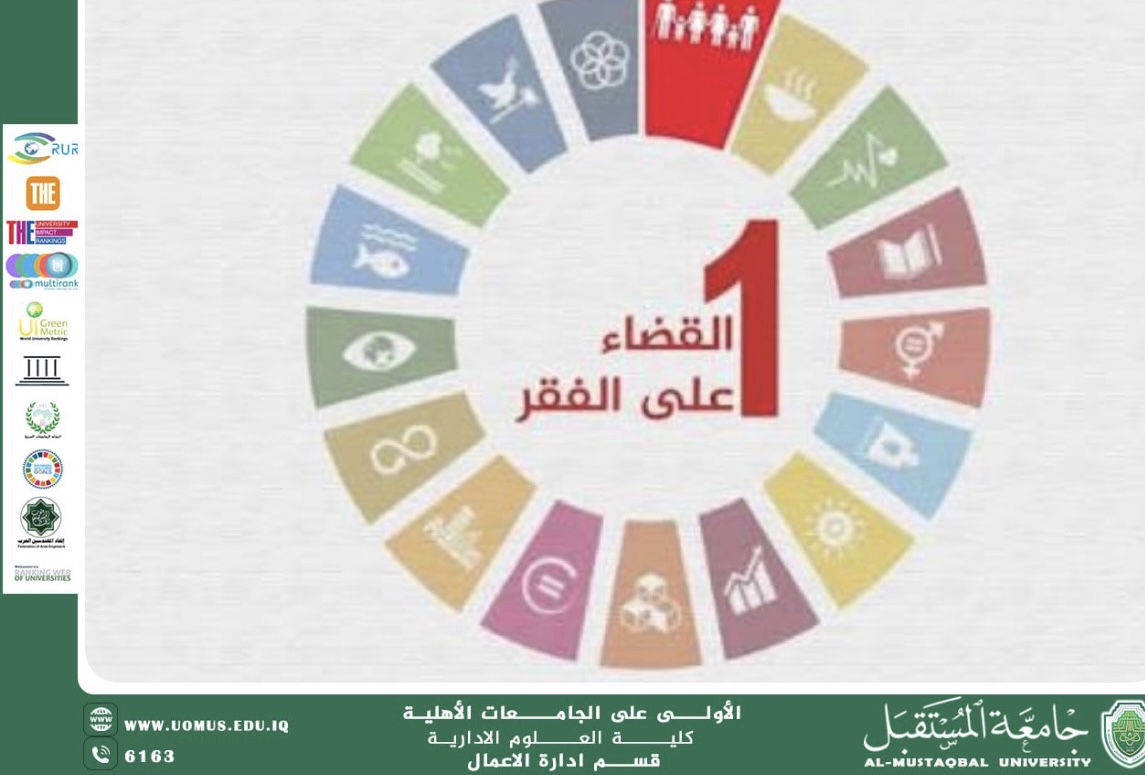
Eliminating poverty represents one of the most significant global challenges that countries and societies strive to address within the framework of the Sustainable Development Goals (SDGs). Goal 1 focuses on ending poverty in all its forms everywhere. In contrast, Goal 17 emphasizes the importance of strengthening international partnerships as a fundamental means of achieving these goals, through cooperation among governments, the private sector, academic institutions, and international organizations. The integration of these two goals reflects a comprehensive vision of sustainable development based on the interconnection of economic, social, and institutional dimensions.
Poverty eradication cannot be achieved in isolation from building effective partnerships that ensure the mobilization of financial resources, the transfer of knowledge, and the strengthening of institutional capacities—particularly in developing countries. Poverty is not merely a lack of income; rather, it is a multidimensional phenomenon that includes deprivation of education, healthcare, basic services, and decent work opportunities. Therefore, addressing it requires joint efforts that transcend national borders and rely on the exchange of expertise and successful experiences.
In the Iraqi context, there is an urgent need to adopt integrated development policies targeting the most vulnerable groups, while enhancing international and regional cooperation to support poverty reduction programs. Partnerships with international organizations can play a vital role in financing development projects, developing infrastructure, and improving the quality of public services. Moreover, engaging the private sector contributes to creating sustainable job opportunities and stimulating economic growth, which positively impacts living standards.
Additionally, academic institutions, including universities, play a pivotal role in supporting the achievement of these two goals through scientific research, capacity building, and raising societal awareness. Universities can serve as platforms for strategic thinking and provide innovative solutions based on data and scientific analysis, as well as prepare qualified human resources capable of leading development efforts.
It is also important to emphasize that the success of partnerships requires an institutional environment based on transparency and accountability, along with clear policies that enhance the efficient use of resources and ensure the desired development impact. Furthermore, leveraging technology and digital transformation can improve the efficiency of development programs and expand access to services, especially in remote and underserved areas.
The integration between Goal 1 and Goal 17 of the Sustainable Development Goals represents a fundamental pillar for achieving comprehensive and sustainable development. Poverty eradication cannot be achieved without strong and effective partnerships, and these partnerships are only complete when directed toward improving human well-being and ensuring dignity. Hence, the importance of joint action and continuous coordination among all stakeholders emerges as essential to building a more just and sustainable future for all.