Art in the Balance of Law: Between Freedom of Creativity and the Limits of Responsibility
29/03/2026 Share :
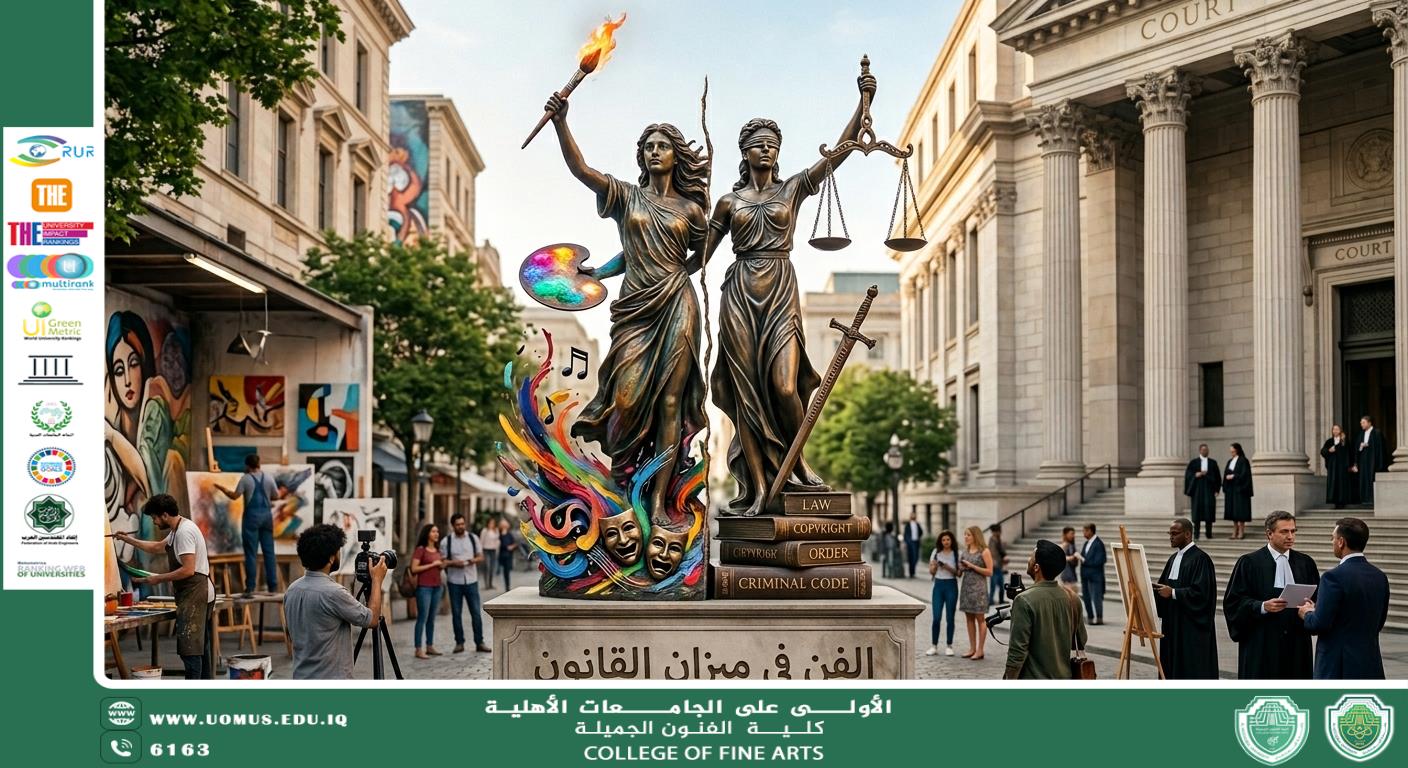
Art is one of the most profound forms of human expression. It serves as a mirror reflecting society’s ideas and experiences, and as a universal language that transcends cultures to speak directly to human emotions. Throughout history, art has been a space for freedom, protest, beauty, and identity. However, this freedom does not exist in isolation from a legal framework that regulates and protects it, creating a delicate balance between the artist’s right to create and their responsibility toward society and the law.
Freedom of artistic expression is guaranteed in most constitutions and legal systems as a fundamental human right. Artists are granted broad space to experiment, innovate, and communicate their visions without undue restrictions. By its nature, creativity requires openness, allowing artists to address sensitive issues and present unconventional ideas that may sometimes provoke debate. In this sense, art becomes a powerful tool for social change and a platform for dialogue and constructive criticism.
At the same time, artistic freedom cannot be entirely absolute. Legal systems impose certain boundaries intended to protect public order, societal values, and the rights of others. Artistic works may intersect with legal concerns such as defamation, violation of privacy, offense to religious or national symbols, or infringement of intellectual property rights. Here, the artist carries both ethical and legal responsibility to be aware of the impact of their work and to avoid crossing lines that may harm individuals or the broader community.
This sense of responsibility becomes even more critical in the digital age, where artistic content can spread rapidly and reach vast audiences within moments. What is published today can influence thousands or even millions, making legal awareness essential, especially for emerging artists. A lack of understanding of legal boundaries may expose artists to accountability, even when their intentions are purely expressive.
On the other hand, the law plays a vital role in protecting artists themselves. Intellectual property regulations ensure that creators retain ownership of their work and are safeguarded against theft or unauthorized use. In this context, the law does not restrict creativity; rather, it provides a secure environment that supports its continuity and ensures both moral and material recognition.
The relationship between art and law is not one of conflict, but of integration. The law does not aim to suppress creativity, but to organize it in a way that balances individual freedom with the interests of society. A conscious artist is one who can create boldly while remaining aware of legal boundaries, producing work that is both impactful and responsible.
In conclusion, art remains a space of freedom—but a responsible one. Between the artist’s brush and the text of the law lies a careful equation that preserves the essence of creativity while protecting society. When this balance is achieved, art becomes a constructive force that contributes to the advancement of human awareness and the reinforcement of cultural and civilizational values.
Almustaqbal University, The First University in Iraq.