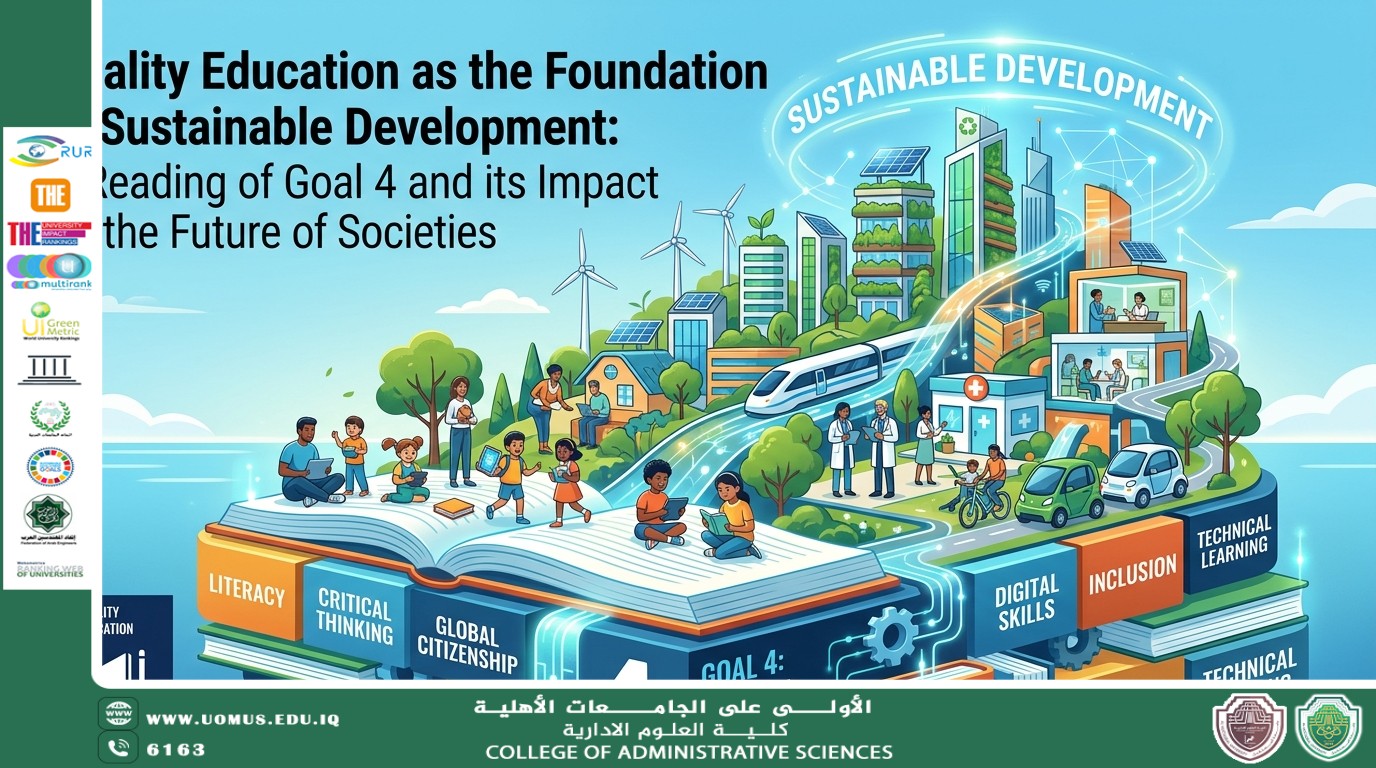
Quality Education as the Foundation of Sustainable Development: A Reading of Goal Four and Its Impact on the Future of Societies
28/03/2026 Share :
Prof. Dr. Haider Ali Al-Dulaimi
College of Administrative Sciences
Education is considered the cornerstone in building advanced societies, as it is the most important means of empowering individuals and achieving comprehensive development. Within the framework of international efforts aimed at improving quality of life and ensuring a better future for coming generations, the fourth Sustainable Development Goal emphasizes the necessity of “ensuring inclusive and equitable quality education and promoting lifelong learning opportunities for all.”
Quality education is not limited to merely providing access to learning opportunities; rather, it includes improving the quality of education and its outcomes, providing a safe and stimulating learning environment, and developing curricula in line with the demands of the modern era. It also contributes to developing essential skills such as critical thinking, creativity, and problem-solving—skills that are necessary to مواجهة the growing challenges of a rapidly changing world.
One of the most significant dimensions of this goal is achieving equity in access to education, as there remains a considerable disparity between countries, and even within the same country, in terms of educational opportunities and quality. Therefore, investing in education—especially in less advantaged areas—is a pivotal step toward reducing social and economic gaps and achieving the principle of equal opportunity.
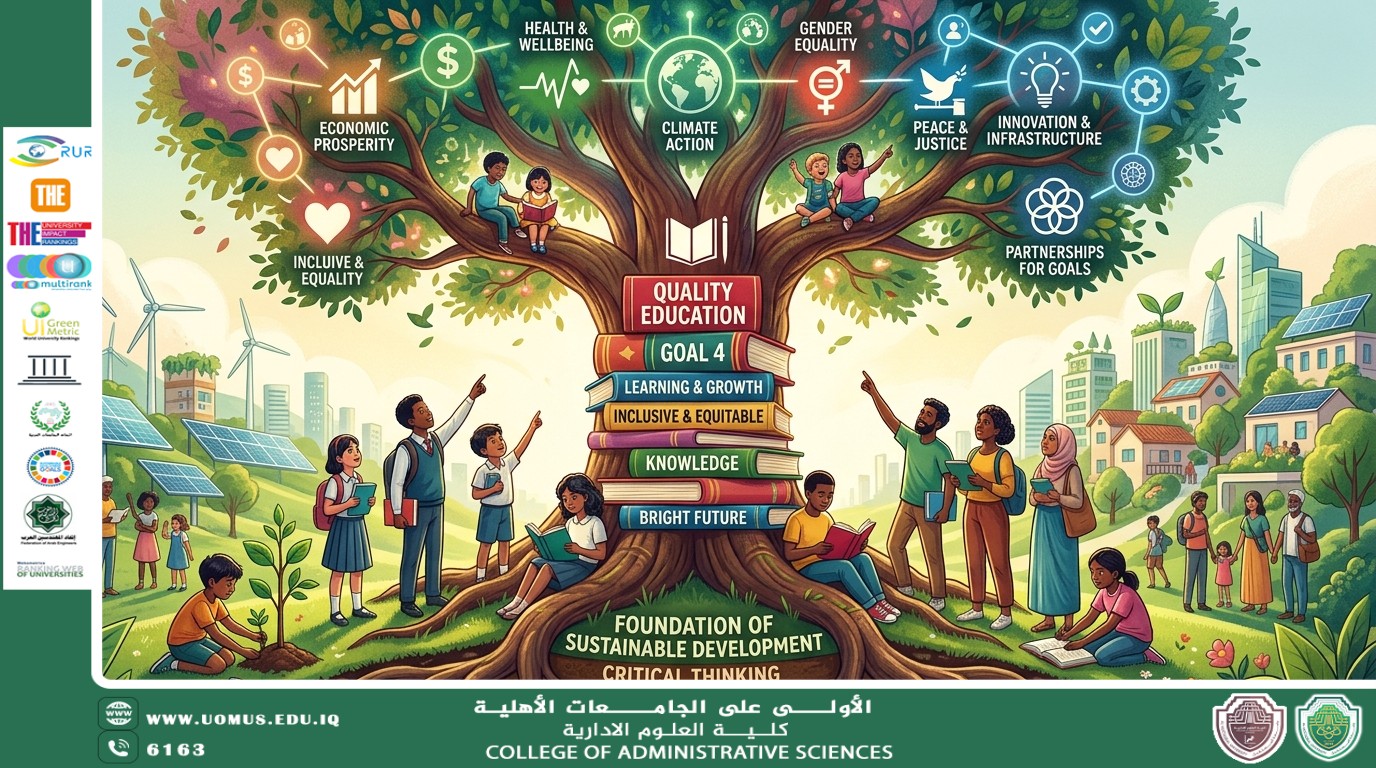
Quality education also plays a fundamental role in promoting economic development, as it contributes to preparing a qualified workforce capable of innovation and productivity. The higher the level of education, the greater the opportunities for economic growth, and the lower the rates of unemployment and poverty. In addition, education enhances awareness of environmental, health, and social issues, thereby supporting the achievement of the other Sustainable Development Goals.
The role of educational institutions, including universities and colleges, cannot be overlooked in achieving this goal. This is done through developing modern academic programs, encouraging scientific research, and linking educational outcomes with the labor market. They also bear the responsibility of instilling values of citizenship, tolerance, and teamwork among students.
Accordingly, achieving quality education is not the responsibility of governments alone; rather, it is a shared responsibility that requires the combined efforts of all members of society, including educational institutions, families, and civil organizations. Through education, we build الإنسان, and through الإنسان, we build the future and achieve sustainable development that ensures a dignified life for all.
Al-Mustaqbal University… ranked first among private universities in Iraq.