
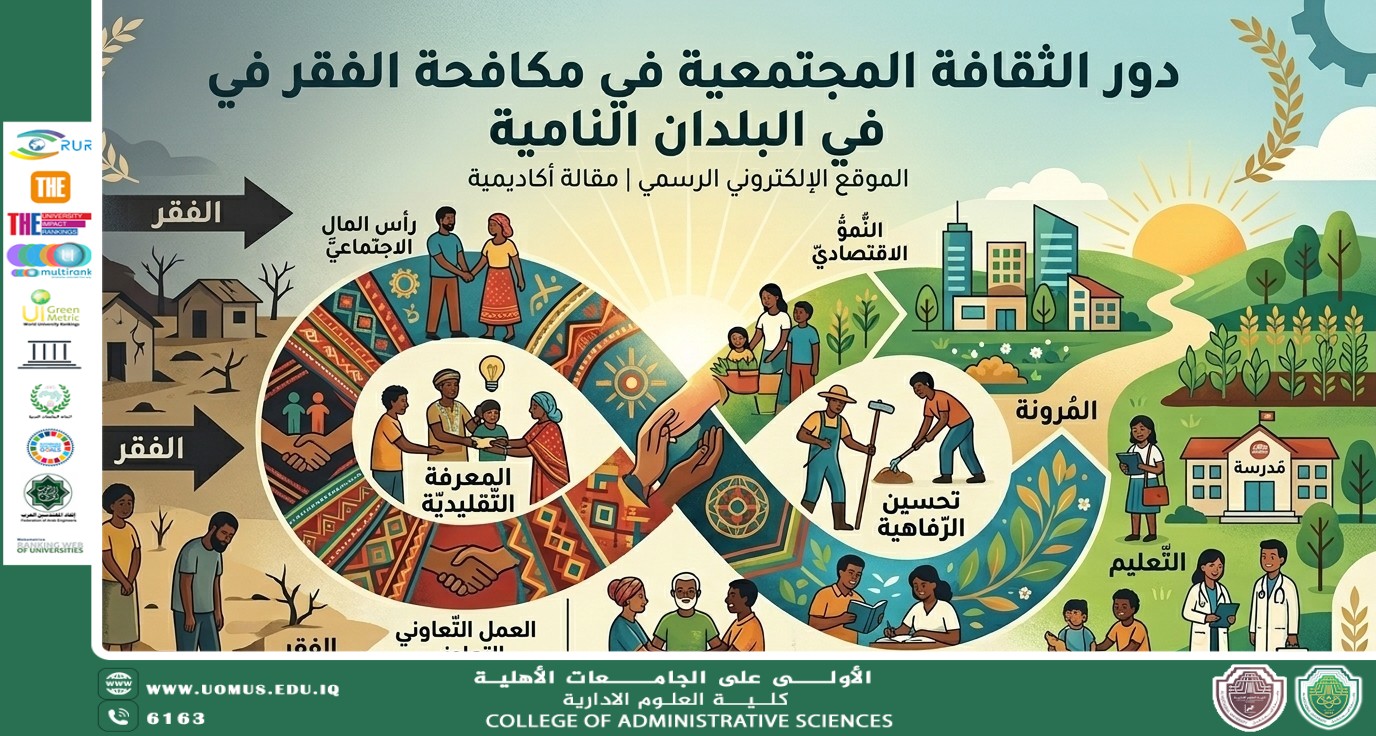
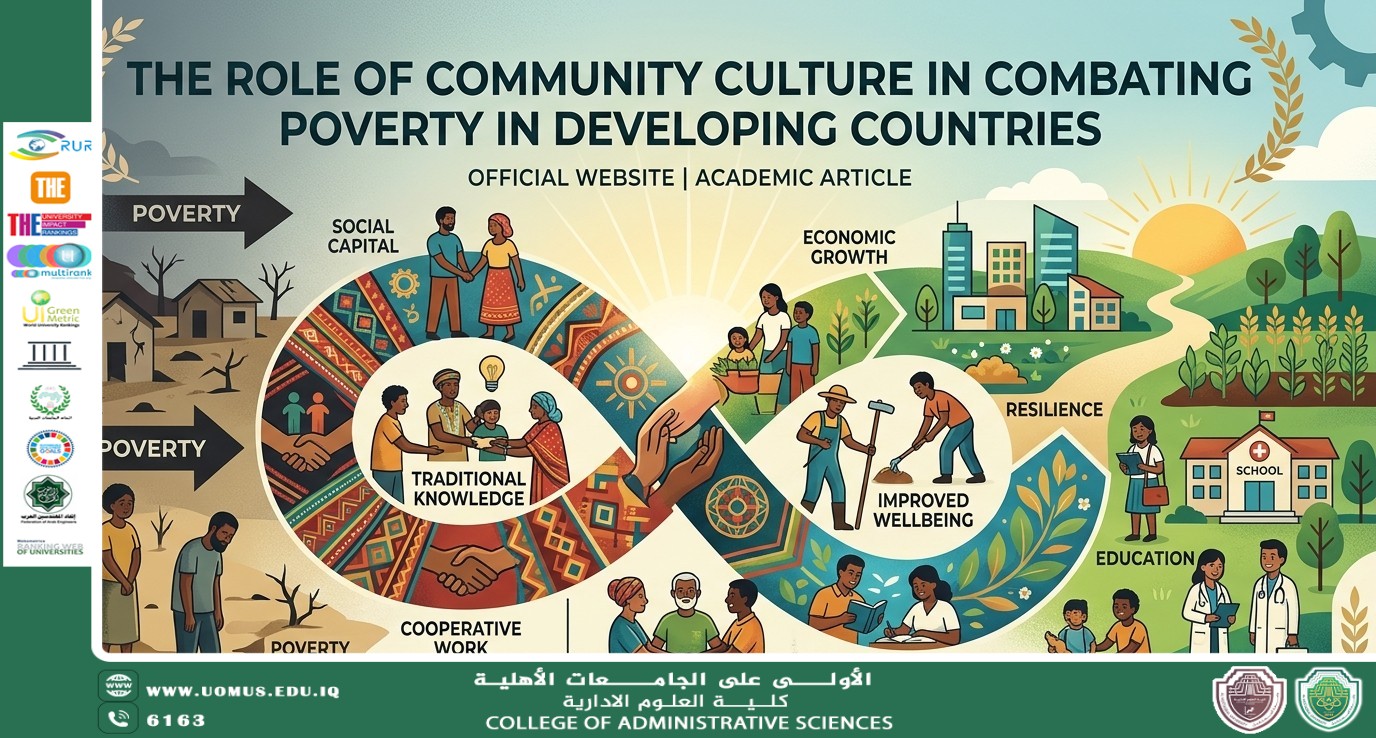
The Role of Societal Culture in Combating Poverty in Developing Countries
01/04/2026 Share :
Prof. Dr. Khalid Hussein Al-Marzouk
College of Administrative Sciences
The problem of poverty is considered one of the most prominent challenges facing many developing countries, as it involves intertwined economic, social, political, and cultural factors. Although traditional approaches to poverty often focus on economic aspects such as increasing income or providing job opportunities, societal culture represents a fundamental and influential element in addressing this issue. Societal culture constitutes a system of values, customs, traditions, and behaviors that guide the conduct of individuals and groups; therefore, it can be either a contributing factor in reducing poverty or a factor that perpetuates it.
Societal culture refers to the set of shared values, norms, and behaviors adopted by members of society, which determine the nature of social relations as well as patterns of thinking and work. In developing countries, culture plays an important role in shaping individuals’ perspectives toward work, productivity, education, and social solidarity. A culture that encourages work, diligence, and self-reliance contributes to raising productivity levels and improving individuals’ economic conditions, whereas some negative cultural practices—such as dependency or the rejection of certain types of work—may hinder development efforts and increase poverty rates.
One of the most important roles played by societal culture in combating poverty is the promotion of the values of education and knowledge. Societies that place education at the top of their priorities are better able to develop the skills of their members and prepare them for the labor market, which leads to improving income levels and reducing unemployment rates. Moreover, spreading a culture of lifelong learning and vocational training contributes to enabling individuals to adapt to economic and technological changes.
Social solidarity culture also plays a pivotal role in reducing poverty, especially in developing societies that may suffer from weak governmental social protection systems. Social traditions that encourage cooperation and solidarity among community members—such as helping the poor, supporting needy families, and participating in charitable activities—can contribute to alleviating the effects of poverty and improving the living conditions of the most vulnerable groups. These values are evident in many societies through civil society organizations, charitable associations, and voluntary community initiatives.
In addition, societal culture contributes to fostering a spirit of initiative and entrepreneurship among individuals. When a culture that encourages innovation, self-employment, and small enterprises prevails, individuals become more willing to establish their own businesses rather than relying entirely on limited government jobs. Small and medium-sized enterprises are considered among the most important drivers of economic development in developing countries, as they provide job opportunities and contribute to stimulating the local economy.
On the other hand, some traditional cultural practices may reinforce poverty if not addressed with awareness. For example, certain social norms may limit women’s participation in the labor market or education, thereby reducing the contribution of half of society to economic activity. Additionally, some irrational consumption patterns may lead to the waste of limited resources among poor households.
Therefore, enhancing the role of societal culture in combating poverty requires adopting policies and programs aimed at raising awareness of the importance of education, work, and productivity, as well as promoting the values of cooperation and initiative. It is also important to utilize media, educational, and religious institutions in spreading a culture of development and productive work, alongside supporting community initiatives that contribute to the economic and social empowerment of disadvantaged groups.
Al-Mustaqbal University… ranked first among private universities in Iraq.