From Poverty to Opportunity: Linking Poverty Eradication with Economic Growth and Decent Work within the Framework of Sustainable Development
08/04/2026 Share :
Prof. Dr. Haider Ali Al-Dulaimi
College of Administrative Sciences
The seventeen Sustainable Development Goals (SDGs), adopted by the United Nations in 2015, represent an essential roadmap toward achieving a better and more equitable future for all. Among these goals, ending poverty (Goal 1) and promoting decent work and economic growth (Goal 8) hold a central place in advancing comprehensive social and economic progress. This article seeks to explore the integrated relationship between these two goals and how linking them can achieve balanced and sustainable development.
Poverty Eradication: A Fundamental Priority for Sustainable Development
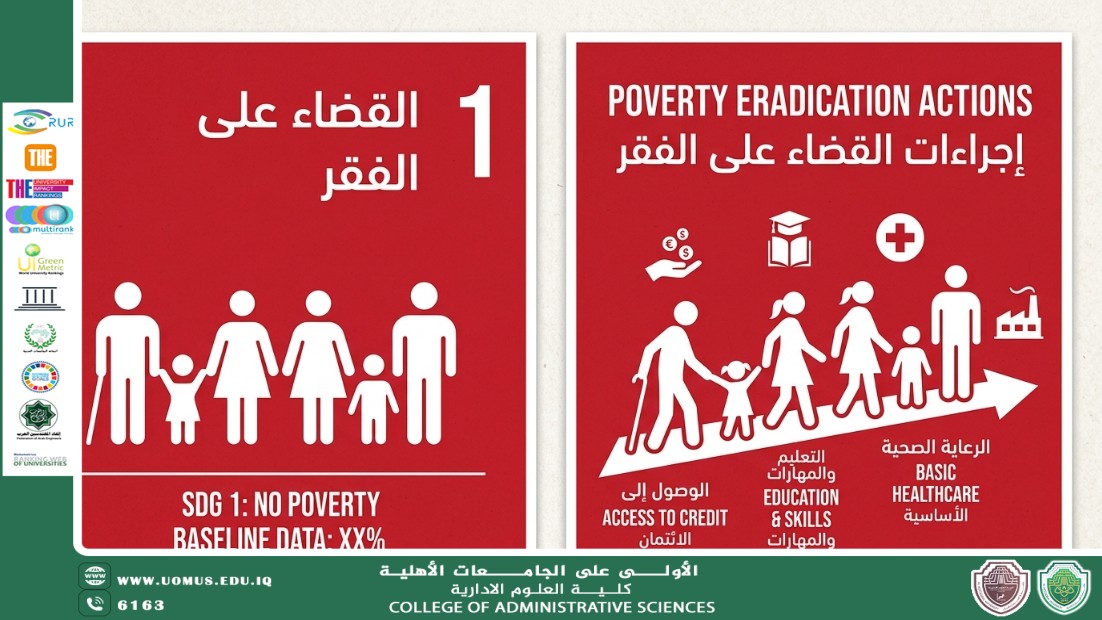
Eradicating poverty is one of the highest objectives pursued by countries and international organizations. Poverty is not limited to low income; it also encompasses restricted access to education, healthcare, clean water, and employment opportunities. Therefore, achieving this goal requires a comprehensive strategy that improves living standards and provides economic and social opportunities for all.
However, this objective cannot be achieved in isolation from a thriving economic environment that generates sustainable and decent employment opportunities. This is where Goal 1 (No Poverty) intersects with Goal 8 (Decent Work and Economic Growth).
Decent Work: A Key Foundation for Reducing Poverty
Decent work is not merely an economic concept; it is a fundamental element in improving the living conditions of individuals and communities. It includes fair wages, safe working conditions, labor rights, and opportunities for training and professional development. Providing decent work opportunities is therefore a powerful tool for combating poverty and achieving social justice.
Through decent work, individuals can move out of poverty by securing stable income that enables them to meet basic needs such as food, shelter, and healthcare. It also contributes to empowering women, youth, and persons with disabilities, thereby promoting equality and reducing social and economic disparities.
Economic Growth: The Main Driver of Poverty Reduction
Achieving poverty eradication requires sustainable economic growth that benefits all segments of society. Economic growth alone is not sufficient; it must be inclusive, ensuring fair distribution of opportunities and benefits.
Goal 8 highlights the importance of creating an economic environment that supports entrepreneurship, encourages local and international investment, and fosters innovation. When strong growth opportunities exist, individuals are more likely to access decent jobs that sustain their livelihoods. Economic growth also improves public services such as education and healthcare, enhancing overall quality of life.
Integration between Goal 1 and Goal 8: Building an Inclusive and Sustainable Economy
The integration between poverty eradication and economic growth can only be achieved when economic and social policies operate in harmony. Investment in education, healthcare, and infrastructure must be prioritized to create an enabling environment for individuals to realize their economic potential.
Education and vocational training: These provide youth with access to decent jobs that contribute to sustainable economic development. Enhancing skills increases productivity, supports economic growth, and reduces unemployment and poverty rates.
Private sector investment and entrepreneurship: The private sector plays a crucial role in generating decent employment. By encouraging entrepreneurship and creating a supportive investment climate, countries can generate new job opportunities across various sectors.
Sustainable social policies: Governments must adopt policies that support employment and protect workers’ rights, including fair wage regulations, improved working conditions, and social safety nets to help individuals overcome financial shocks.
Challenges to Achieving Integration
Despite the importance of linking poverty eradication with economic growth, several challenges may hinder this integration, including:
Economic and social inequalities: Growth in some countries does not always reduce the gap between rich and poor.
Unsustainable employment: Some jobs may not provide long-term economic security, limiting their impact on poverty reduction.
Global economic changes: Financial crises, climate change, and pandemics can exacerbate poverty levels in many countries.
Conclusion: Toward Sustainable Development
Linking poverty eradication with economic growth and decent work represents the optimal path toward achieving inclusive and sustainable development. This requires cooperation among governments, the private sector, and civil society, with strategies focused on expanding economic opportunities while ensuring sustainability and social justice.
Although challenges remain, political will, innovation, and collaborative efforts among all stakeholders can drive meaningful change, reflecting the aspirations of societies toward a world free from poverty and characterized by sustainability and prosperity.
Al-Mustaqbal University… The leading private university in Iraq.