
3D Printing in Construction: Is the Era of Bricks and Traditional Cement Over?
15/04/2026 Share :
The construction industry has entered a historic phase with the emergence of 3D Construction Printing (3DCP). This technology, once confined to lab experiments, is now building real homes, offices, and even bridges in a matter of days.
How Does It Work?
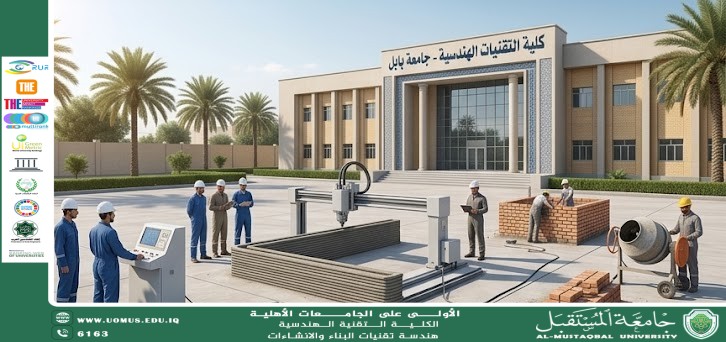
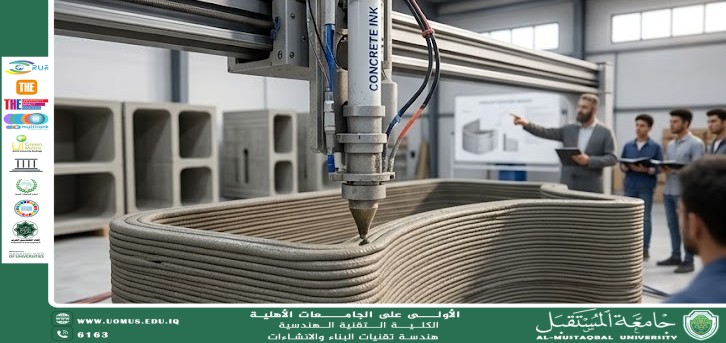
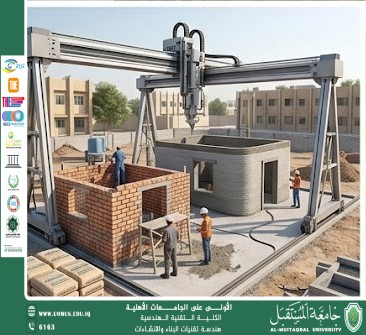
The technology relies on a massive robotic arm or a "Gantry" system moving according to a digital plan (BIM). The printer extrudes a specialized concrete mix (ink) that features rapid setting and high strength, layering walls with extreme precision.
The Winning Advantages:
Extreme Speed: A full house structure can be printed in less than 48 hours.
Zero Waste: There is no material waste; the printer uses exactly what the design requires.
Design Freedom: It allows for curved walls and complex geometries that were impossible or too costly with traditional masonry.
Labor Efficiency: The process requires only a few supervisors instead of dozens of workers.
Is the Era of Traditional Bricks Over?
Despite the technological allure, traditional bricks still hold the advantage in small-scale projects and areas lacking high-tech infrastructure. However, as printer costs decrease and "Smart Concrete" evolves, the future seems to be heading toward "Silent Construction Sites" operated by robots.