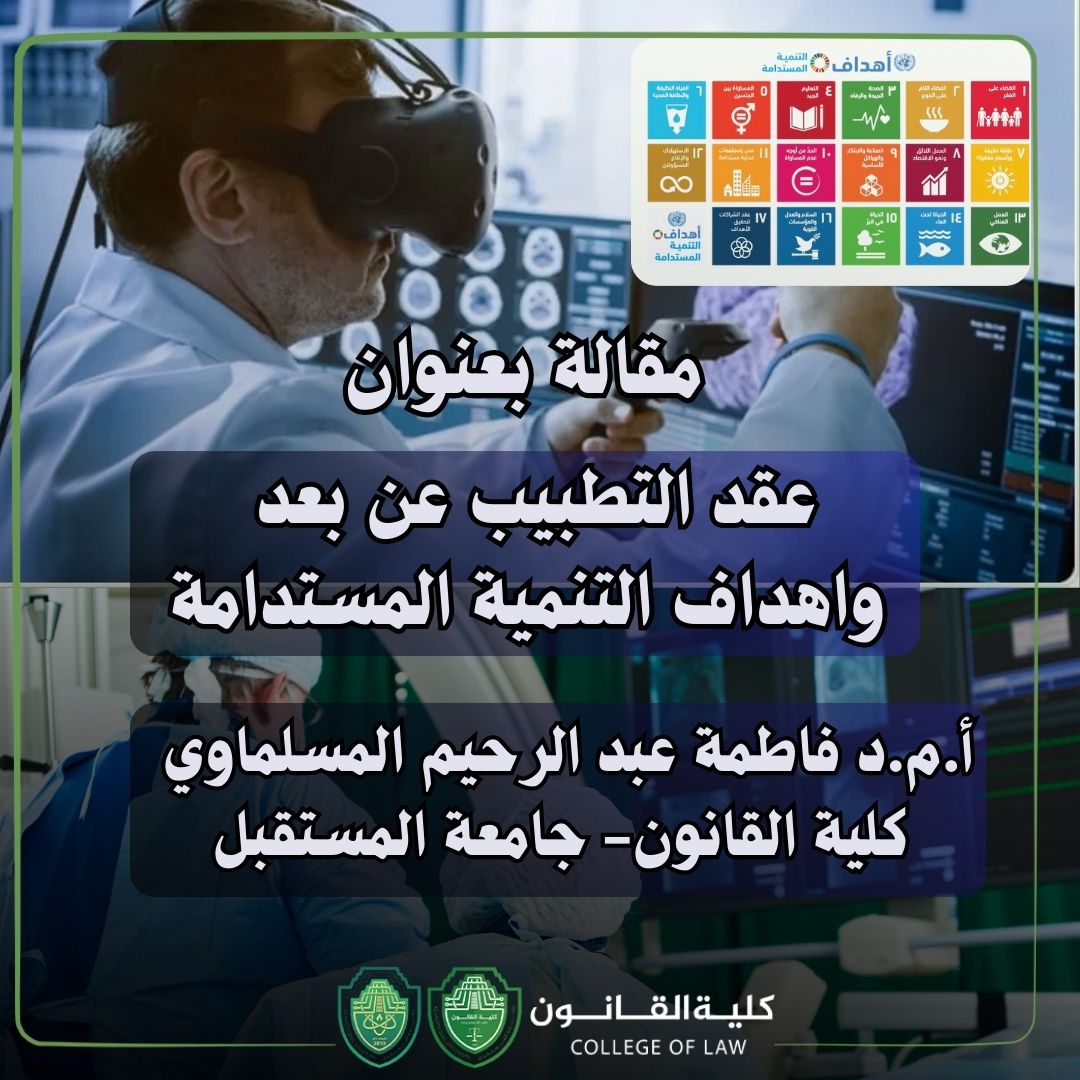
Telemedicine Contracts and the Goals of Sustainable Development
02/02/2025 Share :
The world is witnessing rapid technological advancements in the healthcare sector, leading to the emergence of telemedicine, which provides medical services and consultations through modern communication technologies. With its widespread adoption, the need to define the legal responsibilities of doctors, healthcare institutions, and patients has become increasingly important.<br /><br />In Iraq, there is no specific legislation that directly regulates telemedicine. However, general provisions in civil law can be relied upon to establish a physician’s liability for professional errors, whether resulting from negligence, incompetence, or violations of medical standards. Additional legal frameworks, such as the Medical Practice Law, the Health Institutions Law, and the Communications Law, may also be applicable.<br /><br />Legal Responsibilities in Telemedicine Contracts<br />Physician’s Responsibility:<br /><br />Obtaining informed consent: The physician must secure the patient’s informed consent before providing telemedicine services. This consent must be based on a full understanding of the nature of the services, potential risks, and available alternatives.<br />Providing services in accordance with professional standards: Physicians must adhere to recognized professional standards when delivering telemedicine services and exercise due diligence to ensure patient safety.<br />Maintaining confidentiality: Physicians are obligated to protect patients' personal and medical information and may not disclose such information without the patient’s consent or as required by law.<br />Healthcare Institution’s Responsibility:<br /><br />Providing the necessary infrastructure: Healthcare institutions must establish the required infrastructure for telemedicine services, including medical devices, software, and secure communication channels, ensuring their safety and protection from security breaches.<br />Training medical personnel: Institutions must ensure that their medical staff are adequately trained in telemedicine technologies and prepared to handle various medical cases remotely.<br />Monitoring and supervision: Healthcare institutions must implement monitoring mechanisms to oversee telemedicine services and ensure compliance with professional and ethical standards.<br />Patient’s Responsibility:<br /><br />Providing accurate information: Patients must supply correct health information to the physician and follow medical instructions and recommendations.<br />Cooperating with the physician: Patients are expected to engage actively in telemedicine services by responding to inquiries and undergoing necessary tests and examinations.<br />Telemedicine and Sustainable Development Goals<br />Telemedicine can contribute to achieving several Sustainable Development Goals (SDGs), including:<br /><br />Goal 3: Good Health and Well-being – Telemedicine enhances access to healthcare services, particularly in remote and rural areas lacking adequate medical facilities and specialized doctors.<br />Goal 5: Gender Equality – Telemedicine can facilitate improved healthcare access for women, especially in societies where mobility restrictions limit their ability to seek medical care.<br />Goal 9: Industry, Innovation, and Infrastructure – Telemedicine fosters innovation in healthcare and promotes the development of essential infrastructure to support remote medical services.<br />By addressing legal responsibilities and aligning with sustainable development goals, telemedicine can serve as a transformative tool for enhancing healthcare accessibility and efficiency.<br />#الجامعة_الاولى_في_العراق<br />#جامعة_المستقبل_الاولى_في_العراق<br />#الاولى_على_الجامعات_الاهلية_في_العراق