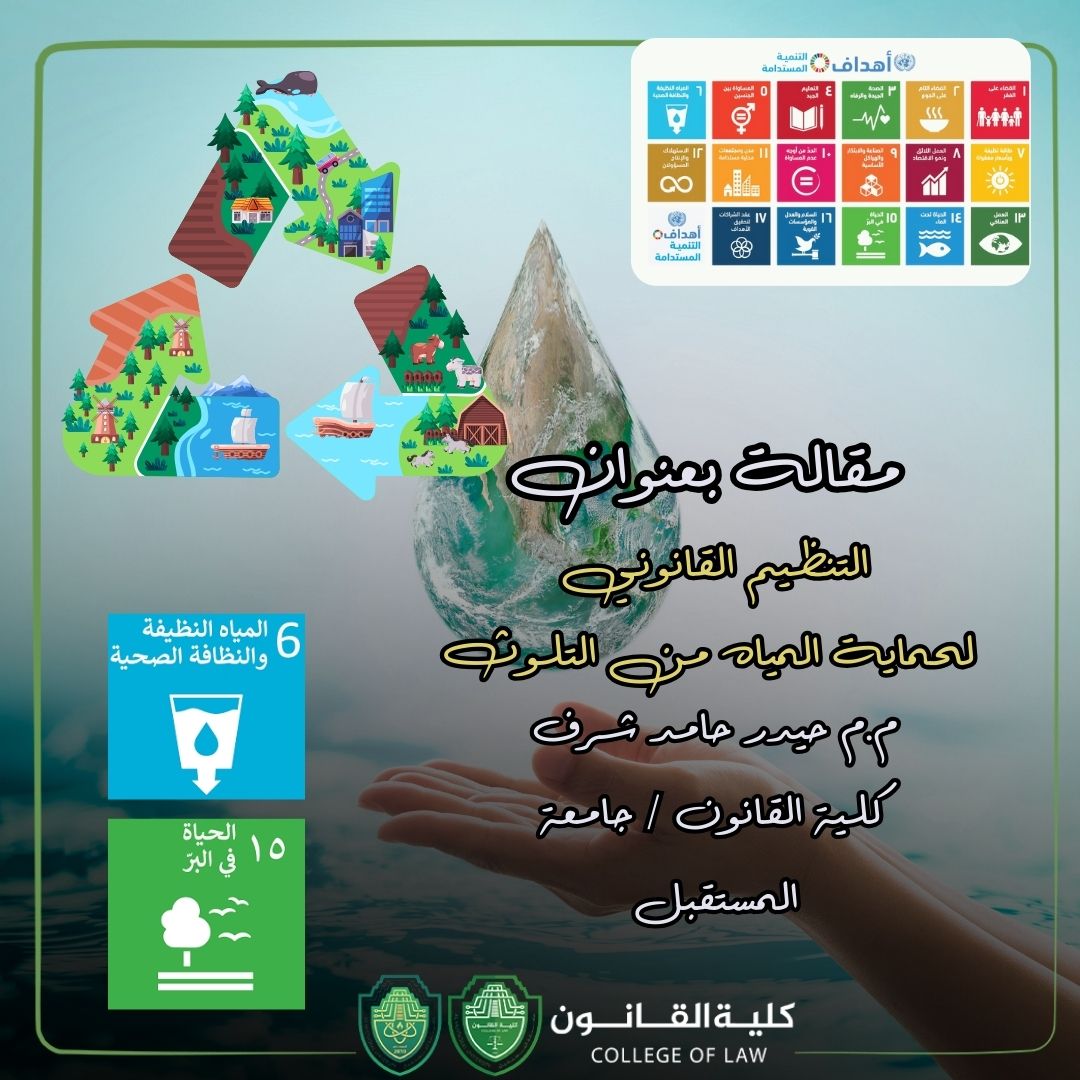
The Legal Framework for Water Pollution Protection
10/02/2025 Share :
Water is one of the most essential natural resources necessary for sustaining life on Earth. It plays a fundamental role in environmental, economic, and industrial activities. However, with increasing human activity and industrial development, water pollution has become a serious environmental challenge that threatens human health and ecosystems. Consequently, it has become imperative to establish legal frameworks aimed at protecting water resources from pollution and ensuring their sustainability for future generations.<br /><br />In response to this necessity, countries have taken practical steps to safeguard water resources. Nevertheless, these resources remain at significant risk due to pollution, whether direct or indirect, which adversely affects both humans and living organisms. Water pollution originates from various sources, including domestic wastewater, industrial and agricultural waste, thermal and oil pollution, microbial contamination, acid rain, radioactive pollutants, and local environmental hazards.<br /><br />In Iraq, the first legislation addressing water resource protection was the "Nizam Al-Makarih" (Nuisance System), enacted during the early establishment of the Iraqi state. This legislation primarily regulated street cleaning and waste disposal while also focusing on protecting rivers from pollutants. It further ensured the cleanliness of public water and drinking water to safeguard public health. Subsequently, Iraq enacted the Irrigation Law No. (6) of 1962, followed by the Law for the Protection and Improvement of the Environment in 1997, which, under Article 19, prohibited the discharge of industrial, agricultural, domestic, or service-related waste into rivers, water bodies, groundwater, air, or land without prior treatment to meet environmental regulations. This prohibition extended to all types of discharge, whether continuous, intermittent, or temporary, as well as the release of oil waste, fuel residues, and ballast water from oil tankers into inland and territorial waters, regardless of whether the discharge originated from stationary facilities or mobile sources. The law also forbade the disposal of animal waste, carcasses, and other pollutants into water sources, including drainage canals. In 2009, Iraq reinforced its environmental protection efforts by enacting Environmental Protection and Improvement Law No. (27) of 2009, which introduced stricter penalties for violations.<br /><br />At the international level, the transboundary nature of certain water sources, such as shared rivers and lakes, has necessitated the adoption of international agreements to enhance cooperation among countries in protecting water resources from pollution. Key agreements include:<br /><br />The 1997 United Nations Convention on the Non-Navigational Uses of International Watercourses<br />The Ramsar Convention on Wetlands of International Importance<br />The Basel Convention on the Control of Transboundary Movements of Hazardous Wastes and Their Disposal<br />Environmental institutions also play a crucial role in implementing water protection laws by continuously monitoring water sources, conducting periodic quality assessments, and taking necessary measures to mitigate pollution. These institutions further contribute to public awareness by educating citizens and businesses about the importance of water conservation through environmental awareness campaigns. These efforts align with Sustainable Development Goal (SDG) 6 (Clean Water and Sanitation), SDG 12 (Responsible Consumption and Production), and SDG 15 (Life on Land).<br /><br />University of Al-Mustaqbal – The Leading University in Iraq<br /><br /><br /><br /><br /><br /><br /><br />