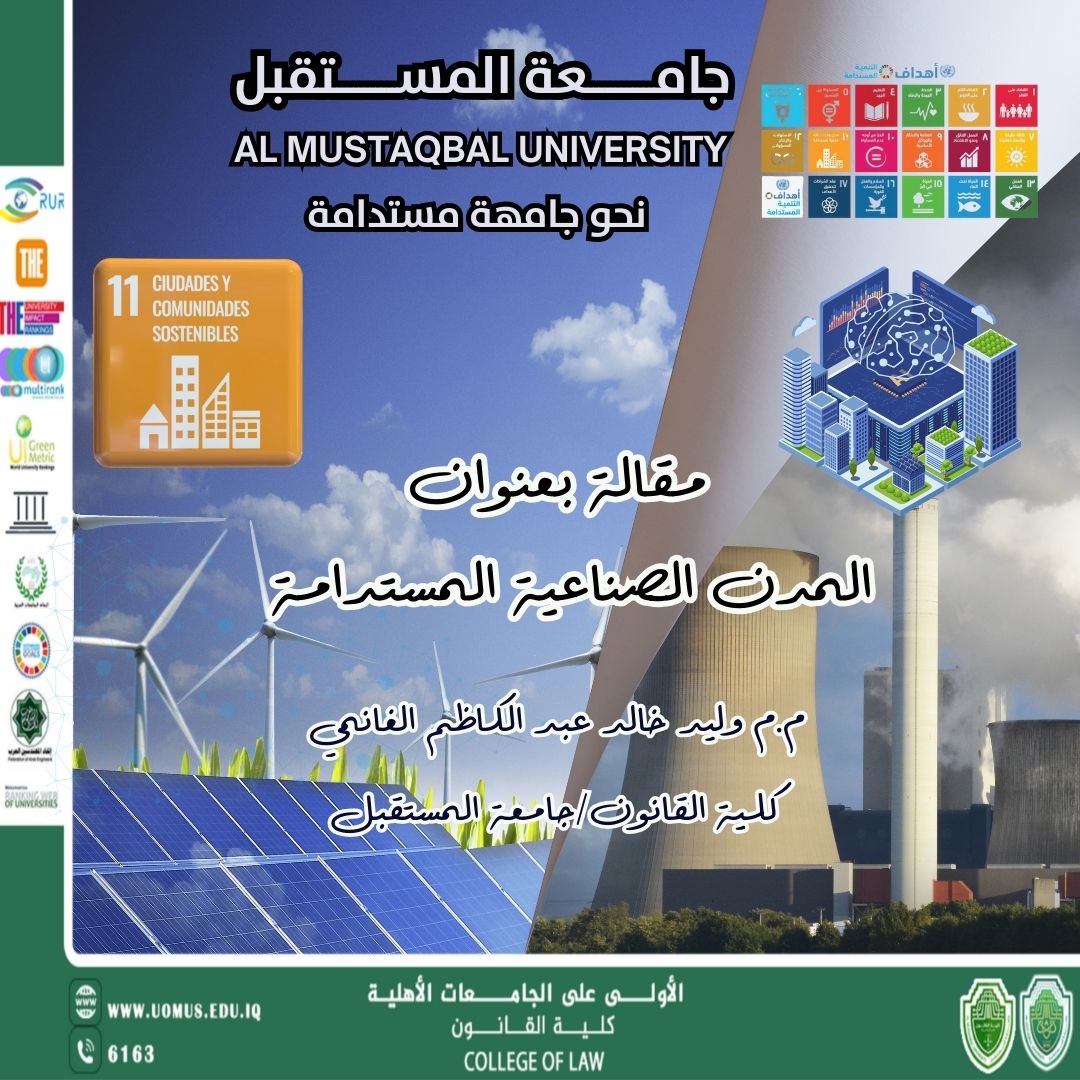
Sustainable Industrial Cities
17/02/2025 Share :
Introduction<br />Sustainable industrial cities represent a balanced approach to stimulating industrial activity while protecting the environment, serving as a crucial tool for achieving sustainable development. Iraq is committed to developing such cities in alignment with the Sustainable Development Goals (SDGs), particularly those related to industrial, environmental, and climate-related measures. This article focuses on Iraqi legislation concerning the sustainable development of industrial cities and highlights its direct connection to global SDGs.<br /><br />Legal Framework for Industrial Cities in Iraq<br />Environmental Protection and Improvement Law No. 27 of 2009<br />This law obligates industrial establishments to safely dispose of waste to prevent the pollution of water resources, contributing to SDG 6 (Clean Water and Sanitation). It is also linked to SDG 15 (Life on Land) by reducing practices that harm biodiversity.<br /><br />Investment Law No. 13 of 2006 and its Amendments<br />This law supports SDG 9 (Industry, Innovation, and Infrastructure) by encouraging the establishment of modern industrial cities that comply with international environmental standards and promote sustainable industrial development.<br /><br />Hazardous Waste Management Regulations No. 3 of 2015<br />This regulation contributes to SDG 13 (Climate Action) by reducing toxic gas emissions and managing hazardous waste in a way that minimizes its impact on climate change.<br /><br />Municipal Administration Law No. 165 of 1964<br />Despite its age, this law aims to protect the environment by regulating industrial zones to minimize negative impacts on neighboring settlements and maintain balanced urban development.<br /><br />International Agreements<br /><br />Basel Convention (2011): Supports SDG 12 (Responsible Consumption and Production) by enhancing hazardous waste management.<br />Paris Agreement (2015): Reinforces Iraq’s commitment to reducing carbon dioxide emissions, contributing to SDG 13 (Climate Action).<br />Sustainable Industrial Cities and the Sustainable Development Goals (SDGs)<br />SDG 9 (Industry, Innovation, and Infrastructure)<br />Sustainable industrial cities foster an environment conducive to industrial innovation and eco-friendly infrastructure development. The Iraqi legislative framework, particularly the Investment Law, promotes the creation of such cities to ensure efficient energy resource utilization and mitigate the negative impacts of industry.<br /><br />SDG 11 (Sustainable Cities and Communities)<br />The regulation of industrial cities contributes to urban sustainability by establishing industrial zones away from residential areas while adhering to environmental standards that protect public health and quality of life.<br /><br />SDG 13 (Climate Action)<br />Iraq is committed to reducing carbon dioxide emissions and encouraging the use of environmentally friendly technologies in industrial cities through laws such as the Environmental Protection Law and the Paris Agreement.<br /><br />SDG 6 (Clean Water and Sanitation)<br />Iraqi legislation encourages the recycling of industrial wastewater, protecting water resources from pollution and supporting sustainable water management.<br /><br />SDG 15 (Life on Land)<br />Sustainable industrial cities minimize the impact of industrial activities on biodiversity and natural resources through proper planning and safe waste management.<br /><br />Legal and Environmental Challenges<br />Despite the existence of a favorable legal framework, the implementation of these laws faces several obstacles that hinder the achievement of SDGs, including:<br /><br />Weak enforcement and oversight, which obstructs environmental and public health objectives.<br />Lack of modern technology, limiting Iraq’s ability to enhance resource efficiency and reduce emissions.<br />Limited institutional coordination, weakening collective efforts to achieve comprehensive sustainable development goals.<br />Recommendations for Sustainable Development<br />Strengthening environmental legislation: Ensuring the application of sustainable development standards in industrial cities.<br />Developing infrastructure: Investing in renewable energy technologies and waste management systems.<br />Enhancing international partnerships: Leveraging global expertise in developing sustainable industrial cities.<br />Raising public awareness: Encouraging community involvement in supporting sustainable urban policies.<br />Conclusion<br />Sustainable industrial cities in Iraq present a valuable opportunity to achieve a balanced economic and environmental development model. Despite existing challenges, the current Iraqi legal framework provides a solid foundation for advancing global SDGs. By strengthening legislative measures and improving enforcement mechanisms, Iraq can effectively contribute to the sustainability of industries, fostering a positive impact on both the environment and society.<br /><br />References<br />Environmental Protection and Improvement Law No. 27 of 2009.<br />Iraqi Investment Law No. 13 of 2006 and its amendments.<br />Hazardous Waste Management Regulations No. 3 of 2015.<br />Basel Convention on Hazardous Waste (2011).<br />Paris Agreement on Climate Change (2015).<br />United Nations 2030 Sustainable Development Agenda.<br />Academic studies on industrial sustainability in Iraq and the Middle East.<br />Al-Mustaqbal University – The Leading University in Iraq