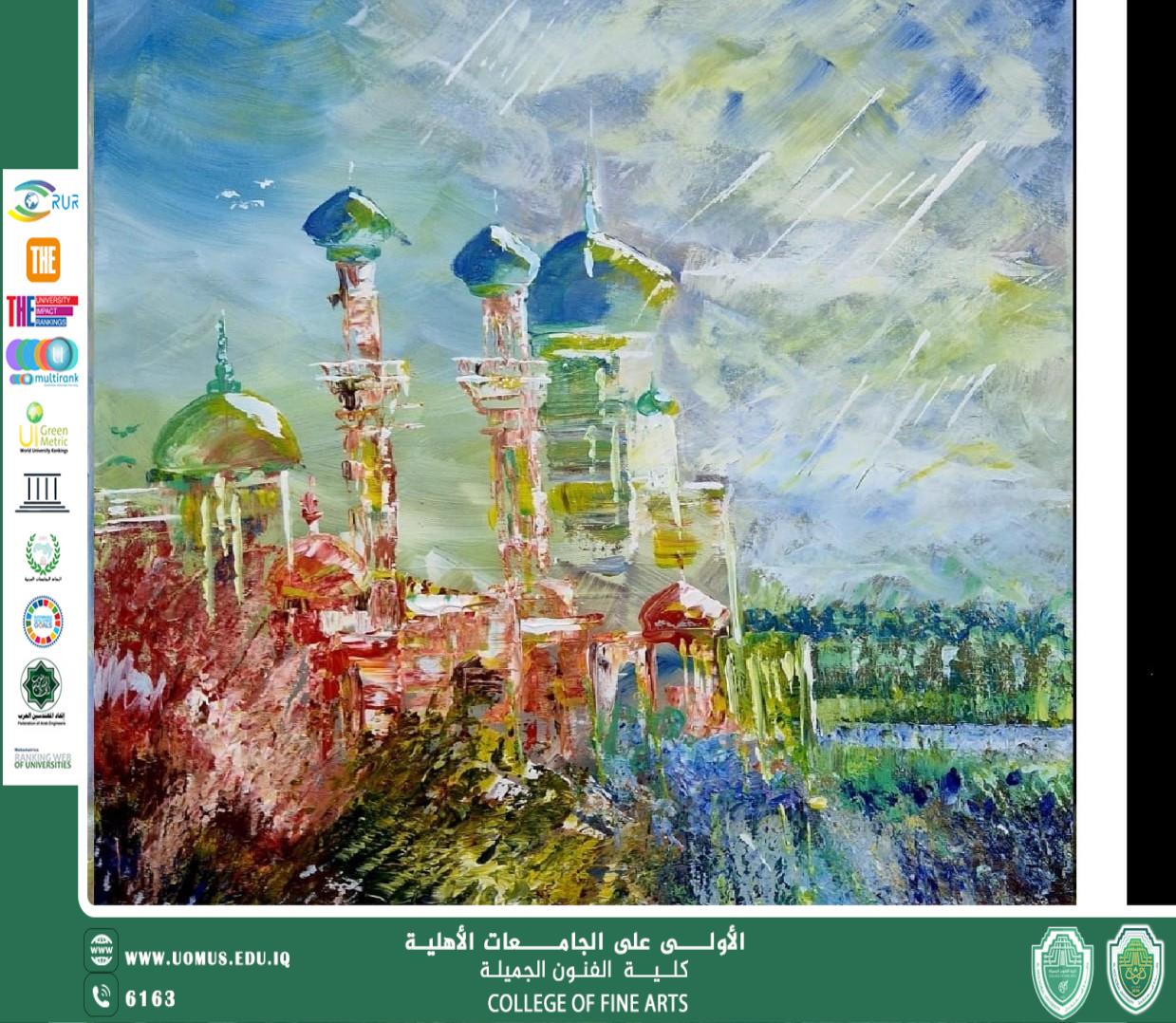
An Article titled "Exhibition Analysis of Dr. Asrar Samandar's Work "Light During the Storm" By Prof. Dr. Huda Hashem Mohammed
08/04/2025 Share :
In this painting, the artist presents a vibrant architectural scene where the religious structure (the mosque) is at the center, set against a dramatic backdrop of rain and interwoven beams of light. The artistic style used reflects an expressive impressionistic character, blending realistic details with color abstraction that enhances the spiritual and symbolic depth of the work. The visual and theatrical elements in the composition can be analyzed through the following aspects:<br /><br />The Mosque<br />The mosque represents the heart of spirituality and strength, occupying the center of the composition. Its minarets and domes, in shades of green and blue, seem to defy the surrounding storm. The use of warm colors (red and yellow) in the structure’s walls adds vitality to the building, creating a contrast with the cool background of blue and green shades. The mosque stands as a symbol of resilience, faith, and steadfastness in the face of nature's forces.<br /><br />The Sky and the Storm<br />The storm creates a dialectical relationship between the light in the overcast sky and the heavy clouds that threaten to obscure it. Brushstrokes and palette knife techniques are employed to express the wind and rain, contributing to the dramatic effect and evoking a sense of conflict within the natural world. The falling white lines enhance the feeling of rapid movement, as if the scene is pulsating with life and turmoil at the same time. The appearance of small birds in the background could symbolize freedom or inner peace, which shines through despite the storm.<br /><br />The Ground and Interaction with Nature<br />The use of dense and colorful brushstrokes and palette knife techniques on the ground creates a visual texture that implies continuous motion, as if the storm's impact extends beyond the sky to the earth itself. The green and water-filled spaces in the background suggest continuity and renewal, balancing the tension between conflict and tranquility.<br /><br />Artistic Techniques and Light<br />The loose and rapid brushstrokes, combined with palette knife movements, give the painting a dynamic, energetic feel. Samandar, as an artist, captures the moment with an emotionally direct approach. The vibrant and intertwined colors emphasize the emotional impact of the storm and the light, highlighting their interplay.<br /><br />The dramatic and semiotic dimension manifested in the mosque as a symbol of spirituality and religious structure amidst the storm reflects the idea of resilience and faith in the face of challenges. The rain, represented by the descending white lines, serves as a symbol of purification and transformation, alluding to the spiritual washing away of challenges that refine the human spirit.<br /><br />The presence of birds, symbolizing peace in the scene despite the storm, suggests that there is still room for flight and liberation, reflecting hope.<br /><br />Finally, "Light During the Storm" carries a profound philosophical dimension, where spirituality meets the challenges of reality. The mosque is not merely an architectural element but a symbol of steadfastness and defiance against the ever-changing forces of nature. The painting expresses the duality of life, where light always follows the storm, and where enduring values remain steadfast, despite the turbulence of time and space.<br /><br />Al-Mustaqbal University the first university of Iraq .