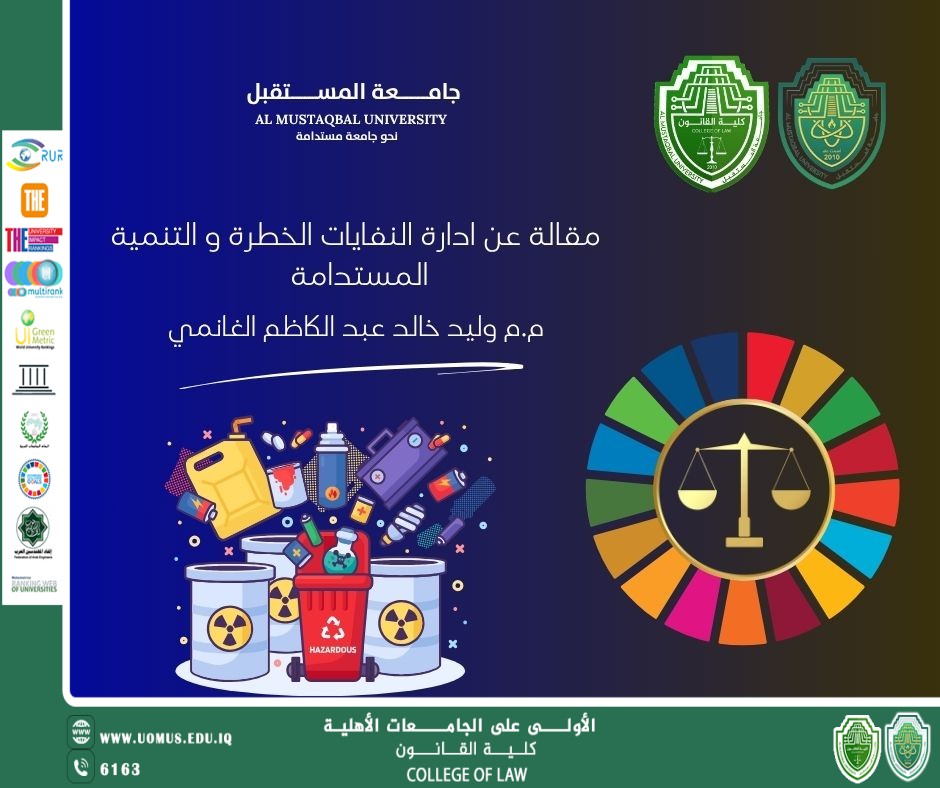
Article on Hazardous Waste Management and Sustainable Development
27/06/2025 Share :
The Iraqi legislator criminalized violations related to hazardous waste under Environmental Protection and Improvement Law No. (27) of 2009, with Article 35 stipulating severe penalties for violating the provisions of Article 20. These penalties include imprisonment, returning hazardous waste to its original location or disposing of it in an environmentally friendly manner, and obligating the offender to compensate for the resulting damage. Article 20 prohibits the transport, handling, burial, storage, or import of hazardous and radioactive waste except under strict control, requiring the use of reliable environmental methods and prior official approval from competent authorities. Article 35 states that any act violating these control measures is subject to criminal penalties and obliges the offender to compensate for the damage caused. The crime of handling hazardous waste is defined as all positive or negative acts that violate national legislation as a result of unlawful handling of hazardous waste. The elements of the crime include the protected object, namely hazardous waste such as chemical or radioactive materials; the material element, fulfilled when offenders commit prohibited acts like handling hazardous waste, illegal storage, burial or incineration threatening the environment, or transport and import without authorization; and the moral element, where the offender knows the danger of their actions and intends to commit them, or crimes occur unintentionally due to negligence or lack of preventive measures. The legislator imposes penalties including imprisonment, restoring the situation to its previous state, and compensating for material and moral damages to the environment and individuals. Regulatory measures include classifying waste to distinguish hazardous substances and prevent illegal activities; aligning national laws with international standards by ratifying the Basel Convention on the Control of Transboundary Movements of Hazardous Wastes and Their Disposal under Law No. 3 of 2011; and requiring licenses for handling hazardous waste according to instructions like the Environmental Protection Law and Hazardous Waste Management Instructions No. 3 of 2015. The prohibition on hazardous waste management aligns with several Sustainable Development Goals, including Goal 3 (Good Health and Well-being) by preventing hazardous waste generation to protect human health, Goal 6 (Clean Water and Sanitation) by reducing waste leakage into water sources, Goal 15 (Life on Land) by preventing environmental damage and preserving biodiversity and natural resources, and Goal 11 (Sustainable Cities and Communities) by supporting healthy and sustainable communities. This prohibition reflects Iraq’s commitment to environmental protection, human health, and securing sustainable resources for future generations, strengthening the link between national legislation and global sustainable development goals and highlighting the importance of sound waste management as part of comprehensive environmental protection efforts.<br /><br />