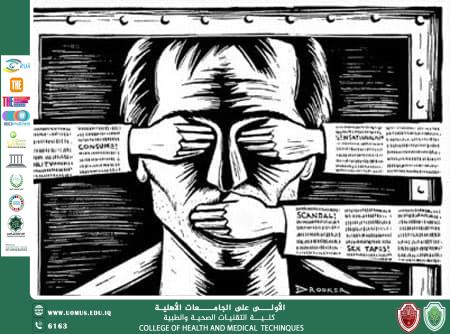
Human Rights in International Law
17/08/2025 Share :
Human rights in international law are a set of fundamental rights and freedoms that every individual is entitled to simply by being a human being, regardless of gender, race, religion, or nationality. International law aims to guarantee these rights and protect them from violations, whether by states or other actors.<br /> The international human rights movement was strengthened when the United Nations General Assembly adopted the Universal Declaration of Human Rights on December 10, 1948. For the first time in human history, the Declaration, formulated as "a common standard of achievement for all peoples and all nations," enshrined the fundamental civil, political, economic, social, and cultural rights to which all human beings should be entitled. Over time, the Declaration has gained widespread acceptance as the fundamental standard of human rights that everyone should respect and protect. The Universal Declaration of Human Rights, together with the International Covenant on Civil and Political Rights and its two Optional Protocols, and the International Covenant on Economic, Social, and Cultural Rights, constitute the so-called International Bill of Human Rights. A series of international human rights treaties and other instruments adopted since 1945 have given legal form to inherent human rights and established the international human rights body. Other instruments have been adopted at the regional level, reflecting specific human rights concerns in the region and providing specific protection mechanisms. Most states have also adopted constitutions and other laws that formally protect fundamental human rights. While international treaties and customary international law form the backbone of international human rights law, other instruments, such as internationally adopted declarations, guidelines, and principles, contribute to its understanding, implementation, and development. Respect for human rights requires the establishment of the rule of law at the national and international levels. International human rights law establishes obligations that states are bound to respect. By becoming parties to international treaties, states assume obligations and duties under international law to respect, protect, and fulfill human rights. The obligation to respect human rights means that states must refrain from interfering with or diminishing the enjoyment of those rights. The obligation to protect human rights requires states to protect individuals and groups from violations of those rights. The obligation to fulfill means that states must take positive action to facilitate the enjoyment of basic human rights.<br /> By ratifying international human rights treaties, governments undertake to implement domestic measures and legislation consistent with their treaty obligations and duties. Where domestic legal measures fail to address human rights violations, individual complaint mechanisms and procedures are available at the regional and international levels to help ensure that international human rights standards are effectively respected, implemented, and enforced domestically.<br />International Human Rights Law<br /> International human rights law is a body of international law aimed at promoting human rights at the social, regional, and local levels. International human rights law consists primarily of a set of treaties and conventions signed by sovereign states, which have binding legal effect on the parties that have ratified them, as well as customary international law. Although not legally binding, international human rights documents contribute to the implementation, explanation, and development of international human rights law. Many other international human rights instruments have been recognized as a source of political commitment.<br />The Relationship Between International Human Rights Law and International Humanitarian Law<br /> The relationship between international human rights law and international humanitarian law is a matter of dispute among international law scholars. Pluralist scholars view international human rights law as distinct from international humanitarian law, while constitutionalists consider international humanitarian law a branch of international human rights law. In short, those who favor autonomous systems emphasize the difference in the applicability of the two laws; according to their view, international humanitarian law can only be applied in situations of armed conflict.<br />Another, more systematic, view is that international humanitarian law represents a function of international human rights law; It includes general rules that apply to everyone at all times, as well as specialized rules that apply only in specific situations, such as armed conflict between a state and a military occupation (international humanitarian law), or to groups of people, including refugees (such as the 1951 Refugee Convention), children (the Convention on the Rights of the Child), and prisoners of war (the Third Geneva Convention of 1949).<br />Legal Foundations<br />- The Universal Declaration of Human Rights (1948): This is the cornerstone of international human rights law and has inspired more than 80 international and regional treaties.<br />- The International Covenant on Civil and Political Rights and the International Covenant on Economic, Social and Cultural Rights: Both entered into force in 1976 and, together with the Universal Declaration, form what is known as the "International Bill of Human Rights."<br />- The Geneva Conventions: These protect human rights during armed conflict and are part of international humanitarian law.<br />International Mechanisms<br />- The United Nations Human Rights Council: Established in 2006 to replace the Commission on Human Rights, it periodically reviews the situation of countries.<br />- The International Criminal Court: Specialized in prosecuting individuals accused of crimes against humanity.<br />- Regional Mechanisms: Such as the European Court of Human Rights and the African Court on Human and Peoples' Rights.<br />Contemporary Challenges<br /> Despite significant progress, challenges remain, such as:<br />- Racial and religious discrimination.<br />- Violations of the rights of minorities and migrants.<br />- Restrictions on freedom of expression and the press.<br />- Weak implementation of international rulings in some countries.<br />The American Inconsistency in Implementing Human Rights<br /> Here, we take two examples of countries that demonstrate the United States' ambivalence in implementing international human rights law:<br />1- South Africa<br /> South Africa rejects the US human rights report, describing it as "biased." The situation of white citizens in South Africa was one of the main points of the US (European) human rights report.<br /> The South African government strongly rejected the contents of the US State Department's 2024 human rights report, describing the document as "biased, inaccurate, and lacking credibility." This is a new escalation of tensions between the two countries, against the backdrop of what Washington considered "systematic violations against ethnic minorities" in the African country.<br /> The US report, released after months of delay, accused the South African government of taking "alarming steps toward the expropriation of Afrikaner land," noting "an escalation in violations against ethnic minorities."<br />The report also noted what it called a "significant deterioration" in the human rights situation compared to last year's report, which recorded no substantive changes.<br /> In a move that sparked widespread controversy, US President Donald Trump signed an executive order this year calling for the resettlement of Afrikaners in the United States, describing them as "victims of systematic violence against minority landowners." The South African government considered these statements "a reiteration of far-right allegations."<br />Challenging Washington's Human Rights Eligibility<br /> In a strongly worded official statement, the South African government said the US report "reflects double standards," adding, "It is ironic that these accusations are made by a country that has withdrawn from the UN Human Rights Council and no longer sees itself subject to the international review system, and then claims to issue objective reports without any mechanism for scrutiny or dialogue."<br /> Meanwhile, the US report faced criticism from human rights organizations and former State Department experts, who argued that the document "ignores violations committed by countries allied with Washington," such as Israel and El Salvador, while escalating its rhetoric toward countries with which it has political differences, such as South Africa and Brazil.<br />2-Gaza<br /> The clearest example of this today is the actions of the Zionist entity in Gaza, which has provoked angry reactions from some European countries. Germany has taken steps to halt or restrict arms exports to Israel, but it said this is not enough. "More must be done, and quickly," it said. Last week, German Chancellor Friedrich Merz announced a partial halt to German arms exports to Israel, justifying the move by citing Israel's announced plans to expand its military operation in the Gaza Strip and seize Gaza City. The situation in the coastal enclave has deteriorated since the outbreak of war following an attack carried out by the Palestinian Hamas movement and other groups in Israel on October 7, 2023. The Council of Europe, headquartered in Strasbourg, France, was founded in 1949. It aims to protect democracy, human rights, and the rule of law in Europe.<br />Mustaqbal University<br />The first university in Iraq