
An Article "Architectural Excellence in the Design of the Parthenon "By: Assistant Professor Dr. Ali Atiya Al-Saadi Scientific Associate of the College of Fine Arts
24/09/2025 Share :
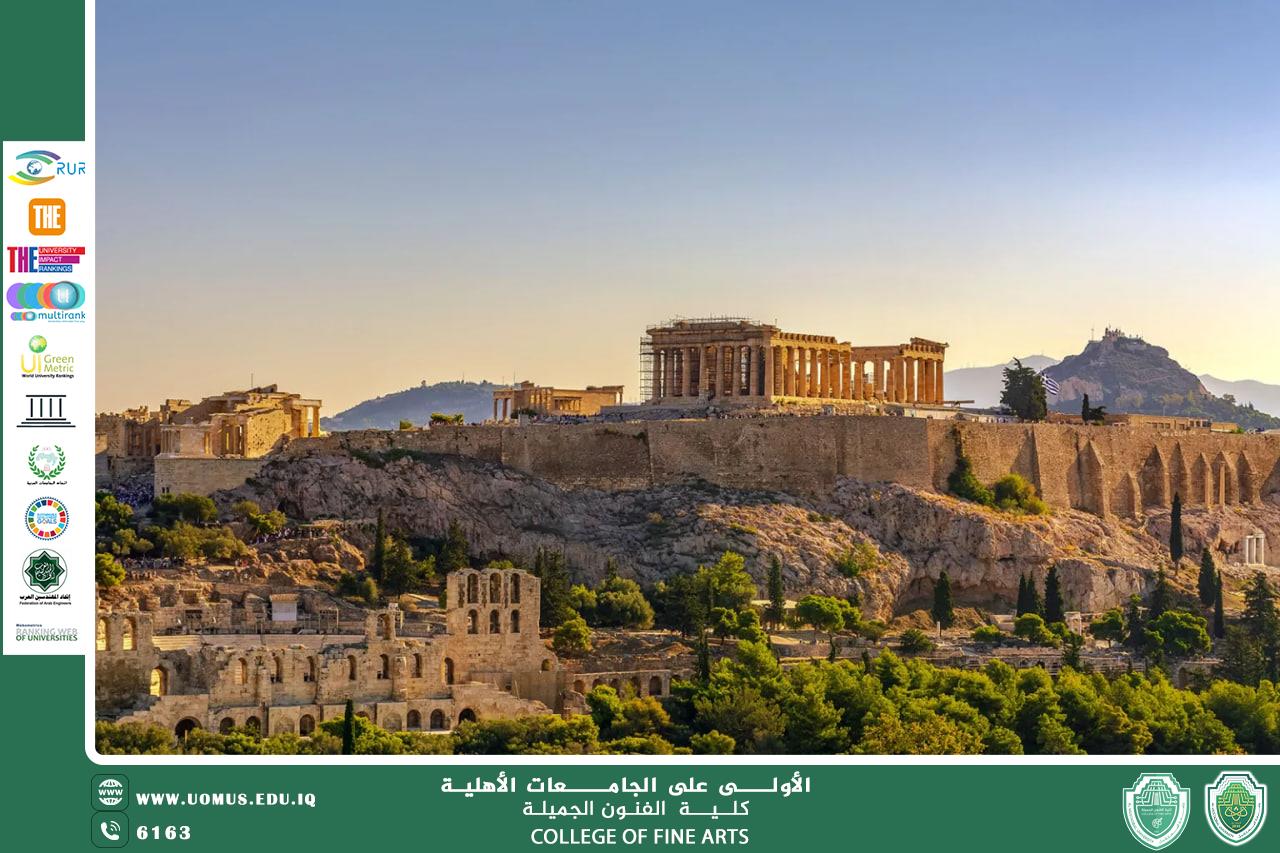
The Parthenon in Athens is considered the pinnacle of classical Greek architecture and a symbol of Athens’ power, wealth, and culture in the 5th century BC. It was built under Pericles between 447-432 BC, designed by Ictinus and Callicrates, with Phidias overseeing the sculpture and decoration. The Parthenon measured about 70 × 30 meters, covering around 2,170 square meters. Approximately 13,400 stones were used, some weighing up to 15 tons, joined with iron clamps. The temple follows the Doric style with Ionic elements, with 8 columns at the front and rear and 17 along each side. Architects employed the Golden Ratio in proportions (9:4) both in the exterior and the inner cella, creating harmony and balance. Subtle curvatures in the base, columns, and entablature corrected optical illusions, ensuring straight lines appeared visually accurate. Symmetry in façades and sculptures enhanced visual harmony. The Parthenon became a lasting inspiration in global architecture, influencing structures from the Roman Pantheon to the U.S. Supreme Court.<br /><br />The Parthenon embodies principles of sustainability through its use of durable natural materials that minimized the need for frequent rebuilding. Its precise engineering and optical refinements ensured visual stability, reducing the necessity for later modifications. By balancing form, function, and beauty, the Parthenon reflects the essence of sustainable architecture, serving religious, civic, and symbolic purposes in a structure that has endured for millennia.<br /><br />Almustaqbal University, The First University in Iraq.