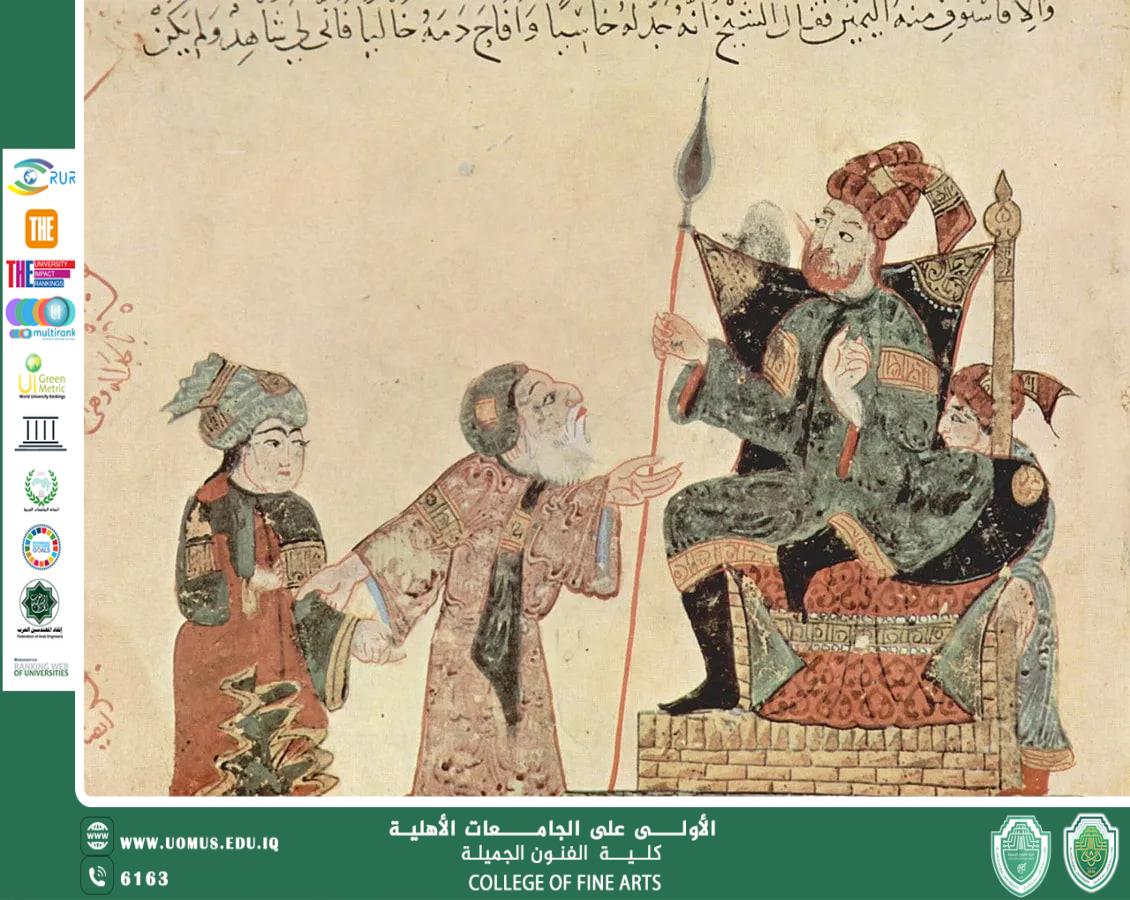

An Article " Yahya al-Wasiti and the Establishment of Islamic Miniature Art "By: Asst. Prof. Dr. Ali Atiya Al-Saadi
04/10/2025 Share :
Yahya ibn Mahmud al-Wasiti is considered one of the pioneers of Islamic art and remains a central figure in the history of Islamic miniatures. He flourished in the 13th century, likely born in Wasit (Iraq) before moving to Baghdad. Al-Wasiti was not only a painter but also a skilled calligrapher, merging text, ornament, and illustration, thus founding what became known as the Baghdad school of manuscript painting.<br /><br />His most famous work is the illustrated manuscript of “Maqamat al-Hariri,” completed in 1237 CE, containing around ninety-nine miniatures. These miniatures vividly depict scenes of daily life, architecture, clothing, food, and social interactions, blending realism with decorative style. Through them, al-Wasiti provided a visual documentation of 13th-century Islamic society with remarkable artistic originality.<br /><br />The legacy of al-Wasiti is vital as it shaped later traditions of Islamic miniature painting, offered a unique window into medieval cultural life, and inspired modern Arab artistic movements.<br /><br />Sustainability in al-Wasiti’s Legacy<br /><br />Al-Wasiti’s heritage achieves the Sustainable Development Goal of “Quality Education” by preserving and transmitting artistic knowledge to future generations. His legacy supports sustainability on several levels:<br /><br />Intellectual sustainability: safeguarding artistic techniques and teaching them to students and artists.<br /><br />Cultural sustainability: maintaining cultural identity by exhibiting and reviving his art in museums and galleries.<br /><br />Economic sustainability: using his heritage in cultural tourism, exhibitions, and publications, generating sustainable resources for cultural institutions.<br />Thus, Yahya al-Wasiti’s legacy serves as a cultural bridge that connects past and present, ensuring sustainability in knowledge, identity, and creativity.<br /><br />Almustaqbal University, The First University in Iraq.