College of Arts Quality Official Affirms: Education is "The Most Important Investment" for Building Sustainable and Progressive Societies
22/10/2025 Share :
Education is widely recognized as one of the most powerful tools for shaping individuals and societies. It is not only a process of gaining knowledge but also a foundation for creating values, skills, and attitudes that drive both personal and national progress. In today’s world, where societies face rapid changes and global challenges, education becomes even more essential for sustainability and long-term development.
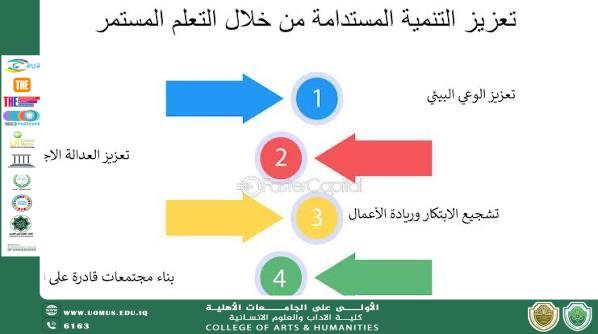
A sustainable and progressive society is one that can adapt to change, use its resources wisely, and ensure fairness for all members. Education plays a central role in achieving these goals. By equipping people with critical thinking and problem-solving abilities, it allows them to face complex issues such as climate change, economic inequality, and technological transformation. Without education, societies would lack the creativity and innovation needed to move forward.
Moreover, education helps in reducing poverty and bridging the gap between social classes. When people have access to quality education, they are more likely to secure decent jobs, improve their living conditions, and contribute to the economy. This process reduces dependence on aid and builds self-reliance, which is a key element of sustainability. In this way, education serves not only as a personal benefit but as a collective investment in the future of the whole society.
Education also promotes equality and social justice. A society cannot progress if only a small segment has access to knowledge while others are left behind. Providing equal educational opportunities for all—regardless of gender, race, or economic background—ensures that every person has the chance to participate in building a better future. In fact, societies that empower women through education often experience higher levels of development, healthier families, and more stable communities.
In addition, education encourages innovation and scientific advancement. Universities and research centers become the birthplaces of new ideas, technologies, and solutions that make societies stronger and more competitive. From renewable energy to medical breakthroughs, most sustainable solutions emerge from educational institutions. A society that invests in education therefore invests in progress, as it creates a culture that values curiosity, experimentation, and discovery.
Cultural awareness is another important outcome of education. A progressive society is not only advanced in technology and economy but also rich in culture, tolerance, and human values. Education teaches respect, cooperation, and global citizenship. These values are crucial in today’s interconnected world, where peace and stability depend on understanding between different peoples and nations.
Furthermore, education helps societies to use their natural resources responsibly. When citizens are educated about environmental issues, they are more likely to adopt sustainable lifestyles and support policies that protect the planet. This connection between education and sustainability cannot be ignored, especially as humanity faces environmental crises such as global warming and biodiversity loss.
Education is also a lifelong journey. A society that promotes continuous learning ensures that its members remain adaptable and open to change. This is especially important in the age of digital technology, where new skills are required almost every day. Lifelong education helps workers remain competitive in the job market and helps societies remain strong in the global economy.
The role of teachers and educational institutions is therefore critical. Schools and universities are not just places for transferring knowledge; they are centers for building character, values, and leadership. A sustainable and progressive society relies on strong educational systems that inspire students to think independently, act responsibly, and lead with vision.