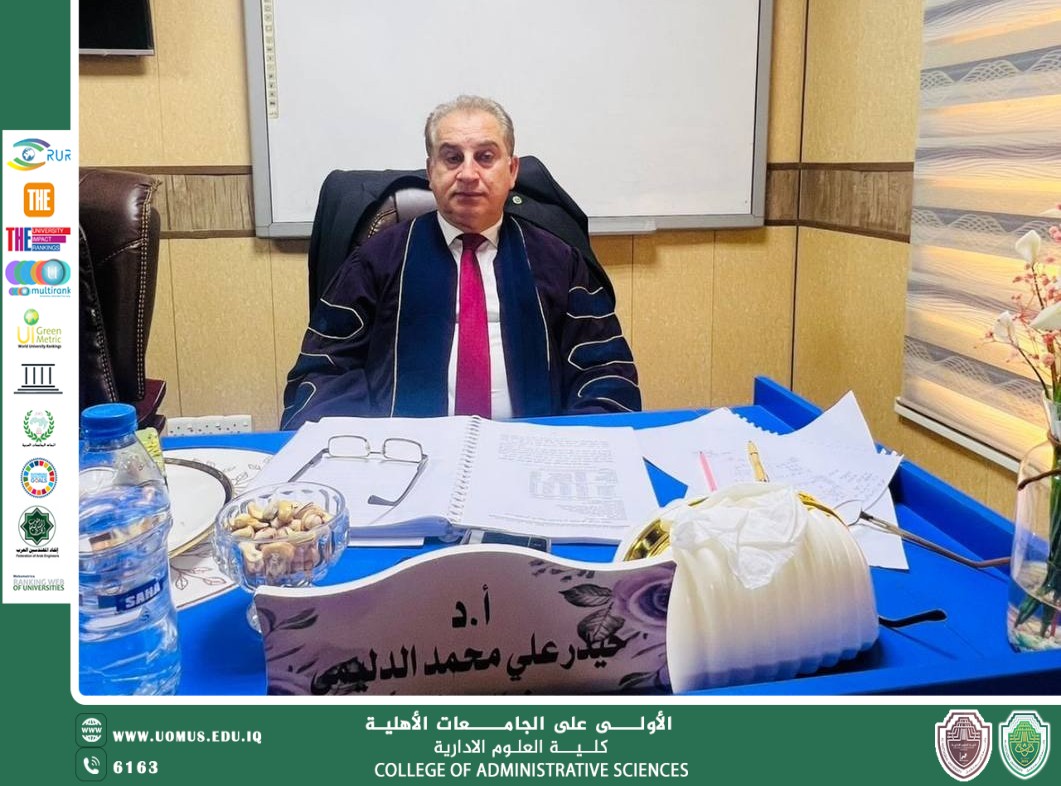
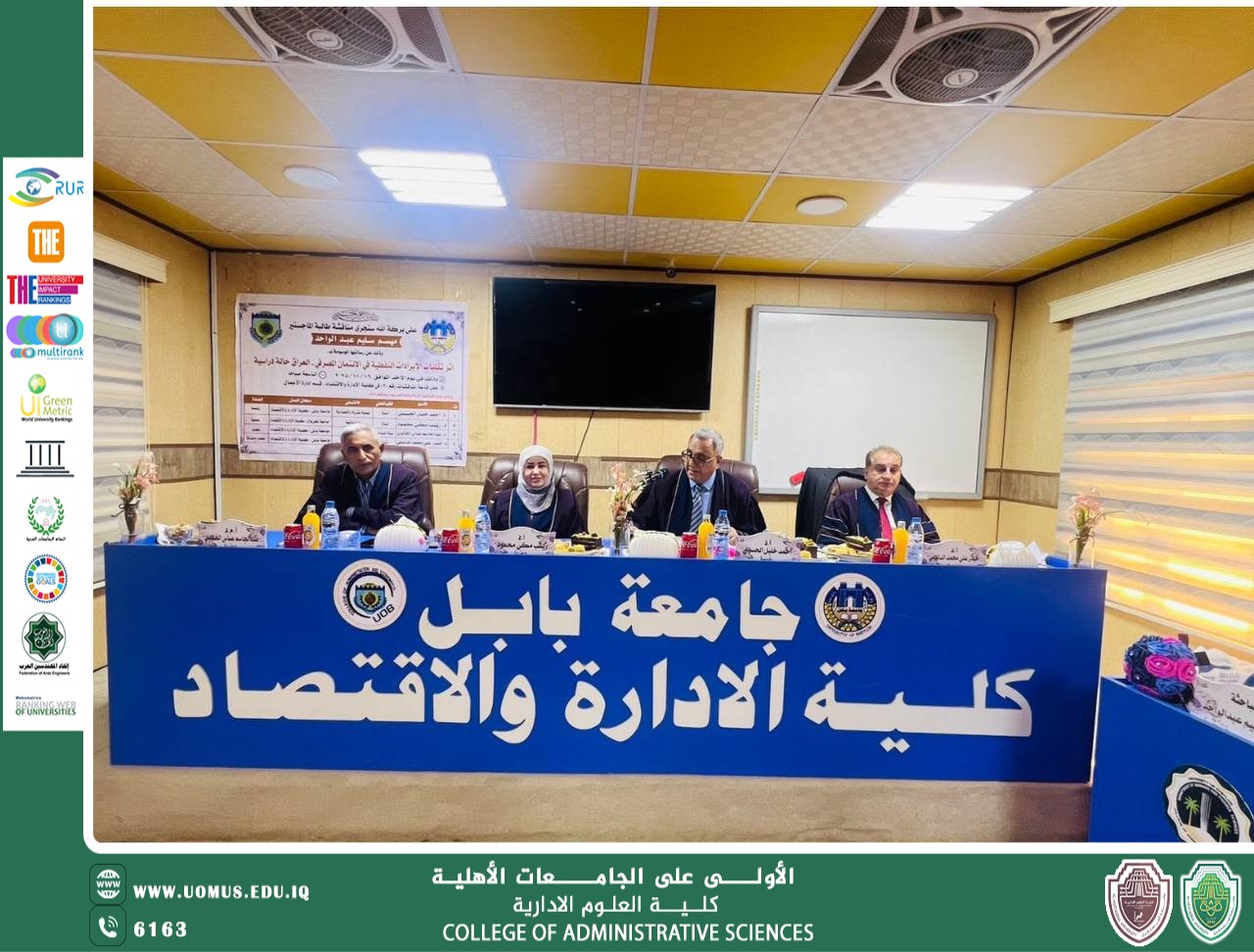
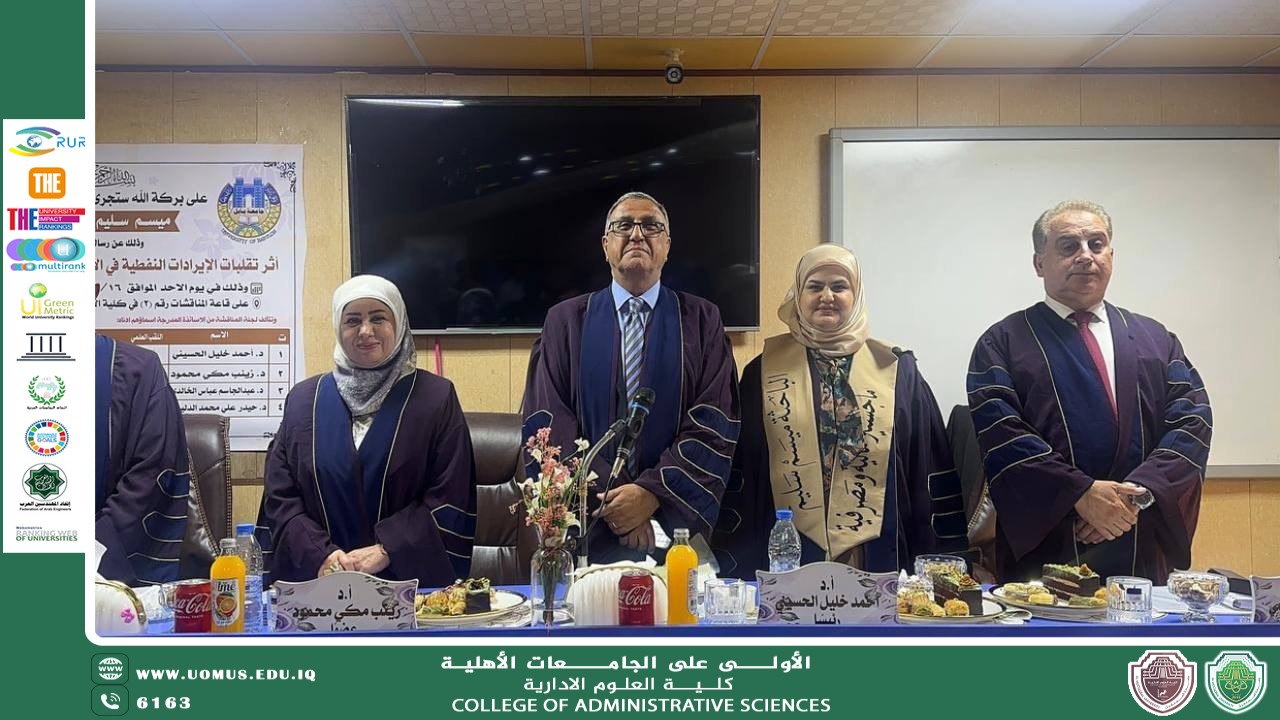
Dean of the College of Administrative Sciences Serves as Member and Supervisor for a Master’s Thesis in Banking and Finance at the College of Administration and Economics, University of Babylon
20/11/2025 Share :
In a distinguished academic setting, the Dean of the College of Administrative Sciences, Professor Dr. Haider Ali Al-Dulaimi, participated as a committee member and supervisor in the defense of the master’s thesis presented by student Maisam Salim Abdulwahid, titled:
“The Impact of Oil Revenue Fluctuations on Bank Credit – Iraq as a Case Study,”
submitted in partial fulfillment of the requirements for the Master’s degree in Banking and Finance.
The thesis defense was successfully completed, and the academic committee approved the research and granted the student the Master’s degree after meeting all scientific research requirements and the accredited academic standards.
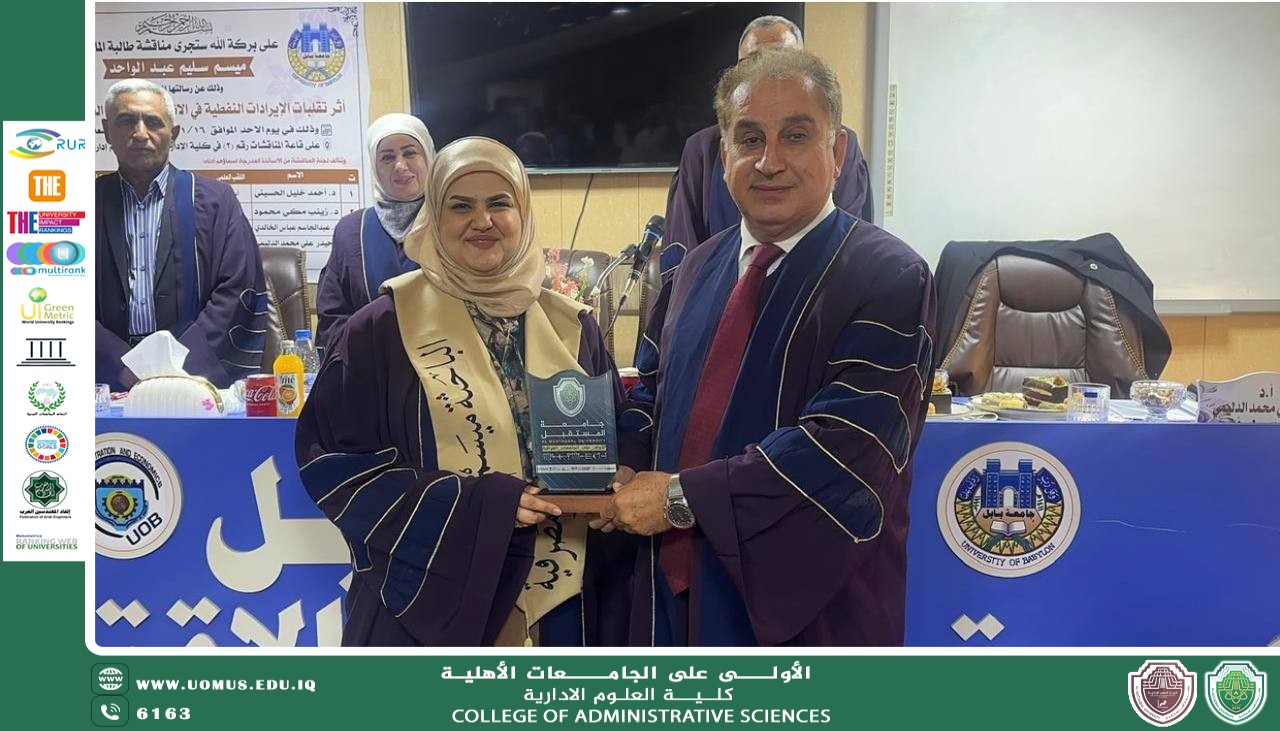
The Dean also presented the student with Al-Mustaqbal University’s Shield as a token of appreciation on this occasion and in celebration of her achievement in earning a Master’s degree in Banking and Finance.
The study aimed to measure and analyze the impact of oil revenue fluctuations on the level of bank credit in Iraq, given the country’s substantial dependence on oil revenues as the primary source of public expenditure. The research examined the nature of the relationship between oil price volatility and the volume of bank credit granted to both the public and private sectors, with a focus on the channels through which oil shocks are transmitted to the banking system.
The study adopted an econometric approach using annual/quarterly data for the period (…) and included several key economic variables such as oil revenues, government expenditure, exchange rate, money supply, and bank credit. Advanced analytical models such as VAR and ARDL were applied to measure causal relationships and determine the direction and strength of the effects among the variables under study.
The results revealed that fluctuations in oil revenues exert a significant and direct influence on bank credit in Iraq. Higher oil revenues contribute to an expansion of credit due to improved liquidity and increased public spending, whereas declining revenues lead to reduced credit levels and heightened pressure on banks. The study also indicated that limited economic diversification and the banking sector’s reliance on government funding increase the sensitivity of credit to oil shocks.
The study concluded with recommendations emphasizing the need to adopt financial and banking policies that mitigate the impact of oil shocks on the banking sector, including supporting the private sector, developing alternative financing instruments, and expanding non-oil revenue sources to enhance financial stability and reduce the vulnerability of the banking system to external fluctuations.