Towards Hunger-Free Societies: Integrating Quality Education with Agricultural and Food Development Policies
24/12/2025 Share :
Prof. Dr. Haider Ali Al-Dulaimi
College of Administrative Sciences – Al-Mustaqbal University
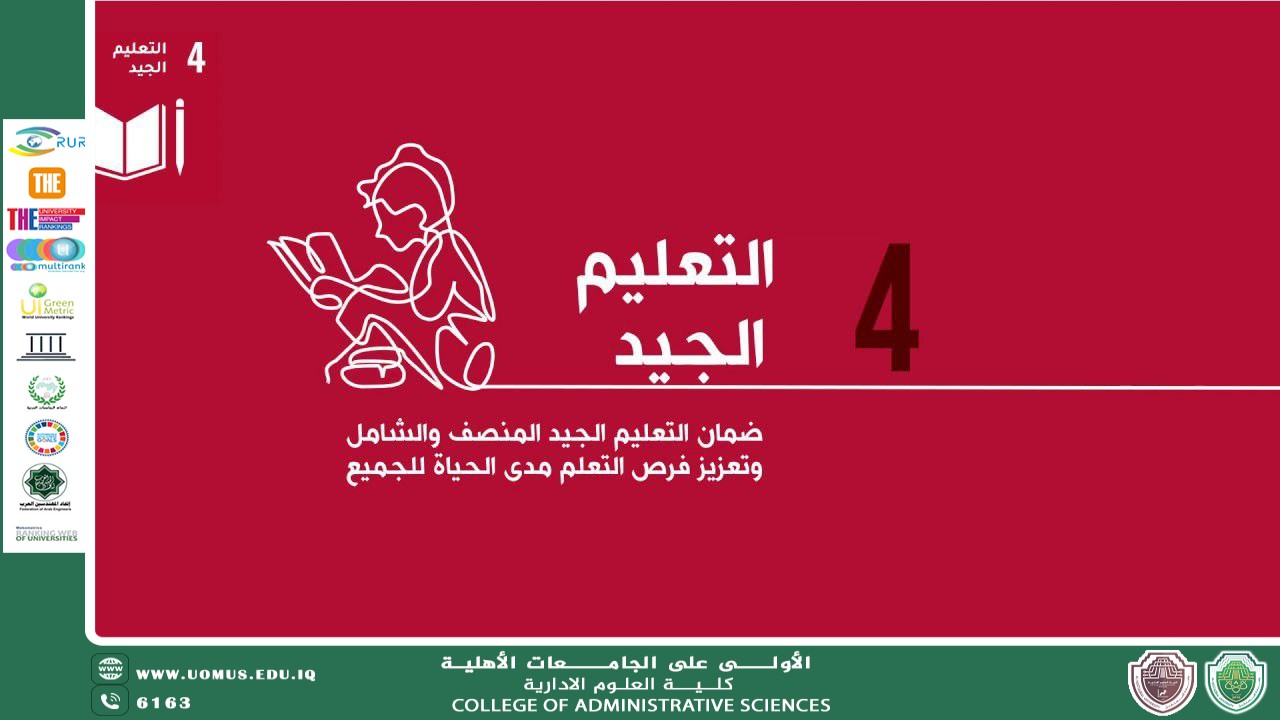
Hunger and food insecurity represent some of the most prominent challenges facing many societies, particularly in developing countries, due to their serious repercussions on public health, social stability, and economic development. The Sustainable Development Goals have emphasized the importance of ending hunger and achieving food security (Goal 2), alongside ensuring inclusive, equitable, and quality education (Goal 4), as two fundamental pillars for building societies capable of achieving self-sufficiency and sustainability.
Quality education plays a pivotal role in enhancing food and agricultural awareness by equipping individuals with the knowledge and skills necessary to improve agricultural production, rationalize the use of natural resources, and adopt modern technologies in agriculture and food processing. An educated farmer is better able to apply sustainable agricultural practices, increase productivity, and reduce food loss, thereby contributing to strengthening national food security.
Education also contributes to preparing specialized cadres capable of formulating and implementing effective agricultural and food policies based on scientific research and innovation, while taking into account environmental and economic sustainability requirements. Here, the role of universities and colleges stands out in developing academic programs related to agricultural sciences, food economics, and sustainable resource management, and aligning them with societal needs and labor market demands.
On the other hand, quality education enhances a culture of healthy nutrition and contributes to improving consumption patterns among individuals and households, thereby reducing malnutrition and food waste. Education also supports the dissemination of concepts of agricultural entrepreneurship and encourages small and medium-sized enterprises in the fields of food production, processing, and marketing, which creates job opportunities and contributes to improving income levels in rural areas.
Achieving hunger-free societies requires genuine integration between educational policies and agricultural and food policies, whereby education is viewed as a strategic tool for capacity building rather than merely a social service. Quality education empowers individuals to actively participate in achieving food security, supports innovation, and enhances societies’ resilience in the face of food and economic crises.
In conclusion, investing in quality education, alongside adopting sound agricultural and food policies, forms the foundation for achieving sustainable food security and building healthier and more stable societies. Through this integration, a clear path can be drawn toward a hunger-free future based on knowledge, production, and comprehensive development.