Rabies
27/12/2025 Share :
Introduction
Rabies is an acute, fatal viral disease that affects the central nervous system of both humans and animals. The disease is most commonly transmitted through a bite or scratch from an infected animal and is considered one of the most dangerous zoonotic diseases. Despite the availability of effective vaccines, rabies remains a public health problem in many developing countries.
Causative Agent
Rabies is caused by a virus belonging to the family Rhabdoviridae, genus Lyssavirus. The virus has a cylindrical (bullet-shaped) structure and infects nerve cells, causing acute encephalitis.
Modes of Transmission
The rabies virus is usually transmitted through:
• Bites from infected animals (the most common route)
• Scratches on open skin
• Licking of wounds or mucous membranes (mouth, eyes)
The animals most commonly responsible for transmission include:
• Dogs (the main global source)
• Cats
• Bats
• Foxes and wolves
Incubation Period
The incubation period typically ranges from 1 to 3 months but may be shorter or longer depending on:
• The location of the bite (its proximity to the brain)
• The severity of the bite
• The amount of virus transmitted
Clinical Manifestations
Rabies infection progresses through several stages:
1. Prodromal stage:
o Fever
o Headache
o General fatigue
o Pain or tingling at the bite site
2. Acute neurological stage:
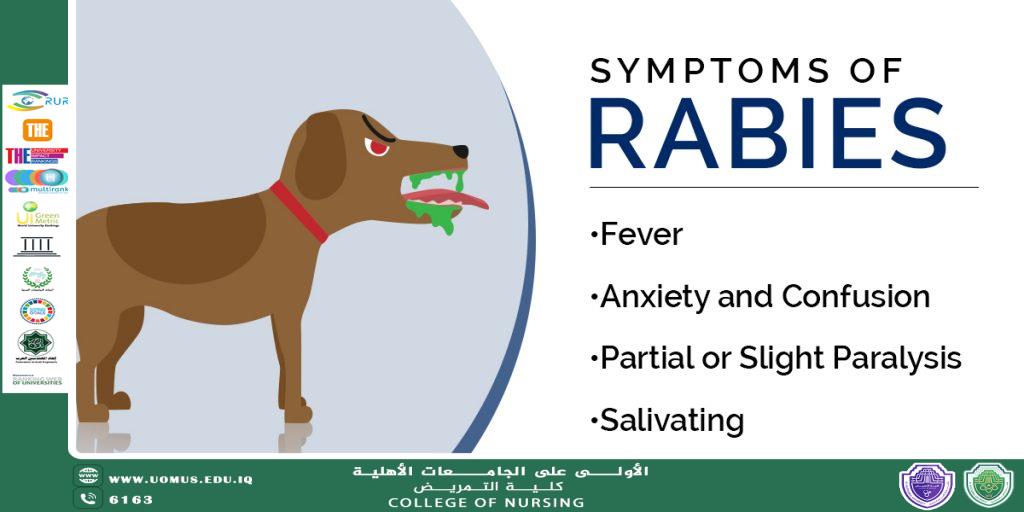
o Anxiety and agitation
o Muscle spasms
o Fear of water (hydrophobia)
o Fear of air (aerophobia)
o Excessive salivation
3. Coma and death stage:
o Paralysis
o Respiratory failure
o Death within days if untreated
Diagnosis
Rabies is difficult to diagnose in its early stages. Diagnosis depends on:
• Medical history (exposure to an animal bite)
• Clinical examination
• Special laboratory tests (PCR, antibody testing)
Diagnosis is often confirmed after death.
Treatment
There is no curative treatment once symptoms appear; therefore, rabies is almost 100% fatal.
Post-Exposure Prophylaxis (PEP):
• Thorough washing of the wound with soap and water
• Administration of rabies immunoglobulin (RIG)
• Administration of the rabies vaccine in multiple doses
Prevention
Prevention is the cornerstone of rabies control and includes:
• Vaccination of dogs and domestic animals
• Control of stray dogs
• Health education
• Preventive vaccination for high-risk individuals (veterinarians, healthcare workers)
Role of Nursing
Nursing plays an important role in:
• Health education about prevention
• Providing first aid after animal bites
• Monitoring vaccine administration
• Providing psychological support to patients and their families
Conclusion
Rabies is a serious disease but is completely preventable when appropriate measures are taken in a timely manner. Health education, regular vaccination of animals, and rapid intervention after exposure are the foundation for reducing deaths caused by this disease.
Al-Mustaqbal University is the First University in Iraq
الهدف الثالث من اهداف التنمية المستدامة -الصحة الجيدة والرفاه