The Role of Medical Biochemistry in the Development and Monitoring of Immunotherapy Prof. Dr. Nasser Abdul-Hassan Nasser Head of the Department of Biochemistry Al-Mustaqbal University
Medical science has witnessed remarkable progress in the field of immunotherapy, which is based on stimulating or directing the immune system to combat disease-causing agents, particularly cancerous tumors. Medical biochemistry has played a pivotal role in this advancement by enhancing the understanding of molecular and immunological interactions within the human body, as well as by developing precise methods to monitor treatment effectiveness and evaluate patient responses.
First: Concept of Immunotherapy
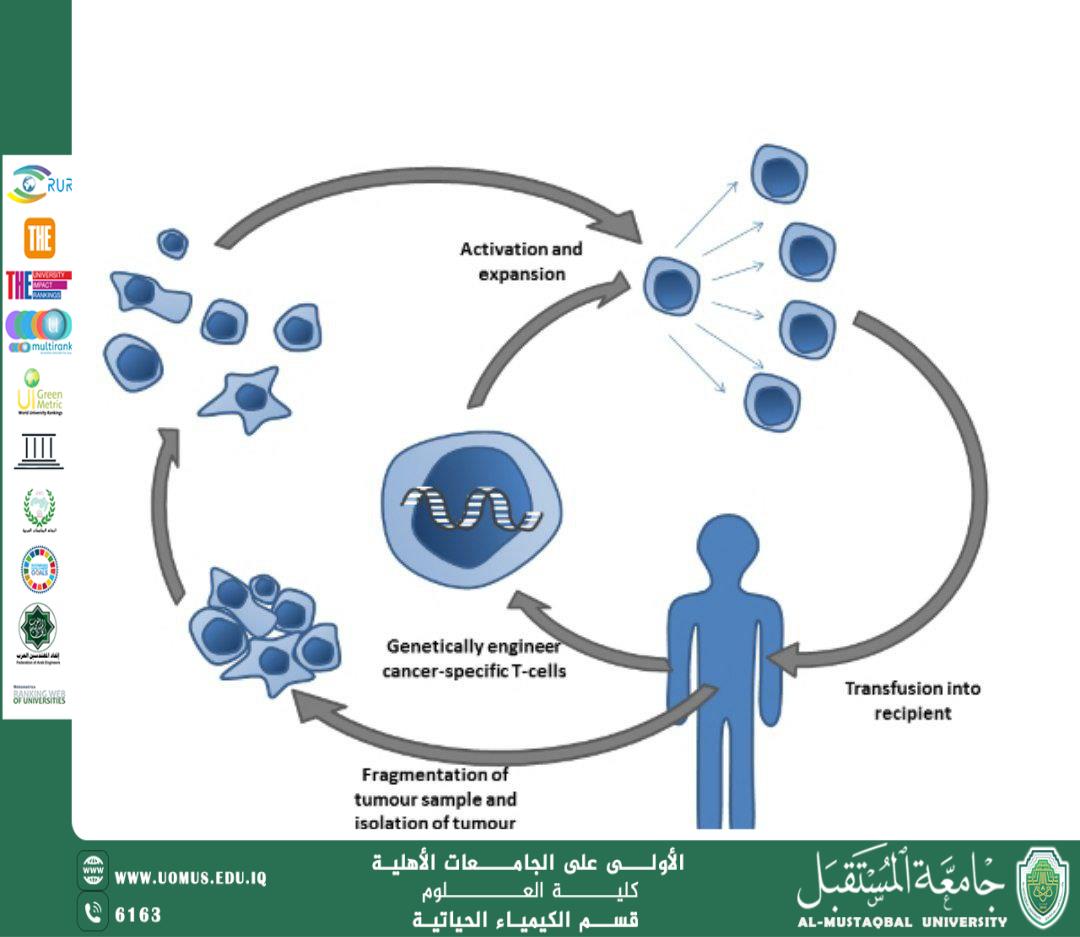
Immunotherapy is a therapeutic approach aimed at enhancing the ability of the immune system to recognize and eliminate diseased cells. It is widely used in cancer treatment, in addition to certain immune and inflammatory disorders. The success of this therapeutic strategy depends on a precise understanding of the molecular mechanisms governing immune responses, which is provided by medical biochemistry.
Second: Role of Medical Biochemistry in Understanding Immune Responses
Medical biochemistry contributes significantly to the study of:
The structure and function of immune proteins such as antibodies and cytokines.
Molecular communication mechanisms between immune cells.
Biological pathways responsible for activating or suppressing immune responses.
This understanding enables researchers to identify appropriate molecular targets for the development of effective and highly specific immunotherapies.
Third: Development of Immunotherapies
Medical biochemistry plays a fundamental role in the development of various immunotherapeutic approaches, including:
Monoclonal antibodies designed to target specific molecules on the surface of cancer cells.
Immune checkpoint inhibitors that prevent immune suppression and enhance the immune system’s ability to attack diseased cells.
Therapeutic vaccines that stimulate the immune system to recognize disease-related antigens.
The development of these therapies relies on detailed analysis of proteins, enzymes, and biochemical interactions involved in immune regulation.
Fourth: Monitoring the Effectiveness of Immunotherapy
One of the most important roles of medical biochemistry is the monitoring of patient responses to immunotherapy through:
Measuring immune-related biomarkers in blood samples.
Analyzing changes in cytokine levels and immune-associated proteins.
Evaluating immune cell activity before, during, and after treatment.
These analyses help determine treatment success and enable early detection of potential adverse effects.
Fifth: Medical Biochemistry and Personalized Medicine in Immunotherapy
Medical biochemistry supports the concept of personalized medicine in immunotherapy by:
Selecting the most appropriate treatment for each patient based on molecular characteristics.
Predicting patient response to therapy prior to initiation.
Modifying therapeutic plans according to laboratory findings.
This personalized approach enhances treatment efficacy while minimizing unwanted side effects.
Sixth: Challenges and Future Perspectives
Despite significant achievements, immunotherapies still face challenges such as variability in patient responses and the occurrence of adverse effects. Medical biochemistry continues to address these challenges by:
Identifying new immune biomarkers.
Improving the accuracy of molecular analyses.
Developing safer and more effective immunotherapeutic agents.
The coming years are expected to witness further advancements in this field due to continuous progress in biochemical technologies.
Conclusion
Medical biochemistry is a core component in the development and monitoring of immunotherapy, as it provides a deep molecular understanding of immune mechanisms, supports the design of advanced therapeutic strategies, and enables precise evaluation of treatment effectiveness
With ongoing scientific research, this discipline will remain a key pillar in improving therapeutic outcomes and opening new horizons in modern medicine.
Al-Mustaqbal University
Ranked First among Iraqi Private Universities