Why Does Gold Rise? The Hidden Factors Driving the Precious Metal Upward
Introduction
Gold prices witnessed an exceptional surge during 2025, with the ounce surpassing the $4,000 mark for the first time in history, achieving unprecedented annual returns exceeding 60% in certain periods. This rise was not the result of coincidence or short‑term speculation, but rather the outcome of a complex interaction among economic, monetary, political, and geopolitical factors, alongside structural shifts in institutional demand, the role of central banks, changes in the relationship with the US dollar, and developments in mining technologies and industrial demand.
This report aims to provide a comprehensive and integrated analysis of the reasons behind rising gold prices during 2025–2026, reviewing their impacts on global and local markets, particularly in Iraq and the Arab region, while also projecting future scenarios through 2030. The report addresses supply and demand dynamics, the role of central banks, the impact of inflation, the status of the US dollar, geopolitical tensions, technical analysis, investor strategies, and historical comparisons, with emphasis on recent data and sources from global financial institutions and gold councils.
First: Overview of Gold Price Growth in 2025
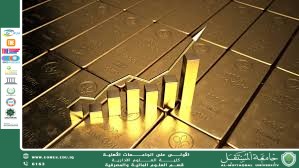
Gold recorded outstanding performance during 2025, rising by more than 60% and setting over 50 new historical records. The price of gold exceeded $4,000 per ounce in October 2025 and continued reaching record levels through year‑end, driven by a combination of economic and geopolitical factors, US dollar weakness, rising institutional demand, and aggressive central bank purchases.
According to reports from the World Gold Council and the World Bank, gold demand increased by 10% during the first three quarters of 2025, fueled by strong investment flows from exchange‑traded funds (ETFs) and central bank acquisitions. Gold ETFs alone recorded record inflows of $80 billion in 2025, double the previous record set in 2020.
Gold prices are expected to continue their upward trajectory in 2026, with major financial institutions forecasting prices in the $4,500–$5,000 per ounce range, and potentially higher under optimistic scenarios.
Second: Economic Factors – Inflation and Its Role in Gold Appreciation
Global Inflation and Gold as a Hedge
Inflation remains one of the primary traditional drivers of gold prices. When inflation rises, the purchasing power of fiat currencies erodes, prompting investors to seek gold as a safe‑haven hedge. In 2025, inflation rates in major economies (the United States, Europe, and China) remained relatively elevated, with US inflation reaching 3%, alongside expectations of sustained inflationary pressures due to expansionary fiscal policies and rising energy and food prices.
This environment led to increased gold demand from both individual and institutional investors, with gold ETF holdings rising by 41% in the first half of 2025. Data also indicate that gold preserved its purchasing power against inflation and outperformed most other asset classes in annual returns.
Real Interest Rates and Gold
Gold prices exhibit an inverse relationship with real interest rates (nominal rates minus inflation). When real rates are low or negative, the opportunity cost of holding non‑yielding assets like gold decreases, boosting demand. In 2025, despite relatively high nominal interest rates (4–4.25% in the United States), elevated inflation kept real rates low, enhancing gold’s attractiveness.
Fiscal and Trade Policies
Expansionary fiscal policies, increased government spending, and rising sovereign debt levels in major economies heightened concerns about future inflation, reinforcing demand for gold as protection against financial and monetary risks.
Third: Monetary Factors – Central Banks and Interest Rate Policies
Central Bank Gold Purchases
Recent years have witnessed the largest wave of central bank gold purchases in over seventy years, with annual acquisitions exceeding 1,000 tons for the third consecutive year. China, Poland, Turkey, and India led this trend as part of diversification strategies aimed at reducing reliance on the US dollar, particularly following Western sanctions on Russia and the freezing of its foreign assets.
A 2025 World Gold Council survey revealed that 95% of central banks view gold as a strategic asset for hedging against geopolitical and inflationary risks, while 73% expect a decline in the US dollar’s share of global reserves over the next five years.
Federal Reserve Policies and Interest Rates
US Federal Reserve decisions played a pivotal role in gold price movements. In 2025, the Fed maintained interest rates at 4–4.25%, with expectations of gradual cuts to support economic growth amid labor market slowdown and weakening manufacturing indicators. Rising expectations of rate cuts generally support gold prices, while expectations of tightening exert downward pressure.
Global Monetary Policies
The impact was not limited to the Federal Reserve; other central banks, such as the European Central Bank and the Bank of Japan, also pursued accommodative or rate‑holding policies, enhancing global liquidity conditions and supporting gold demand.
Fourth: The Relationship Between the US Dollar and Gold
The Traditional Inverse Relationship
Historically, gold and the US dollar share an inverse relationship: when the dollar weakens, gold prices rise, and vice versa. In 2025, the US Dollar Index recorded its worst annual start since 1973, declining against a basket of major currencies, thereby strengthening gold’s appeal to international investors.
Causes of Dollar Weakness
The dollar’s decline stemmed from several factors:
- Expectations of US interest rate cuts.
- Rising US fiscal deficits and sovereign debt levels.
- Declining confidence in the dollar as the sole global reserve currency, particularly following sanctions on Russia and moves by China and other countries to reduce US Treasury holdings while increasing gold reserves.
Impact on Emerging Markets
Dollar weakness boosted gold demand in emerging markets such as China, India, and Turkey, where gold became more attractive as a store of value relative to depreciating local currencies.