
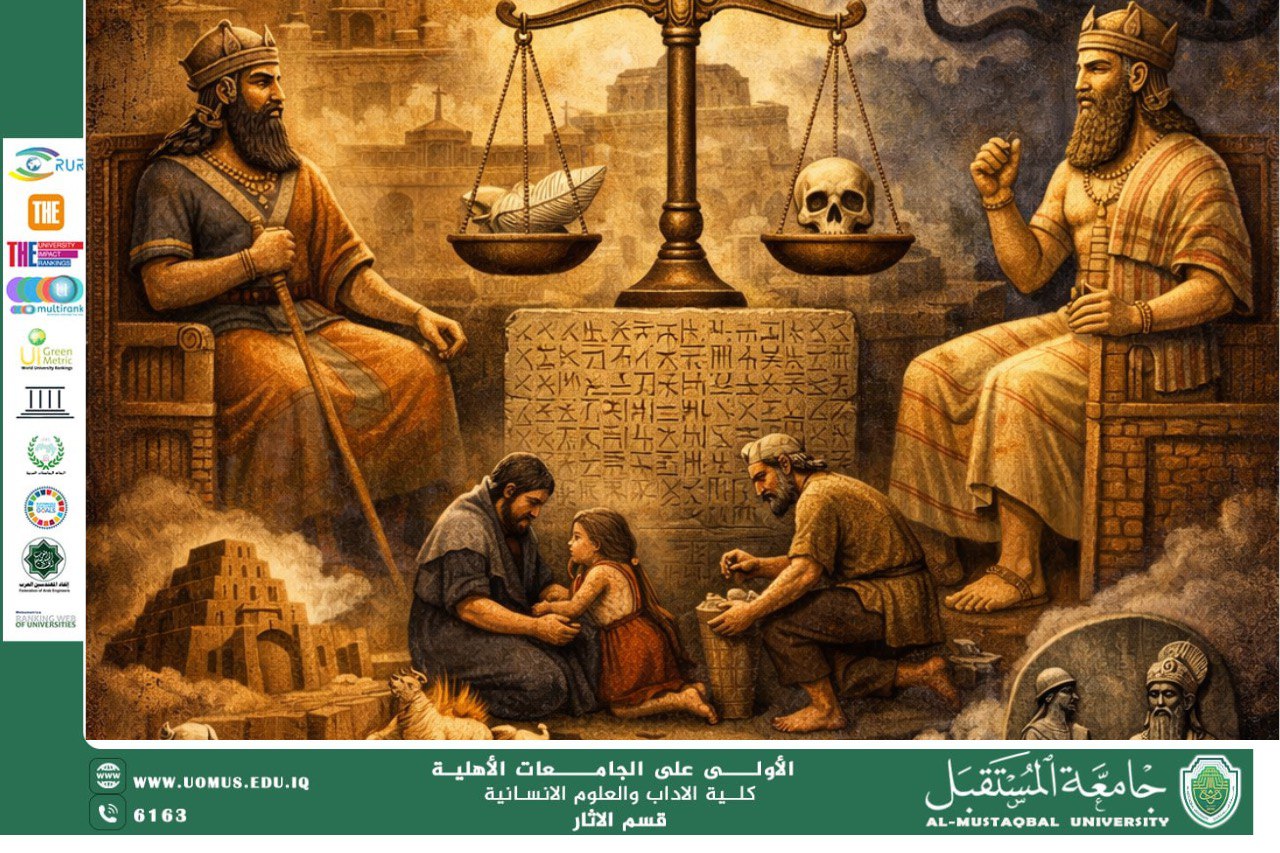
Life, Good and Evil, Values and Ethics in Cuneiform Texts
The term ethics refers to an individual’s behavior that conforms to the customs and traditions of their society and aligns with its values. It also denotes the rules of conduct, a person’s style and way of life. In other words, ethics represent the codes of behavior that must be followed in order to do good and avoid evil.
Human beings were regarded as the first entities endowed with the ability to distinguish between good and evil; that is, humans are the only beings that carry social values, and their existence is defined through their relationship with these values. Since humans live a social life, they were considered inherently moral beings, and ethical issues were viewed as an integral part of religious thought. Literary works, including myths of human creation, indicate that the gods created humans to serve them, worship them, offer sacrifices, and build temples for them. In return, humans aspired above all to receive protection and goodness in life as a reward for their righteous deeds. Cuneiform documents clearly show the strong emphasis of the Sumerians and Babylonians on honesty and justice, order and law, and their aversion to lying, evil, and disregard for the law.
Kings and princes always took pride in having established laws and laid the foundations of order in the land, and in protecting the weak from the strong and the poor from the rich. For example, King Urukagina boasted of lifting oppression from the people of Lagash and restoring justice and freedom to them. Likewise, Ur-Nammu, the founder of the Third Dynasty of Ur, referred in the prologue to his law code to several of his deeds that addressed ethical issues. He eliminated a number of widespread injustices and regulated weights and measures to ensure security and integrity in market transactions. Widows, orphans, and the poor also received significant attention, as he sought to protect them from injustice and exploitation. Similarly, the Code of Hammurabi addressed various aspects of life.
Cuneiform texts clearly indicate that the gods favored all that was ethical and righteous and detested any deviation from moral principles. All the major gods of the divine assembly were praised as lovers of truth, honesty, goodness, and integrity. Some texts also show that adherence to ethics was a central function of several deities.