**Plastic Arts: The Language of the Soul and the Memory of Civilization** *By Dean Dr. Mazen Hadi Kazar Al-Taie*
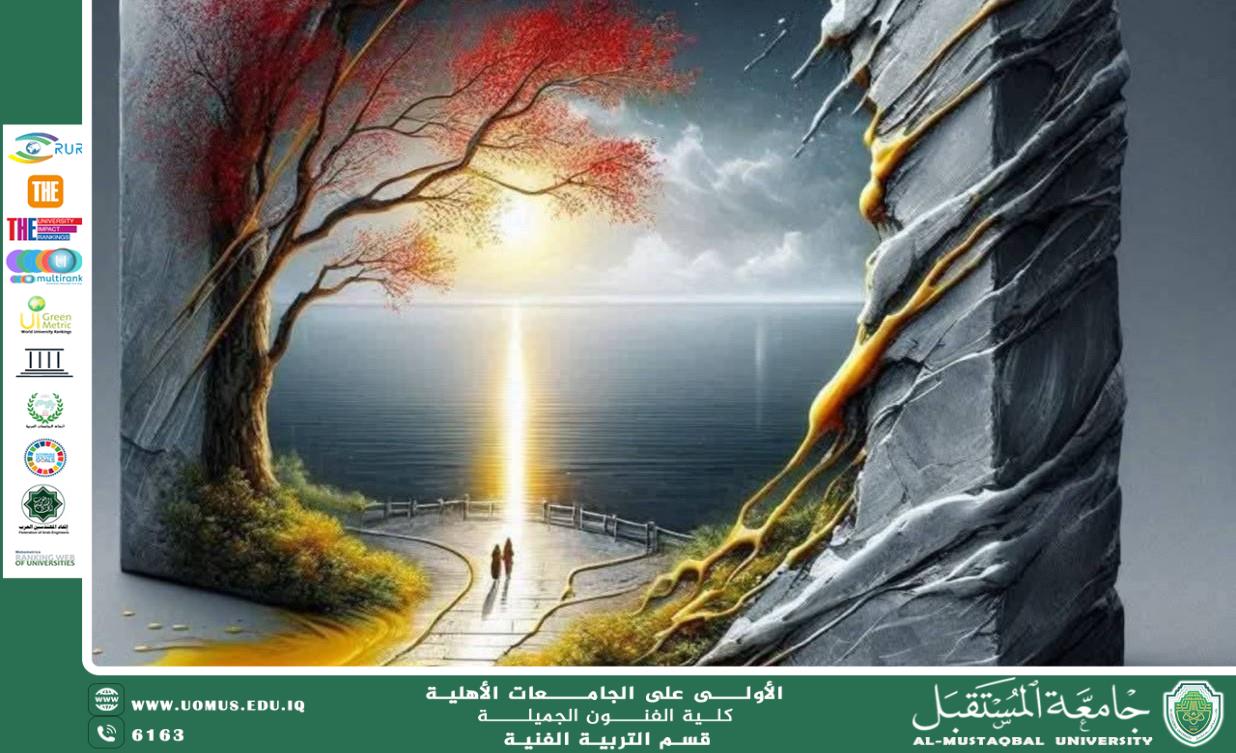
Plastic arts are among the deepest means of human expression and are closely intertwined with the spirit of civilization. They serve as a mirror reflecting human awareness of themselves and the world around them. From the earliest drawings on cave walls to contemporary experiments in painting, sculpture, ceramics, and design, plastic art has remained a living witness to the development of human thought and its cultural and social transformations.
Plastic art is based on reshaping or transcending reality through color, line, form, and space, providing the viewer with a visual, intellectual, and aesthetic experience simultaneously. It does not merely imitate appearances but seeks to penetrate the essence, provoke questions, and stimulate imagination. Its value lies in being a universal language that transcends spoken language and speaks directly to shared human emotions.
Throughout history, plastic arts have contributed to documenting the unwritten history of peoples, with paintings and sculptures serving as witnesses to beliefs, rituals, and the daily facets of life. They have also played a central role in shaping aesthetic taste, enhancing critical sensibilities, and fostering cultural awareness among individuals and communities.
In the modern era, plastic arts have undergone profound transformations, influenced by scientific, technological, and intellectual changes. Multiple schools and movements emerged—from Impressionism and Cubism to Abstract and Conceptual Art—each offering a different vision of the world and the artist’s relationship with reality. Artistic works are no longer confined to traditional forms but have become open spaces for experimentation and intermingling between different arts and media.
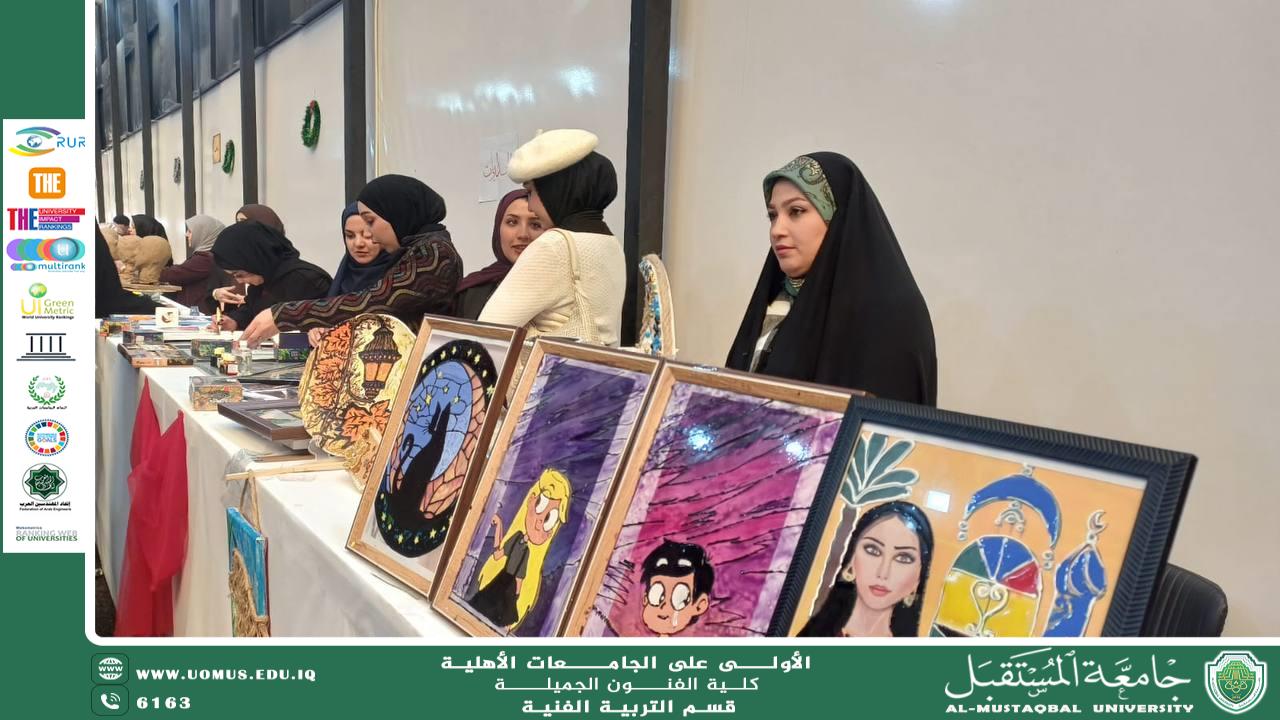
Supporting and nurturing plastic arts through education, practice, and critique is a cultural and civilizational necessity. It is not merely an aesthetic luxury but a human need that refines taste, broadens horizons, and reinforces values of dialogue and diversity. Through art, humans can express their concerns, pains, and hopes in a silent yet profoundly impactful language.
Thus, plastic arts remain a bridge between the past and the present, between the self and the other, and a vast field for inexhaustible creativity, affirming that beauty has been and will continue to be one of the most essential aspects of human truth...Almustaqbal University, The First University in Iraq
.