"A Scientific Article by Ms. Haneen Haidar Hussein Entitled “Integration Between the Cornea and the Lens
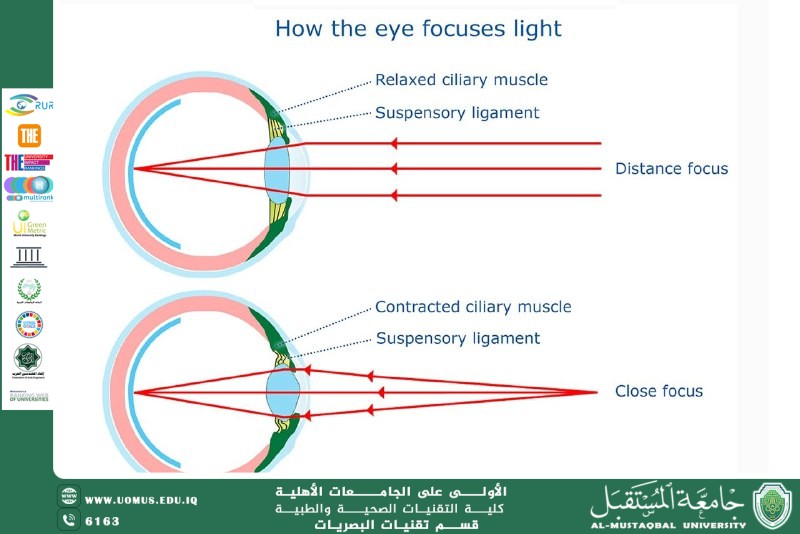
The process of vision is considered one of the most complex biological processes, as it relies on precise physical principles, most notably the phenomenon of refraction. The cornea and the crystalline lens together form an integrated optical system within the human eye. This system works to refract light rays and accurately focus them onto the retina, allowing a clear image of visible objects to be formed.
Disorders Resulting from Disruption of Integration
Any malfunction in the function of the cornea or the lens directly affects the quality of vision. Such disturbances may lead to refractive errors such as myopia (nearsightedness) or hyperopia (farsightedness), or to conditions such as cataracts. These disorders can be treated through various methods, including eyeglasses, contact lenses, and modern surgical interventions.
The integration between the cornea and the lens represents a precise model of harmony between structure and function within the visual system. Thanks to this integration, the eye is able to perform its function with high efficiency. Moreover, scientific understanding of this interaction contributes to the development of diagnostic and therapeutic approaches for visual disorders, thereby enhancing eye health and overall quality of vision.
University of Al-Mustaqbal – The First and Leading Private University