
An article titled "The Role of Clean Water in Promoting Public Health and Achieving Sustainable Development" by Engineer Hassanein Hadi Hussein
The Role of Clean Water in Promoting Public Health and Achieving Sustainable Development
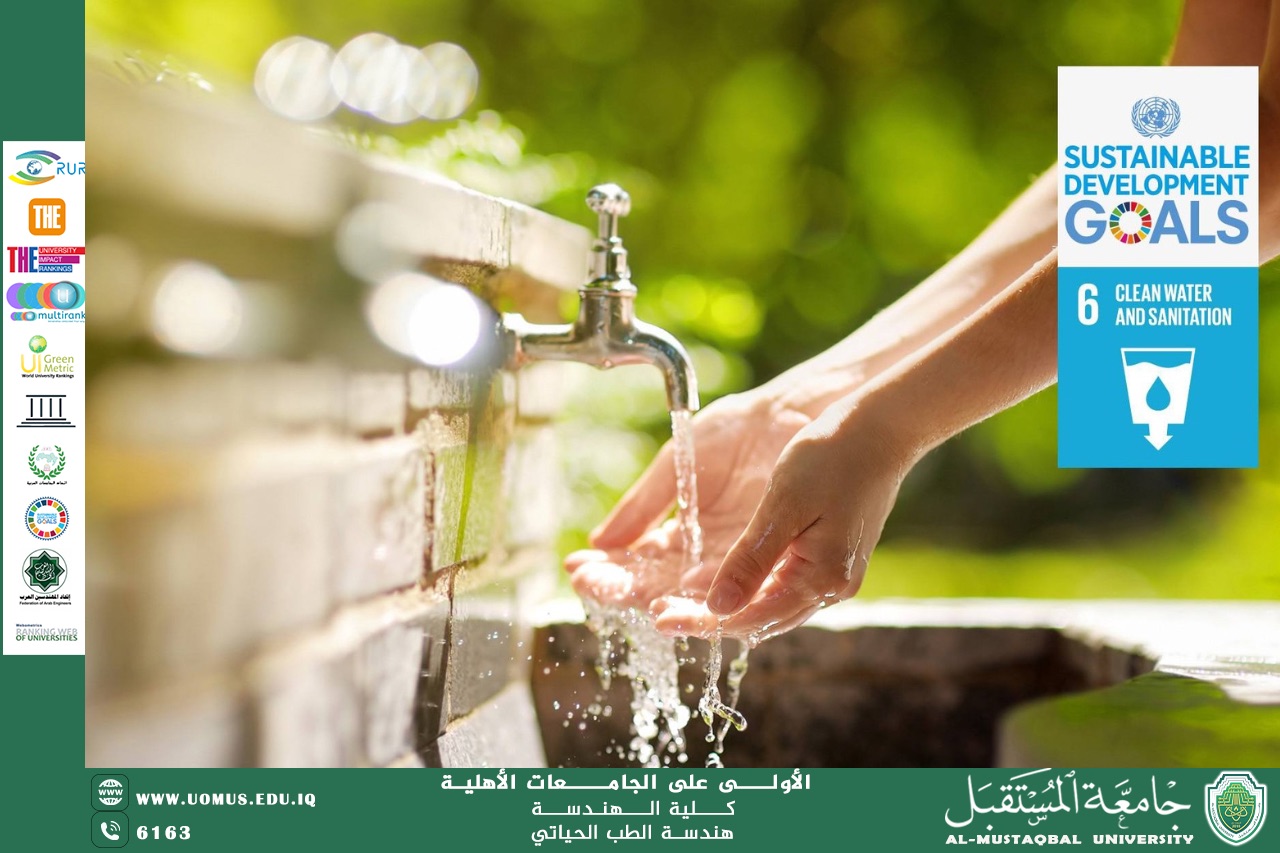
Clean water and sanitation services are fundamental pillars of human health and the sustainability of societies. This study aims to analyze the complementary relationship between providing safe water and sanitation, on the one hand, and promoting public health and well-being, on the other, within the framework of the Sustainable Development Goals (SDGs) adopted by the United Nations. It also highlights the importance of sustainable water resource management in reducing the spread of diseases, improving quality of life, and supporting social and economic development.
Many countries around the world, particularly developing countries, face increasing challenges in providing clean and safe drinking water, along with inadequate sanitation services. This deficiency is a major contributing factor to the spread of infectious diseases, which negatively impacts public health and limits opportunities for economic and social development. In this context, the SDGs emphasize the need to adopt integrated policies that address health and environmental issues in an interconnected manner, ensuring comprehensive and sustainable development.
The Impact of Clean Water on Public Health
Access to clean and safe water directly contributes to reducing the spread of waterborne diseases, such as cholera, typhoid, and acute diarrheal diseases, which are leading causes of death, especially among children. Improved hygiene and sanitation services also reduce the burden on health systems and enhance individuals' ability to participate actively in economic and social activities, positively impacting overall well-being.
The Integration of Sustainable Development Goals 3 and 6
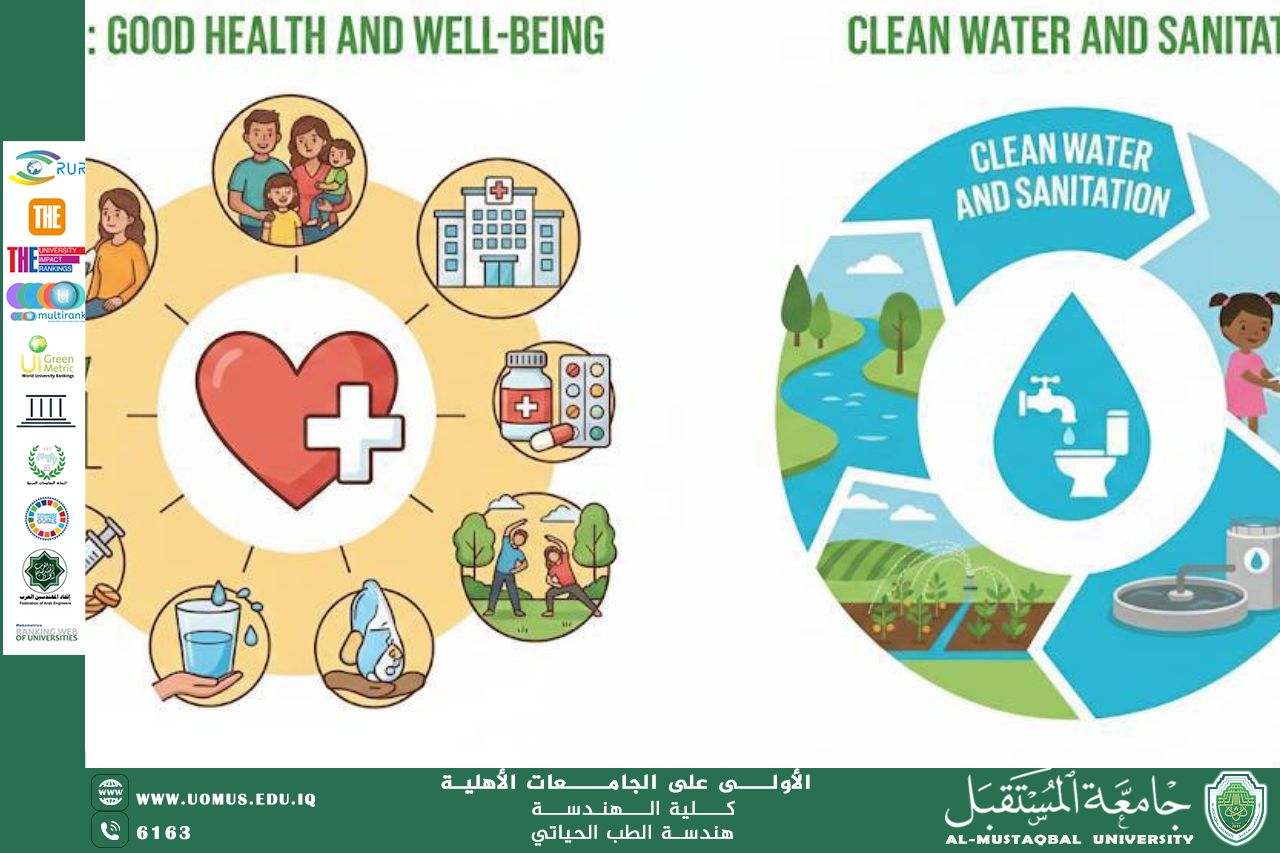
The link between Sustainable Development Goal 6, which focuses on ensuring access to clean water and sanitation, and Goal 3, which aims to promote good health and well-being, is clearly evident. Progress in water resource management and improved sanitation services directly contributes to reducing disease rates and improving health indicators for the population. This integration underscores the importance of adopting a holistic approach to implementing the Sustainable Development Goals, where each goal supports the achievement of the others.
The Role of Public Policies and Modern Technologies
Government policies play a pivotal role in achieving sustainable water resource management through appropriate legislation, financial allocation, and enhanced institutional cooperation. Modern technologies, such as desalination, wastewater treatment, and reuse, also contribute to addressing growing water challenges. Raising health and environmental awareness among community members is a complementary element to these efforts, ensuring the rational use of water and the preservation of natural resources.
Ensuring access to clean water and sanitation services is a prerequisite for good health and well-being, not merely an end in itself. The close link between the health and environmental dimensions of sustainable development underscores the importance of adopting integrated and comprehensive strategies that contribute to improving the quality of human life, preserving natural resources, and guaranteeing the rights of current and future generations.