The importance of nutrition for oral and dental health in winter
The importance of nutrition for oral and dental health in winter
Oral and dental health is an essential part of human general health, and is directly affected by the quality of nutrition consumed, especially during winter, when susceptibility to diseases and deficiencies in some nutrients increase due to reduced exposure to sunlight and changes in dietary habits. Therefore, paying attention to proper nutrition in this season plays an important role in maintaining healthy teeth and gums and preventing many oral problems.
The effect of winter on oral and dental health
During winter, many people tend to eat foods rich in sugars and starches and sweetened hot drinks, which increases the risk of tooth decay. Furthermore, insufficient water intake can lead to dry mouth, which reduces saliva production, the natural mechanism for cleaning the mouth and fighting bacteria. Additionally, weakened immunity during winter can increase the risk of gum inflammation and other oral diseases.
The Role of Proper Nutrition in Preventing Oral Diseases
A balanced diet plays a key role in strengthening teeth and maintaining healthy gums. Essential nutrients contribute to building tooth enamel, strengthening the supporting bones, and boosting oral immunity against bacteria and infections.
Nutrients important for oral health in winter
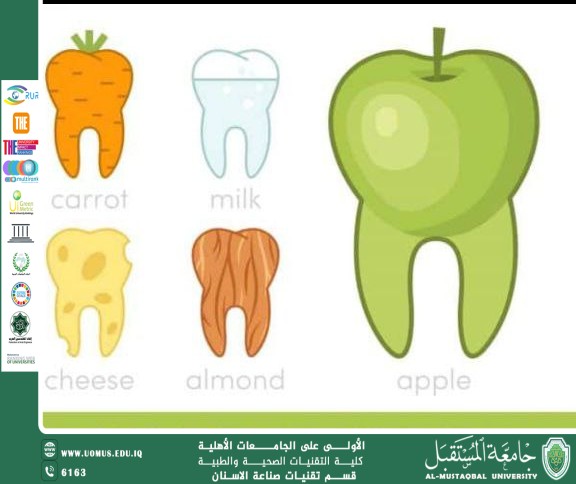
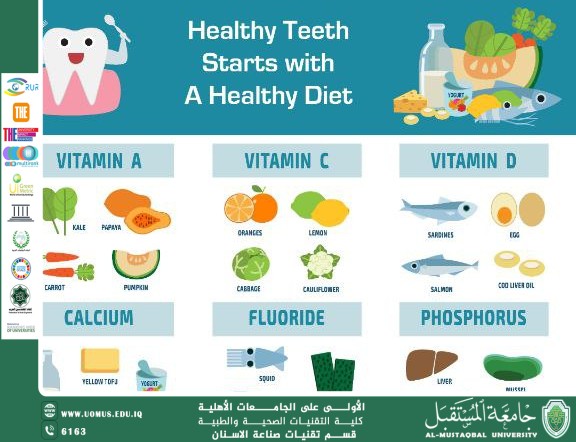
Calcium: Essential for strong teeth and bones, it is found in milk and dairy products such as cheese and yogurt, as well as sesame seeds and almonds.
Vitamin D: Helps with calcium absorption, and its levels tend to decrease in winter due to reduced sun exposure. It can be obtained from fatty fish, egg yolks, and fortified milk.
Vitamin C: Essential for healthy gums and preventing bleeding and inflammation. Found in oranges, lemons, kiwis, and green peppers.
Phosphorus: Works with calcium to strengthen tooth enamel. Found in meat, fish, and legumes.
Water: Drinking enough water keeps the mouth moist and reduces the growth of bacteria that cause cavities.
Healthy eating habits in winter:
It's important to reduce your intake of sweets and sugary drinks, especially between meals, and to focus on eating fresh fruits and vegetables. It's also advisable to eat fiber-rich foods, which help clean teeth and stimulate saliva production. Avoid excessive consumption of very hot drinks, as these can negatively affect tooth enamel.
In conclusion,
maintaining a healthy and balanced diet during winter is one of the most important ways to preserve oral health and prevent cavities and gum disease. Proper nutrition, along with daily oral hygiene and regular dental checkups, ensures a healthy smile and a better life.