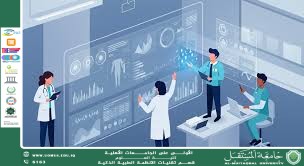

Improving Hospital Management Decisions Using Smart Data Analytics and Its Role in Achieving the Sustainable Development Goals ( Asst. Lecturer Ali Saleem Haleem).
Hospitals around the world are experiencing increasing pressures due to rapid population growth, rising rates of chronic diseases, and escalating operational costs. In response to these challenges, Smart Data Analytics has emerged as a strategic tool that transforms vast amounts of medical and administrative data into actionable insights. This transformation supports accurate decision-making, enhances healthcare efficiency, improves service quality, and promotes sustainability within healthcare systems.
Modern hospitals rely on advanced health information systems to collect large and complex datasets, including electronic health records (EHRs), medical Internet of Things (IoT) devices, human resources systems, and inventory and supply chain data. Through smart data analytics, hospitals can effectively leverage these datasets at multiple levels. Predictive analytics enables the anticipation of patient volumes and disease patterns, allowing for proactive planning and optimized resource allocation. Descriptive analytics provides real-time dashboards that reflect operational performance, resource consumption, and compliance with clinical protocols. Prescriptive analytics goes a step further by recommending operational strategies, such as optimizing staff scheduling or improving supply chain efficiency.
At the management level, the use of smart data analytics significantly improves administrative decision-making by reducing patient waiting times, enhancing bed utilization, and ensuring efficient distribution of medical staff. It also contributes to lowering operational costs by minimizing waste in medications and medical supplies, as well as optimizing energy and water consumption. Furthermore, smart analytics supports clinical quality by enabling physicians to make evidence-based decisions, facilitating early diagnosis, reducing medical errors, and improving patient safety.
The impact of smart data analytics extends beyond administrative and clinical benefits to include environmental sustainability. By monitoring resource consumption and optimizing supply chains, hospitals can reduce their carbon footprint and align their operations with environmentally responsible practices. This approach closely aligns with the Sustainable Development Goals (SDGs), particularly Goal 3: Good Health and Well-being, through improved preventive care and higher-quality healthcare services, and Goal 9: Industry, Innovation, and Infrastructure, by fostering innovation in health information systems and integrating artificial intelligence into hospital management.
In conclusion, integrating smart data analytics into hospital management represents a fundamental step toward building smart and green hospitals of the future. It enables a balanced approach that combines operational efficiency with high clinical quality, while ensuring alignment with sustainable development objectives.
Al-Mustaqbal University The Leading University in Iraq