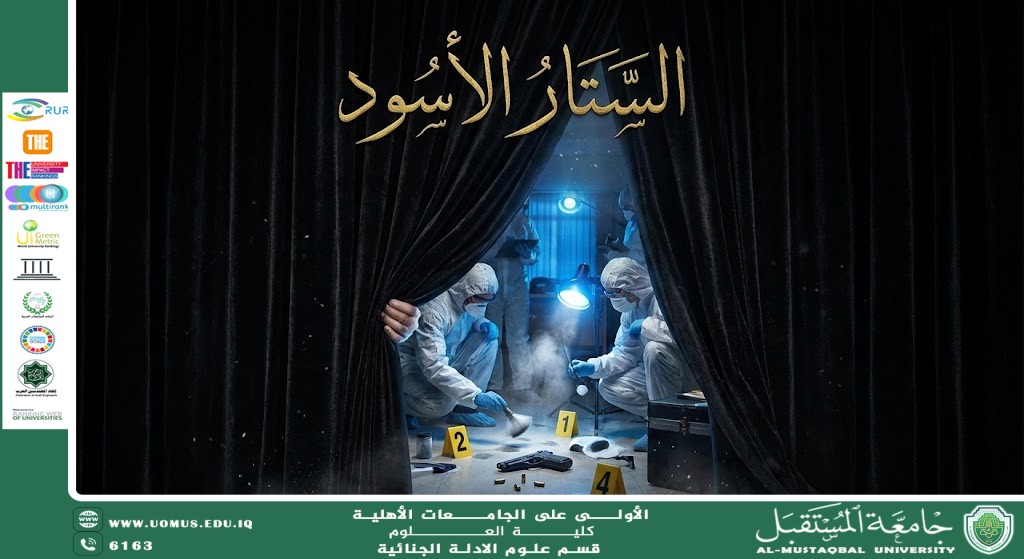
(Behind the Black Curtain: Forensic Evidence Uncovers the World of Human Trafficking (Asst. Lecturer Raed Jawad Kazim
Behind deceptive façades, one of the most heinous crimes in the world is orchestrated: human trafficking. A crime that does not rely on weapons alone, but on deception, silence, and fear. Yet this silence does not last long when forensic evidence begins to speak.
A neglected fingerprint, a mobile phone, a digital trace—small details that, in many cases, have led to the dismantling of transnational criminal networks. Modern forensic technologies no longer merely prove that a crime has occurred; they now expose how these networks operate, their methods of recruitment, and their forms of exploitation.
In cases where victims are unable to speak, evidence becomes a witness that does not lie—a witness that reconstructs the truth and shatters the immunity human traffickers seek to hide behind.
The battle against human trafficking is far from over, but every sound piece of forensic evidence is a new step toward justice and toward revealing what unfolds behind the black curtain.
Al-Mustaqbal University – the first university in Iraq.
SDG4