The Role of Artificial Intelligence in Drug Prediction and Design
Artificial Intelligence (AI) has become one of the most influential technologies of the modern era, significantly impacting various fields, especially healthcare and pharmaceutical research. One of its most important applications is in drug prediction and design, where AI contributes to accelerating drug discovery, improving accuracy, and reducing costs.
1. Artificial Intelligence in the Pharmaceutical Field
Artificial Intelligence refers to computer systems capable of simulating human intelligence by analyzing data, learning from it, and making informed decisions. In the pharmaceutical field, AI relies on techniques such as machine learning and deep learning to process vast amounts of chemical, biological, and medical data that are difficult to analyze using traditional methods.
2. Role of AI in Drug Prediction
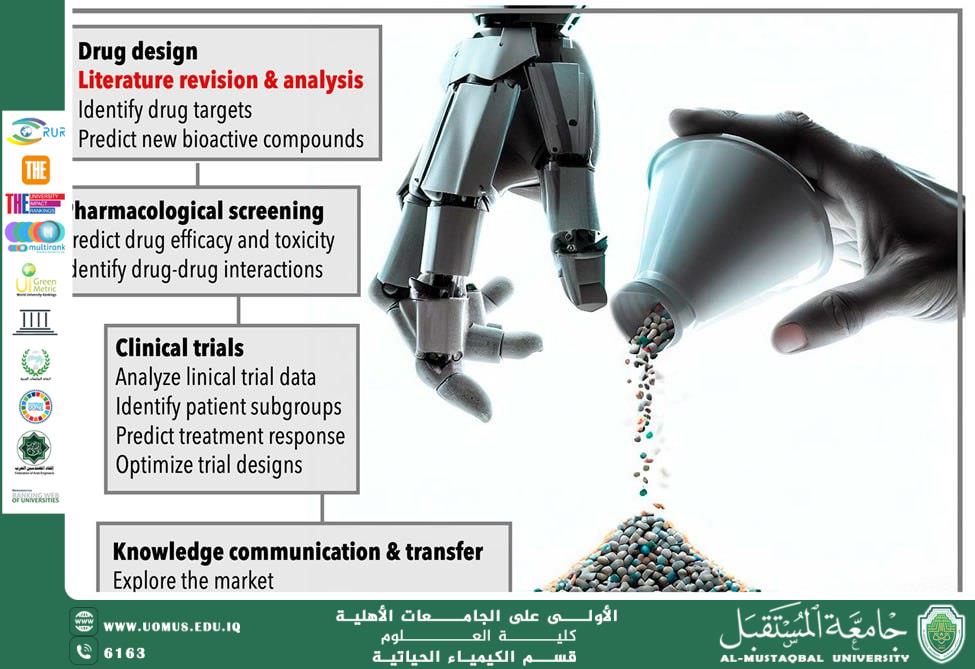
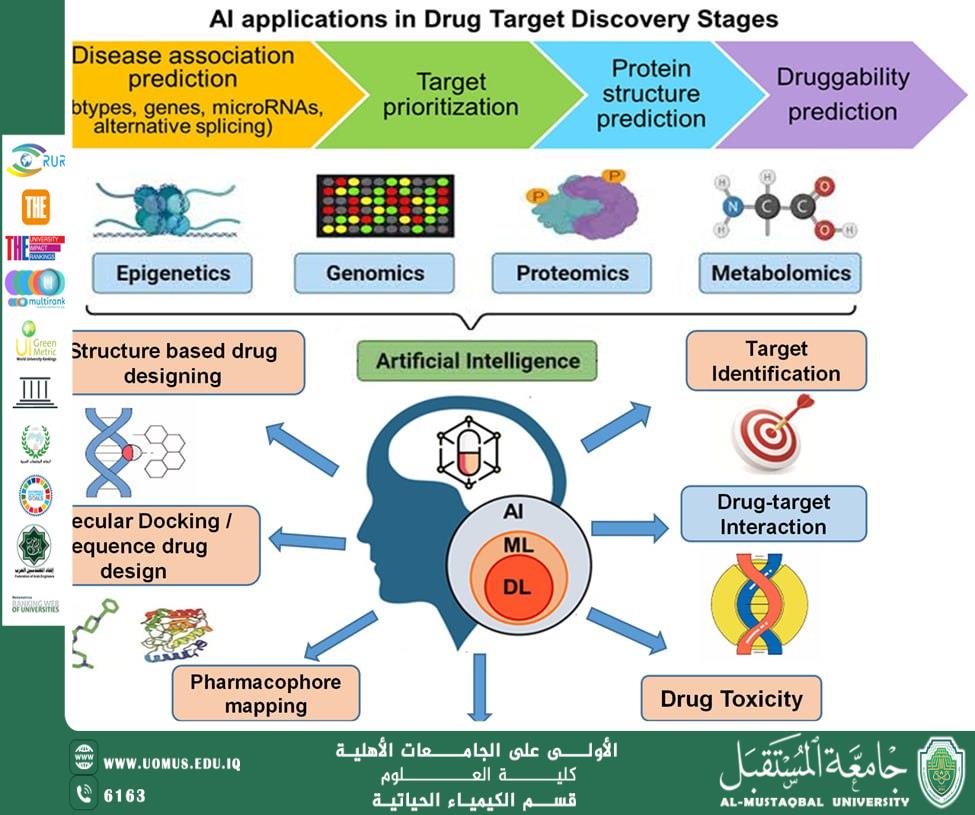
AI plays a crucial role in predicting drug behavior and effectiveness by:
* Analyzing interactions between chemical compounds and biological targets.
* Predicting drug efficacy before clinical trials.
* Identifying potential side effects and toxicity risks.
These predictive capabilities help researchers select safer and more effective drug candidates at early stages.
3. Role of AI in Drug Design
AI has transformed traditional drug design methods by:
* Generating new molecular structures with desired therapeutic properties.
* Optimizing drug characteristics such as stability, absorption, and potency.
* Reducing the time required to develop new drugs from many years to much shorter periods.
AI also supports drug repurposing, where existing drugs are identified for new medical uses.
4. Benefits of Using AI in Drug Development
The main benefits of AI in drug prediction and design include:
* Faster discovery of new drugs.
* Lower research and development costs.
* Increased accuracy and reduced human error.
* Enhanced decision-making support for researchers and clinicians.
5. Challenges and Future Perspectives
Despite its advantages, AI in drug development faces several challenges, including:
* The need for high-quality and reliable data.
* Ethical concerns related to medical data usage.
* The importance of integrating AI systems with human expertise.
In conclusion, Artificial Intelligence represents a revolutionary tool in drug prediction and design. It has significantly improved the efficiency and accuracy of pharmaceutical research and opened new possibilities for developing safer and more effective treatments. As AI technologies continue to evolve, their role in shaping the future of medicine will become increasingly vital.