DNA Fingerprinting: The Molecular Identity of Humans Prepared by: Lect. Abbas Hamza Khudhair Department of Biochemistry – College of Science – Al-Mustaqbal University
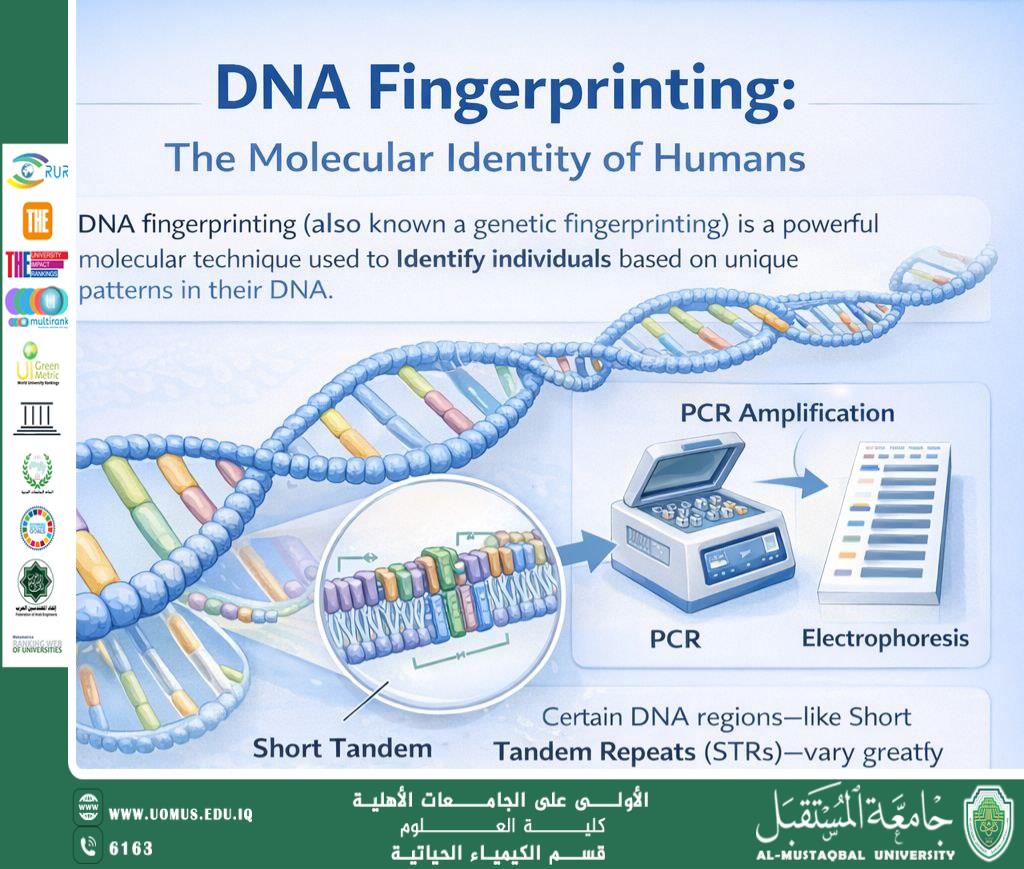
DNA fingerprinting (also known as genetic fingerprinting) is a powerful molecular technique used to identify individuals based on unique patterns in their DNA. Although all humans share most of their DNA, certain regions—especially Short Tandem Repeats (STRs)—vary greatly from one person to another, making each individual’s genetic profile unique (except identical twins).
This technique relies mainly on PCR amplification of specific DNA regions followed by electrophoresis, producing a distinctive genetic pattern for each person.
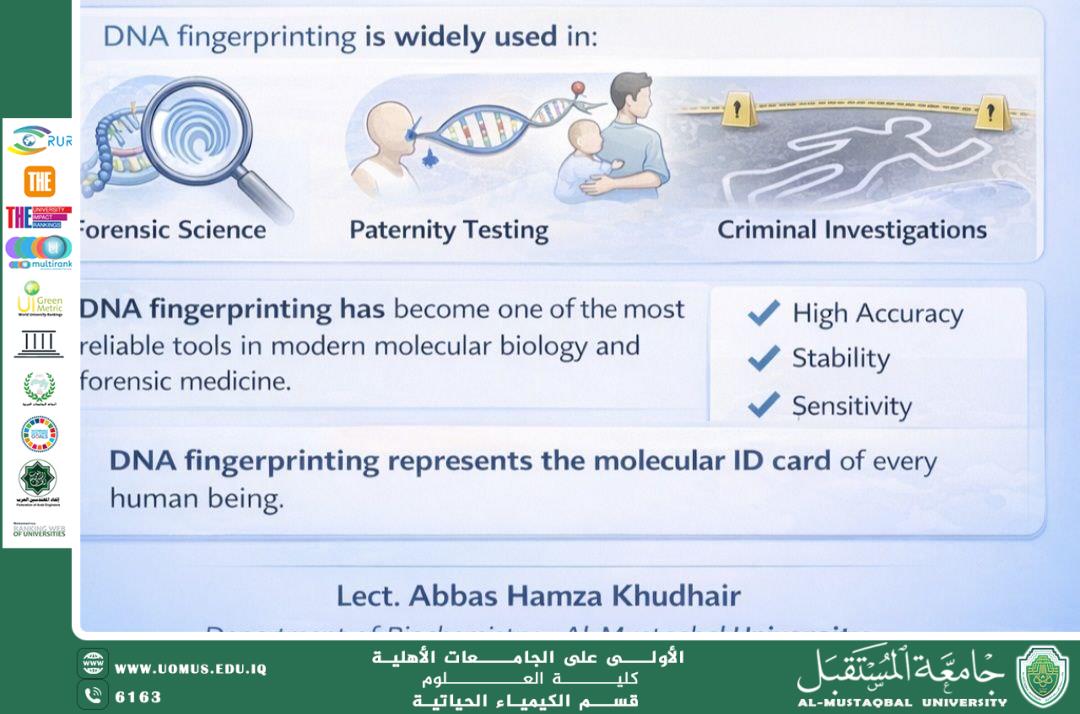
DNA fingerprinting is widely used in:
Forensic science and criminal investigations
Paternity and kinship testing
Identification of victims
Medical genetics and transplantation matching
Because of its high accuracy, stability, and sensitivity, DNA fingerprinting has become one of the most reliable tools in modern molecular biology and forensic medicine.
In short: DNA fingerprinting represents the molecular ID card of every human being