Integration of Artificial Intelligence and the Internet of Things to Enhance the Accuracy of Biometric Monitoring (Lecturer Qusay Munir Diab)
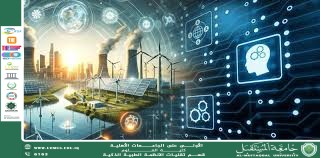
In light of the current digital revolution, the integration of Artificial Intelligence (AI) and the Internet of Things (IoT) has become one of the most significant drivers of technological advancement, particularly in the development of biometric monitoring systems. These systems rely on the continuous collection and precise analysis of health-related data, enabling the delivery of practical and efficient solutions across multiple fields, including healthcare, security, and education. As a result, this technological integration is closely aligned with the Sustainable Development Goals, especially Sustainable Development Goal 4 (Quality Education).
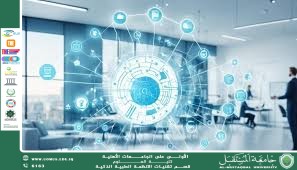
The Internet of Things enables the connection of sensors, medical devices, and personal monitoring tools through digital networks, generating continuous streams of biometric data such as heart rate, oxygen levels, and physical activity. Artificial Intelligence, in turn, processes this data using machine learning and deep learning techniques to identify patterns, interpret complex relationships, and predict future conditions with high accuracy. The real-time integration of these technologies allows biometric monitoring systems to function intelligently by transforming raw data into meaningful indicators that support rapid responses, accurate diagnostics, and informed decision-making.
This integration has significantly advanced healthcare systems by enabling remote patient monitoring and reducing the need for frequent hospital visits, while also enhancing security applications through more reliable biometric identification technologies, including fingerprint recognition, iris scanning, and facial recognition systems. In the educational sector, AI and IoT-based biometric systems have opened new possibilities for improving teaching and learning processes by utilizing wearable devices to monitor students’ concentration levels, stress, and physical well-being. Such data enables educators to adapt instructional methods in real time to better match individual learning needs.
These advancements strongly support the objectives of Quality Education by promoting personalized learning environments where students’ physical and cognitive conditions are continuously assessed during the learning process. When indicators of fatigue, reduced attention, or stress are detected, educational strategies can be adjusted immediately to enhance learning effectiveness. Furthermore, biometric monitoring technologies contribute to creating safer and healthier educational environments, particularly in crowded institutions or during public health crises, by enabling early detection and preventive measures.
In addition, the integration of AI and IoT plays a crucial role in reducing educational disparities by supporting students with special needs through adaptive and interactive learning systems that take into account their health and cognitive conditions, thereby strengthening inclusivity and equal access to education. Despite these benefits, several future challenges remain, including data privacy and cybersecurity concerns, the need for robust digital infrastructure to support real-time data transmission, and the high costs associated with deploying such technologies, especially in developing countries.
Nevertheless, the integration of Artificial Intelligence and the Internet of Things represents a transformative shift in biometric monitoring systems, extending its impact beyond healthcare and security into the educational domain. By fostering intelligent, inclusive, and safe learning environments and supporting personalized education, this integration directly contributes to achieving Sustainable Development Goal 4: Quality Education.
University of Al-Mustaqbal – The First University in Iraq